- Tour Our Sites:
- Restoration
- Depot
- Library
- Fabrication
- Art
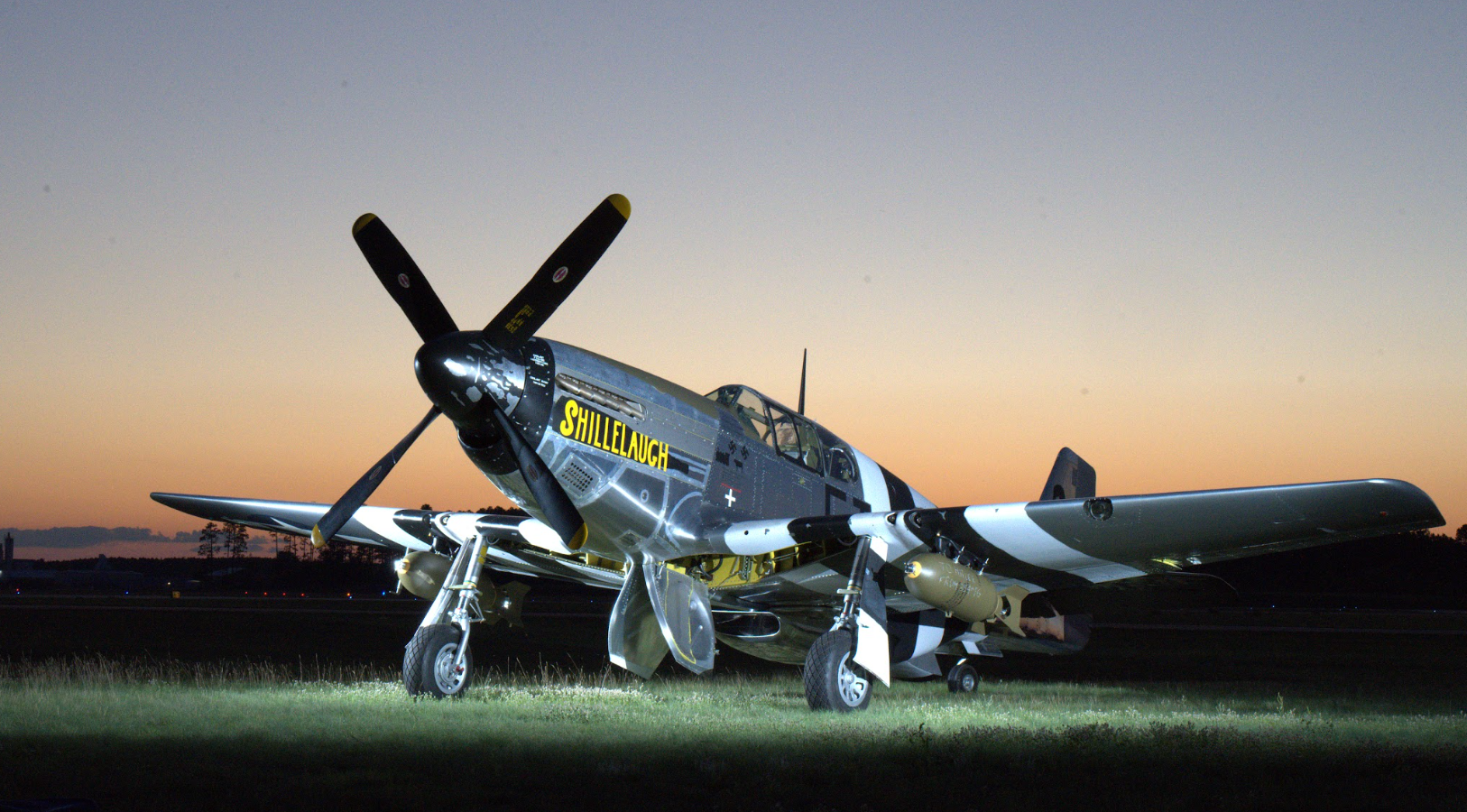
Imagine you have just walked up to a forward airfield somewhere in England or France in the summer of 1944. The grass is torn by tires and trampled by boots. A ground crew is finishing a fuel check. And there she sits — a P-51B Mustang named Shillelaugh, her natural-metal skin streaked with exhaust, her invasion stripes hastily brushed on in the frantic hours before D-Day, her paint marked by the honest wear of a machine that is flown hard, 95 missions of every type, with lives riding on it.
That is the airplane we set out to build. Not a museum jewel sealed under glass, but a working warbird as she actually looked on the day Ken Dahlberg climbed into the cockpit.
When you scanned the QR code on the ground graphics around this Mustang, you came looking for the story behind the finish. Here it is.
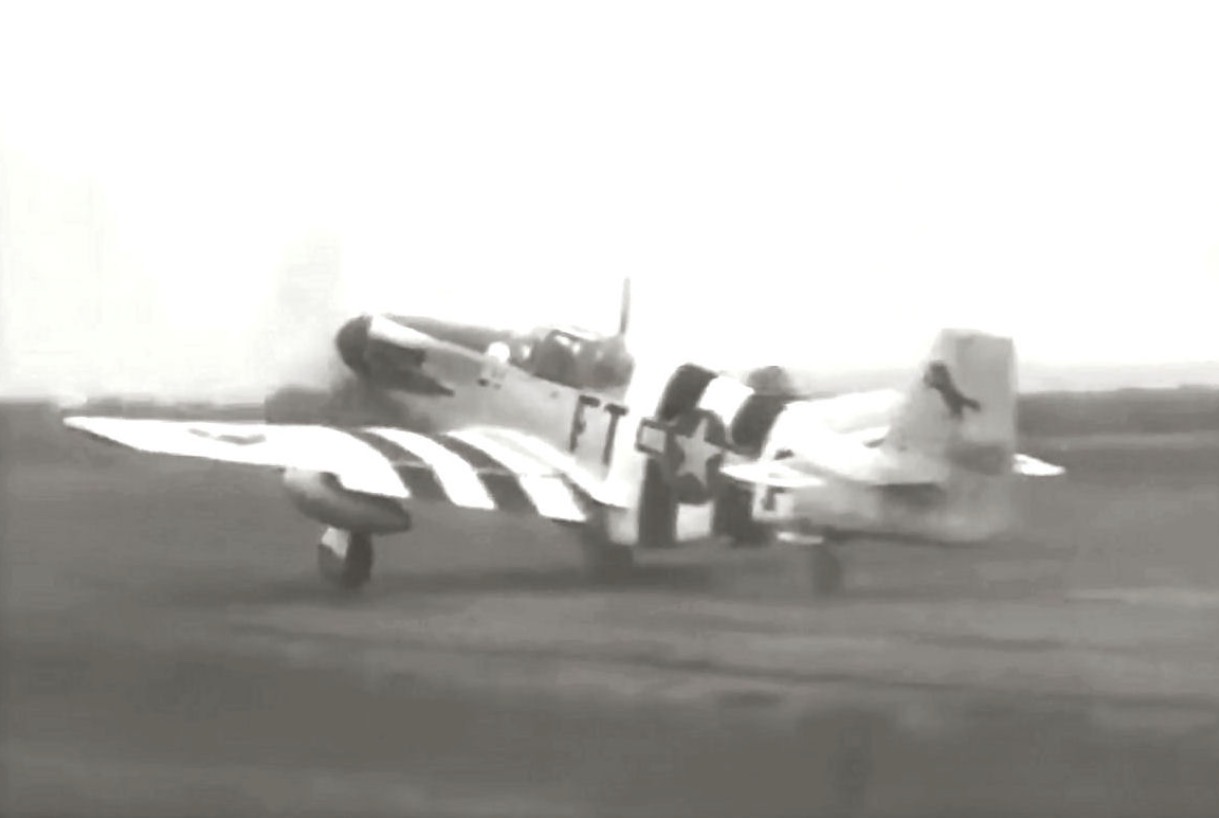
The Airplane: P-51B-10-NA, 42-106602
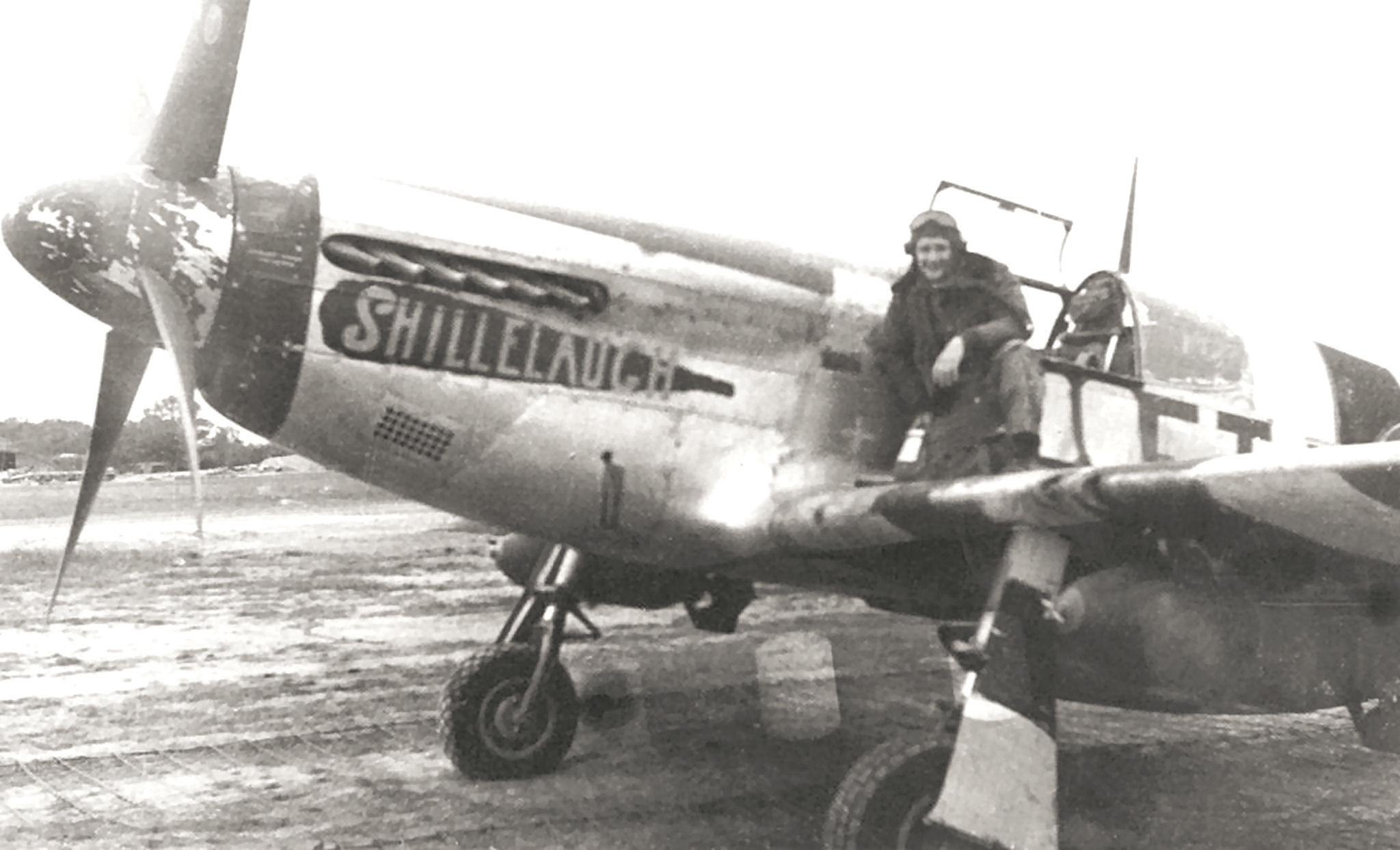
Shillelaugh P-51B-10-NA, serial number 42-106602, flew an astonishing 95 combat missions with the 353rd Fighter Squadron, 354th Fighter Group — the legendary “Pioneer Mustang Group” — in the European Theater of Operations. Her logbook reads like a catalog of the air war over Europe: dive bombing, escort missions deep into Germany toward Berlin, beach patrols over Normandy, scrambles, fighter sweeps, and ground-attack assaults.
Shillelaugh arrived in England in early April 1944 and flew its first combat mission on 15 April 1944. The factory-fresh Mustang was the third assigned to Lt. Col. David O’Hara, the pilot who named her after the Irish fighting club. Across its service, twenty different pilots of the 354th flew her in combat.
A note on the name: the nose art was originally spelled Shillelaugh, and later — when the invasion stripes were ordered off the upper surfaces, and the scheme was freshened up — it was repainted as Shillelagh, with a spiked club added forward of the lettering. Both spellings are part of her authentic history.
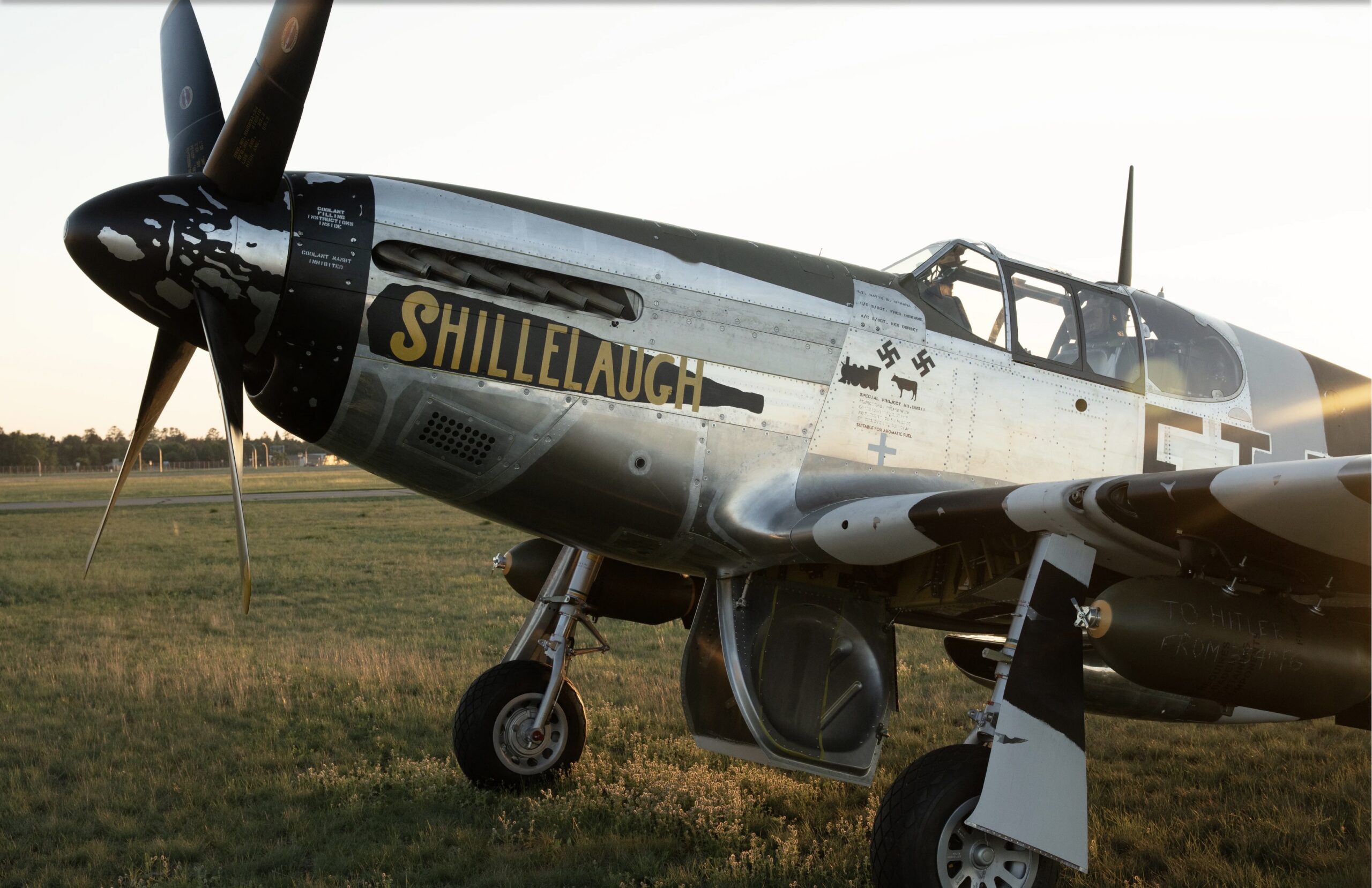
Here is the heart of why Shillelaugh looks the way she does.
In an era when warbird restoration chases a flawless, show-polished perfection, AirCorps Aviation made a deliberate choice with Shillelaugh: do not over-restore the airplane. The goal was to build an honest representation of what this war-weary P-51B would have looked like in service on the airfields of the UK and France.
That is a far harder discipline than it sounds. Anyone can make aluminum shine. It takes restraint, research, and confidence to leave an airplane looking like it has a job to do. Every department on this project worked from the same north star: faithfulness to how the airplane was actually built and actually used, not to how we might wish it looked.
The foundation for that faithfulness is research. AirCorps does its work from original North American Aviation engineering drawings whenever they are available, drawing on our AirCorps Library — an archive of more than 532,000 warbird engineering drawings and manuals. A cornerstone of this archive is the Ken Jungeberg Collection, which includes over 50,000 original North American Aviation engineering drawings that were preserved from destruction in 1988. When you build from the factory’s own drawings, you reproduce the factory’s own results — including the imperfections that make an airplane look real.
Building Shillelaugh the Way the Factory Did
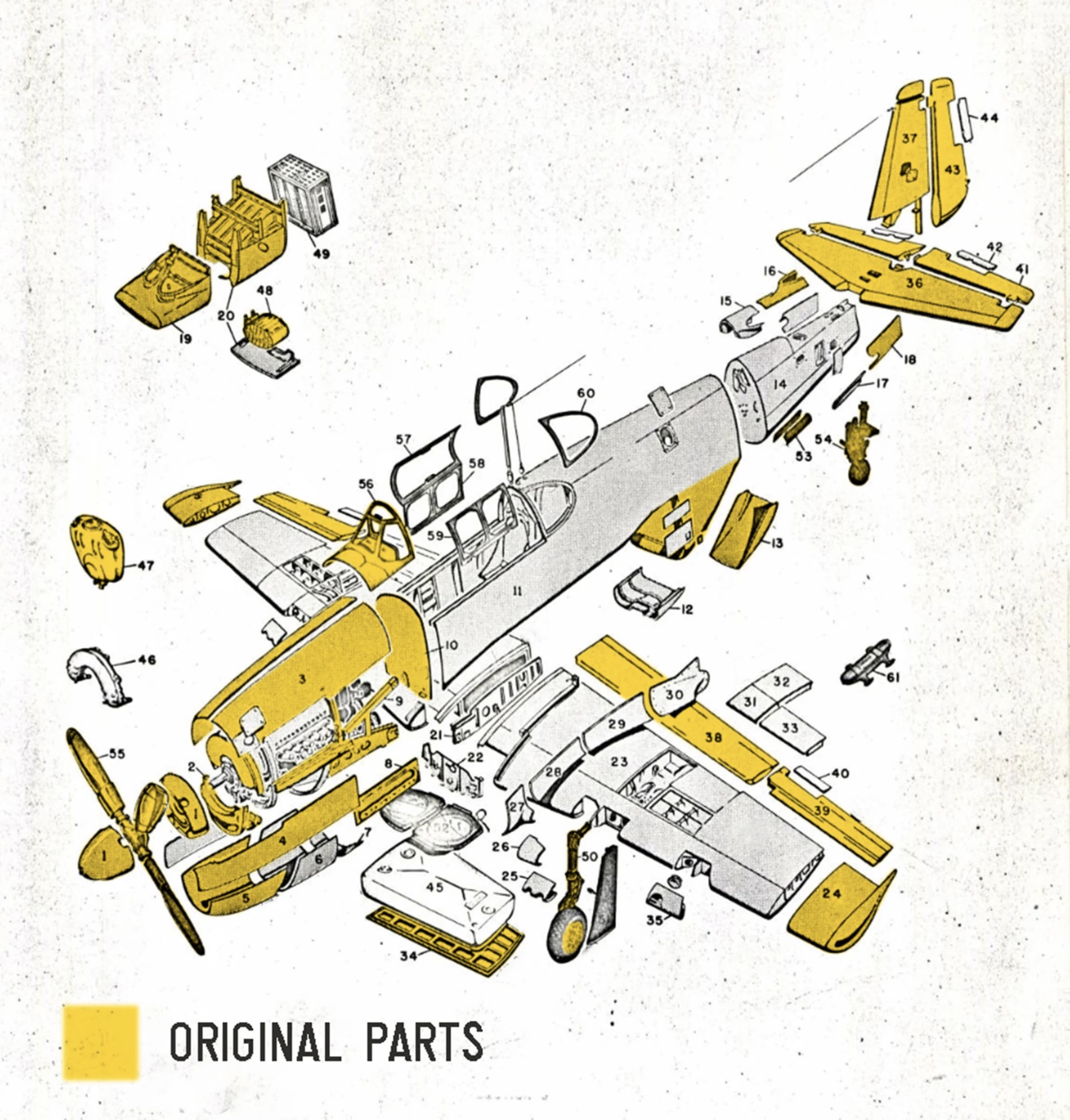
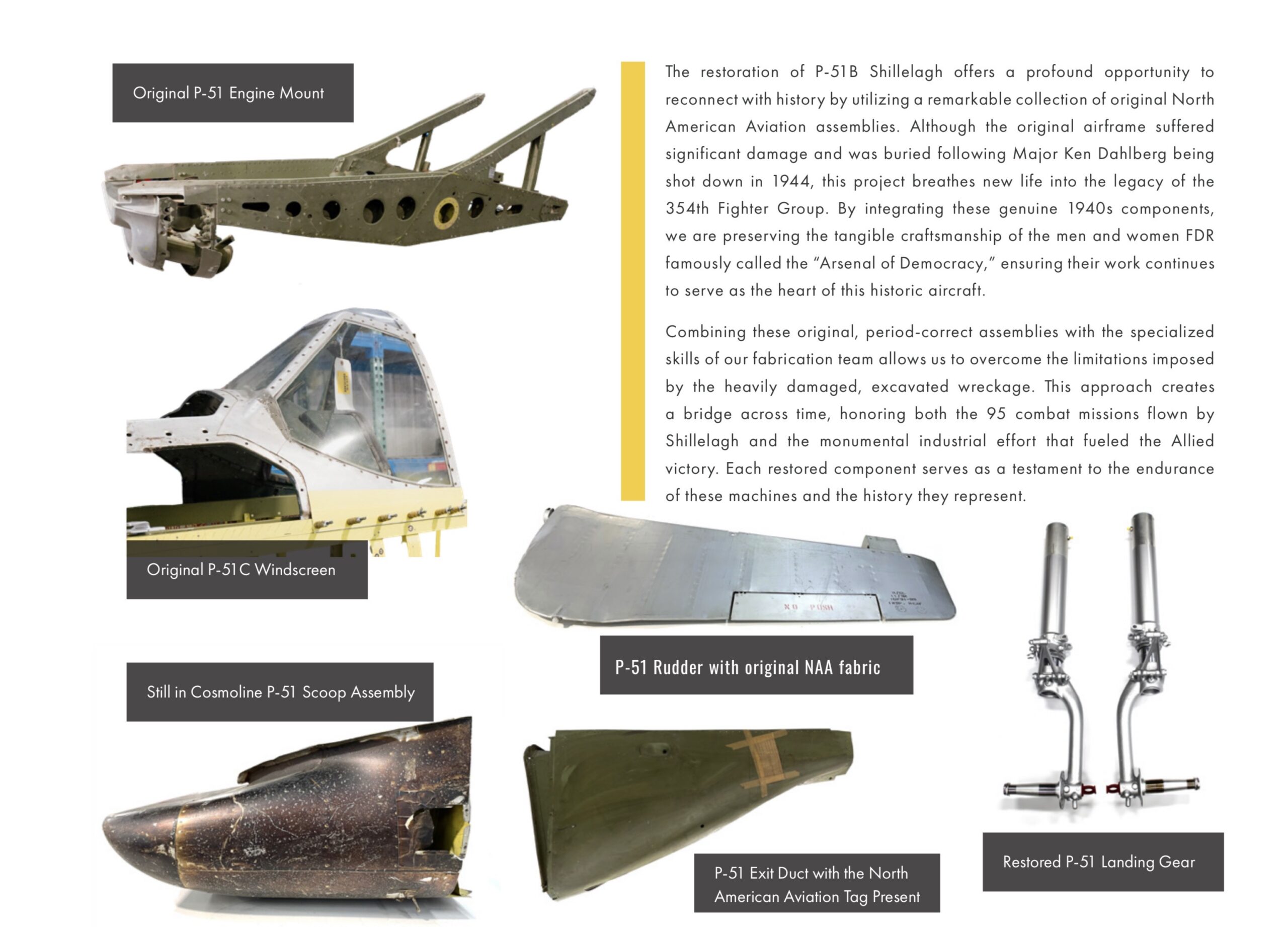
Shillelaugh is remarkable for how much of her is genuinely of the period. The restoration leans heavily on New Old Stock (NOS) parts — components manufactured by North American in the 1940s, never installed, including items like the engine mount, flaps, horizontal, vertical, windscreen, rudder, landing gear, and cowlings. While these weren’t on the original 42-106602 airframe, they are authentic, wartime North American Aviation parts.
The finish methodology follows the factory floor, not the modern paint booth:
These touches are a tribute. Every stamp, every brushed stripe, every dunked bracket is a salute to the men and women on the home front — the workers President Roosevelt called the “arsenal of democracy.” When a restorer reproduces a factory inspection stamp, he is shaking hands across eighty years with the inspector who first pressed it. (AirCorps restorers have, on other projects, even discovered the original signatures of the factory workers who built the plane — a reminder of the human hands behind every rivet)
The Fine Balance: Where Safety Wins
A war-weary appearance is the goal for the finish. It is never the goal for the airplane. Shillelaugh is built to fly, and to fly safely, which means the restoration walks a careful line between authenticity and airworthiness.
Where modern safety demands it, modern systems go in discreetly, beneath a 1944 skin. Some details are honored in appearance only: Shillelaugh will carry original radios, but they are there for the look, not for function. As AirCorps historian Chuck Cravens puts it plainly, “Safety overrides originality”.
That is the balance: she looks like 1944, and she flies like she was finished yesterday.
The Fun of an Airplane That Gets People Talking
There is one more reason to build an airplane this way, and we won’t pretend otherwise: it is enormously fun, and it gets people talking.
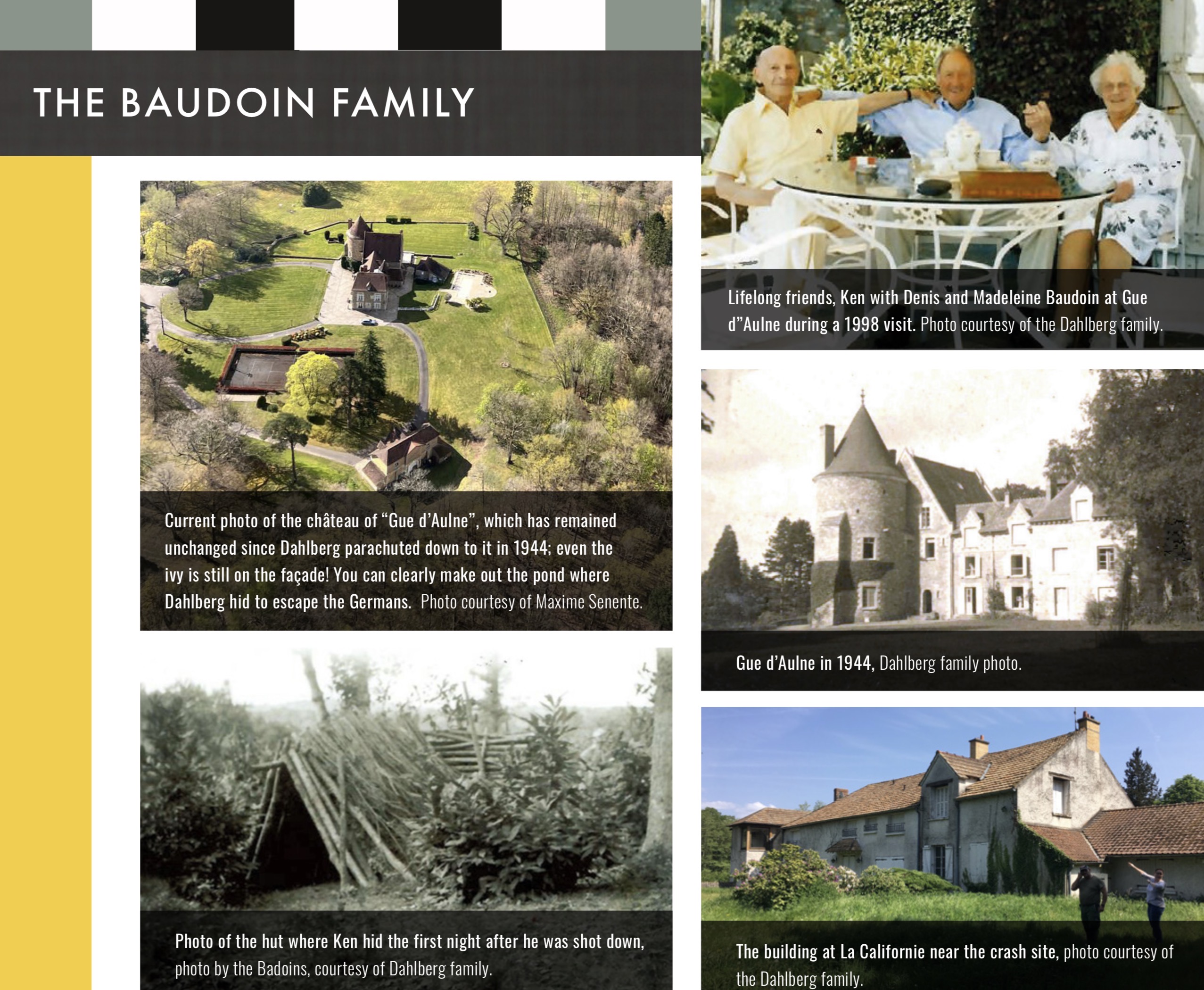
Beyond the military legacy of the P-51B Mustang, the bond forged between American ace Kenneth Dahlberg and the Baudoin family stands as a profoundly moving story of human courage and enduring gratitude. When Dahlberg was shot down over occupied France in 1944, the Baudoins harbored him at catastrophic personal risk, risking swift execution by German occupiers to protect a stranger in need. That heroic act did not end when the war was won; it laid the foundation for a deep, life-long friendship that spanned decades and crossed the Atlantic. Dahlberg never forgot the family that saved his life, maintaining close ties with the Baudoins for over half a century, making regular visits back to France, and treating them as an extended branch of his own family. Their lasting relationship transforms a tense wartime evade-and-escape story into a timeless tribute to moral courage, mutual sacrifice, and a kinship that outlasted the war by decades.
A flawless, freshly polished Mustang is beautiful, but it can be silent. A war-weary Mustang asks questions. Why is the paint streaked there? Are those brush marks in the invasion stripes? Is that stamp real? Visitors lean in. They reach for a story. And that conversation — sparked by an honest finish — is exactly how history gets passed along to the next person, and the next generation.
That is the whole point. These airplanes are a way to keep talking about the people behind them.
We don’t have many WWII veterans left with us. What an honor it would have been to have Ken Dahlberg stand beside this airplane and see her again.
As a warbird community, we have become the gatekeepers of the stories handed to us by Ken Dahlberg and the countless other veterans who served and sacrificed. Restorations like Shillelaugh are how we keep faith with them — honoring not only the pilots who flew, but the ground crews who maintained “their boys,” and the men and women in the countless factories who built these machines.
Shillelaugh honors the heroes who are no longer here to regale us with their stories, to hold court and captivate a crowd in places like Warbirds in Review. We tell the stories now. We owe them an airplane that tells the truth.
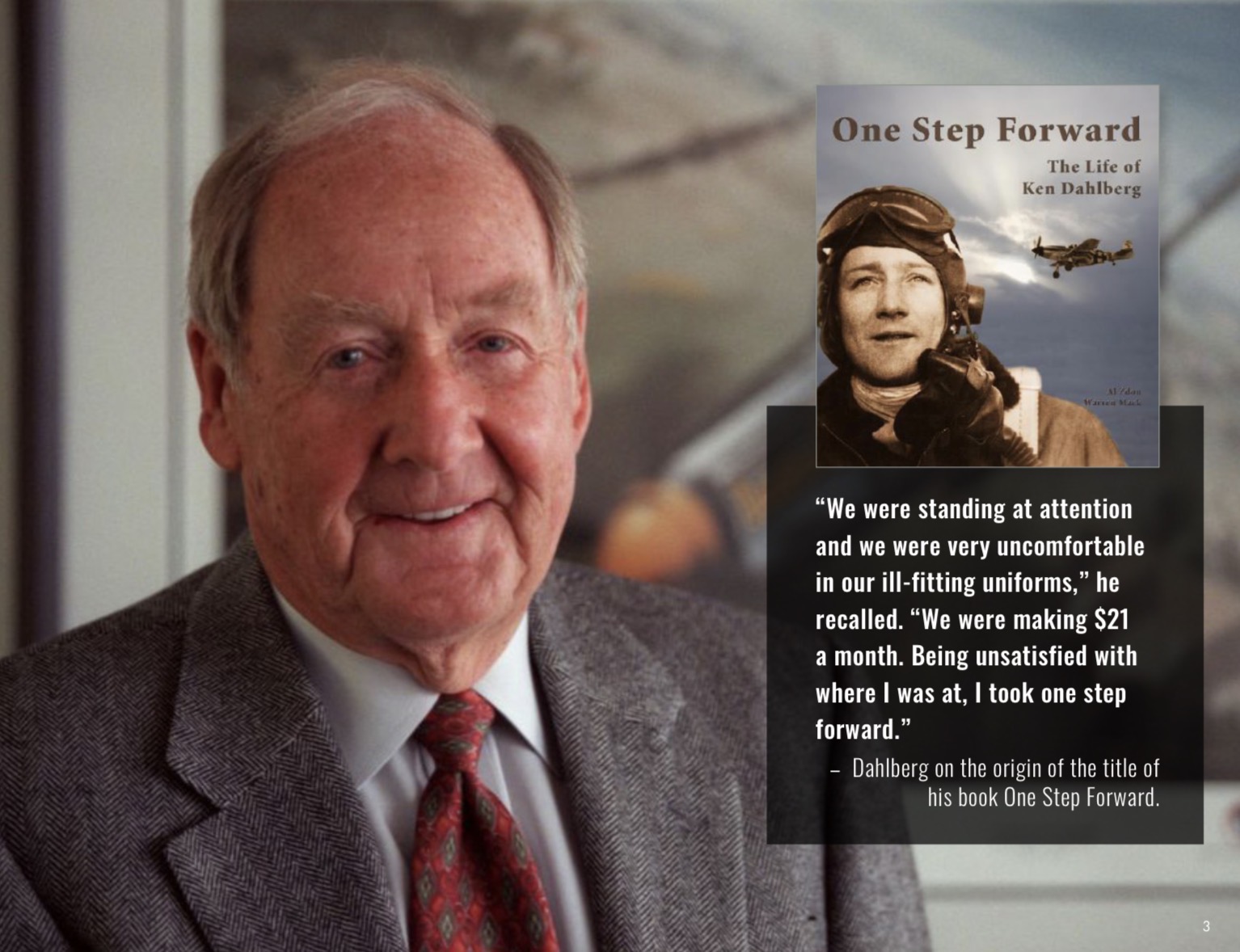
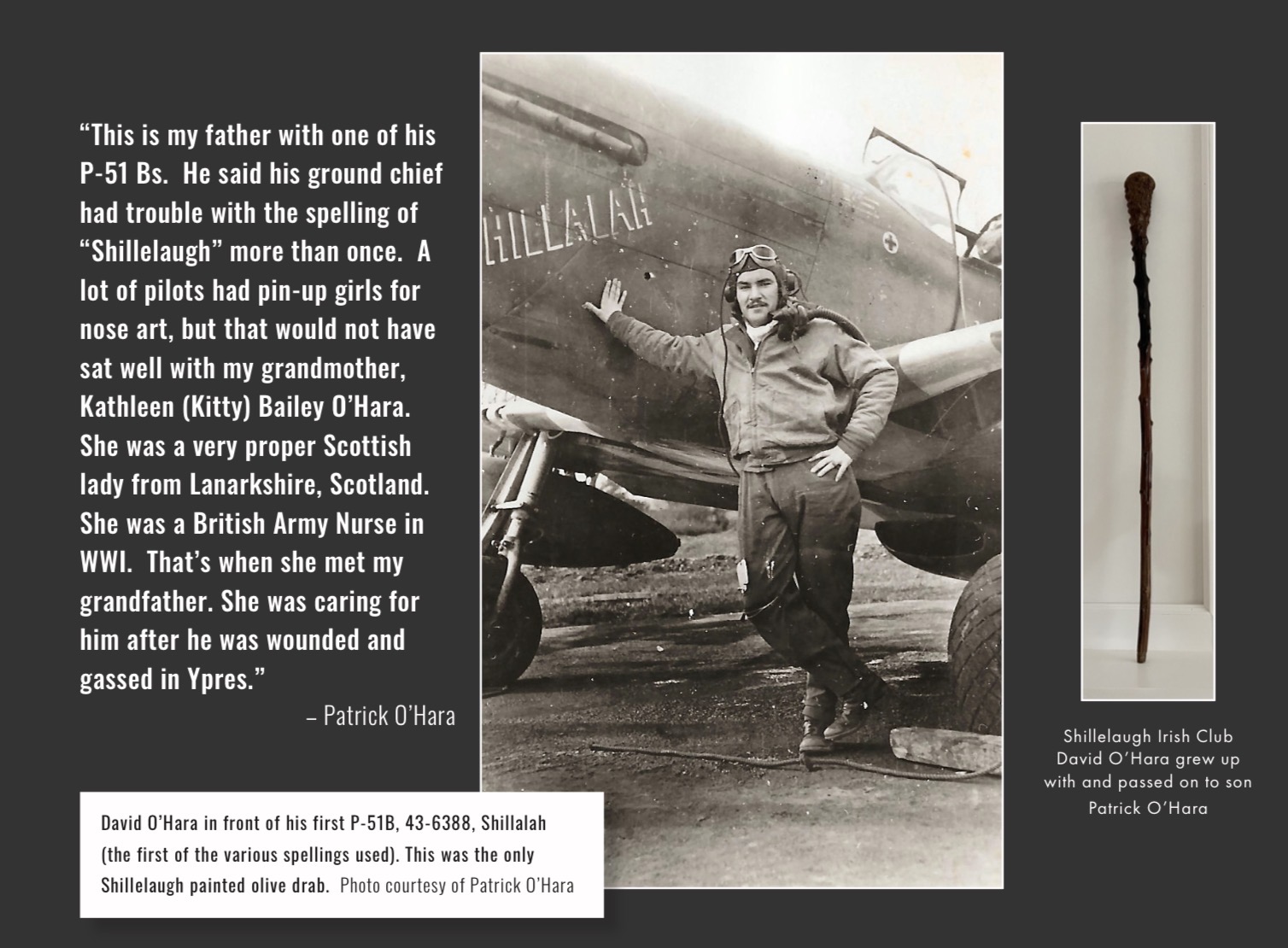
Shillelaugh was restored by AirCorps Aviation of Bemidji, Minnesota, for The Eames Collection at Dakota Territory Air Museum in Minot, North Dakota. The aircraft was recovered in July 2020 with the support of the Baudoin family as well as the Ken and Betty Dahlberg Family Foundation.
Join us at Warbirds in Review during EAA AirVenture Oshkosh 2026:
North American P-51B Mustang Shillelaugh III — Honoring Lt. Kenneth H. Dahlberg Wednesday, July 22, 2026 · 1:00 p.m. Presenters: Warren Pietsch, Bruce Eames
Follow the full restoration through the AirCorps Aviation project updates and the Dakota Territory Air Museum.