- Tour Our Sites:
- Restoration
- Depot
- Library
- Fabrication
- Art

Update by Chuck Cravens
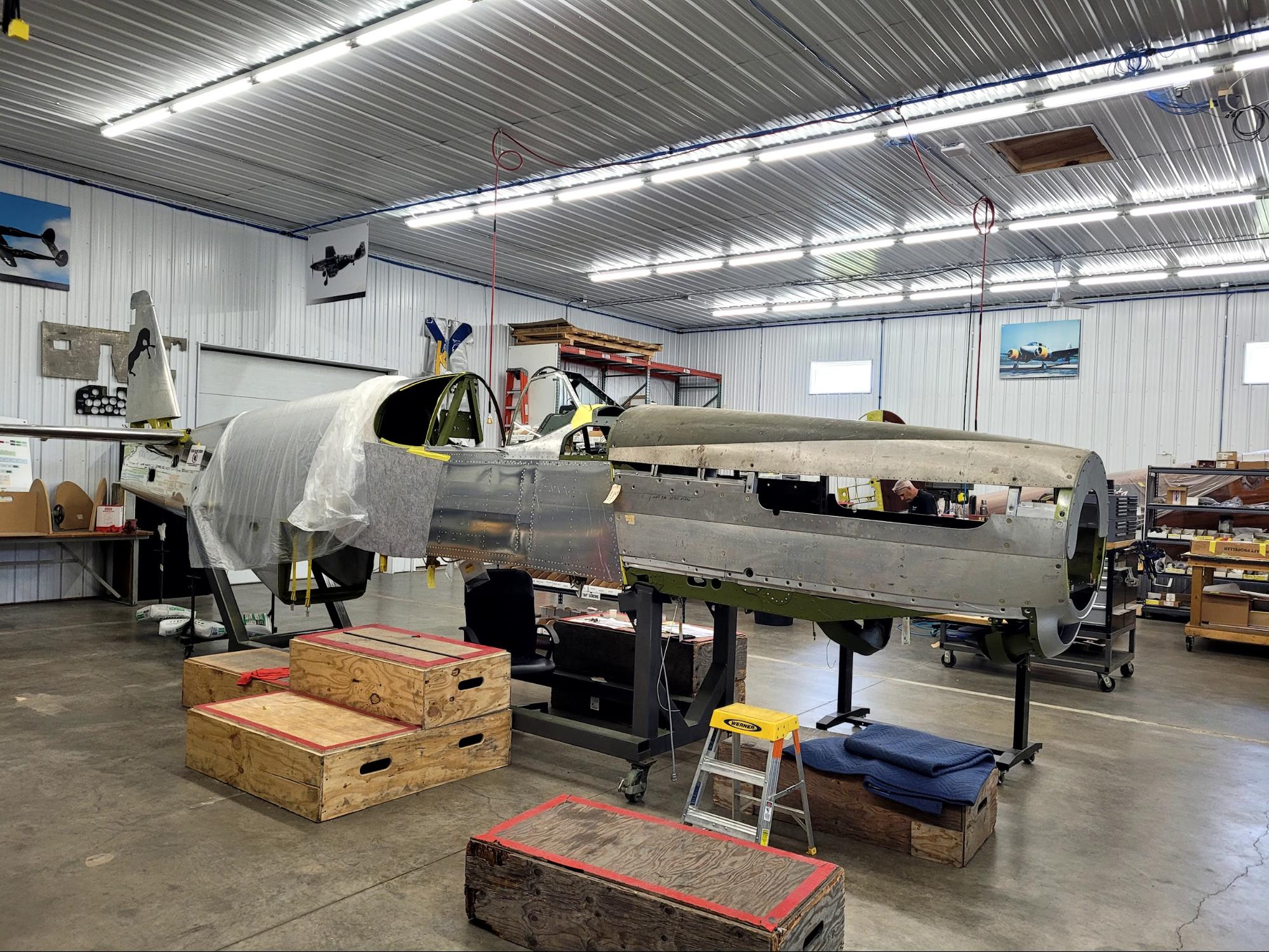
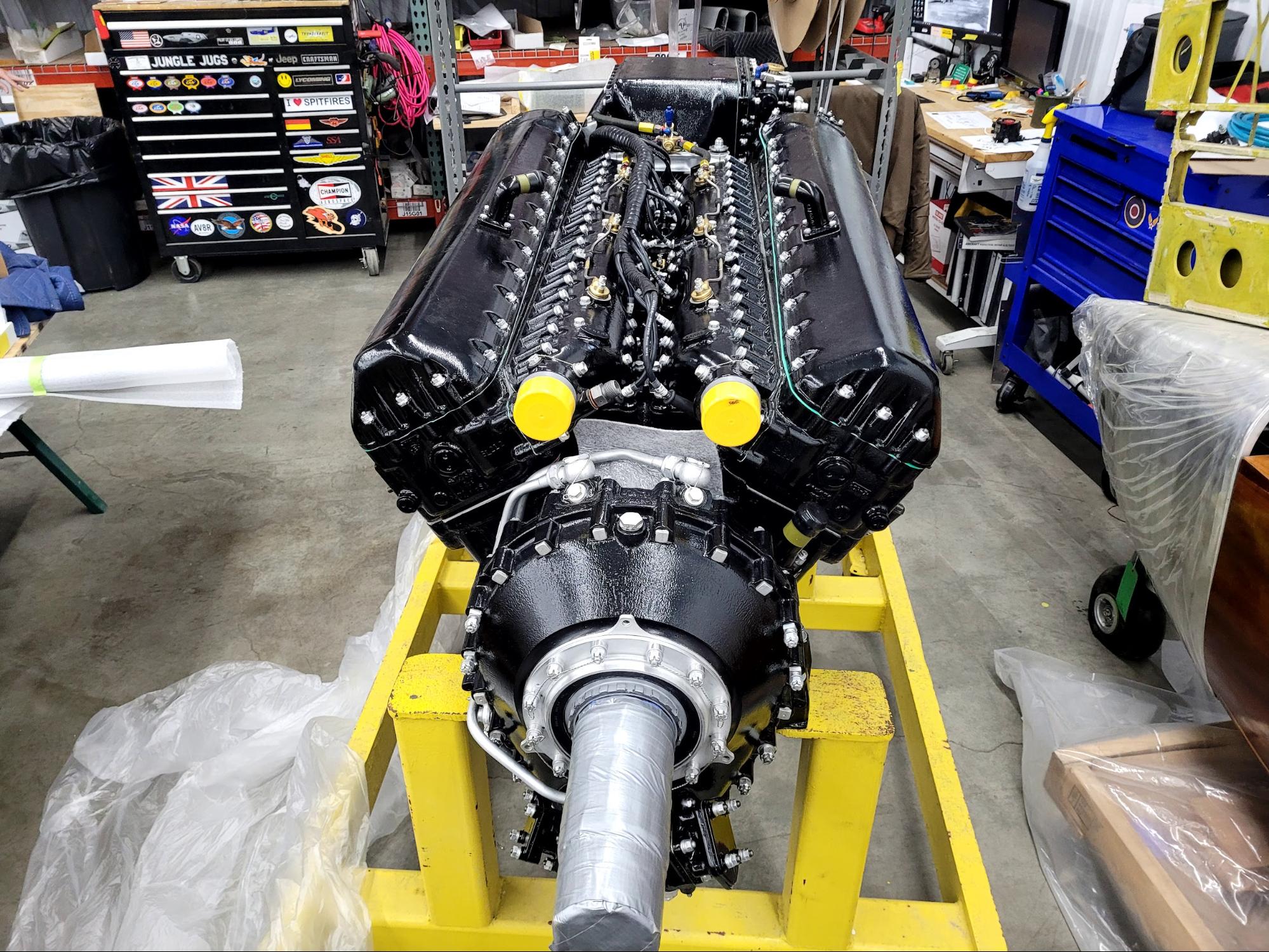
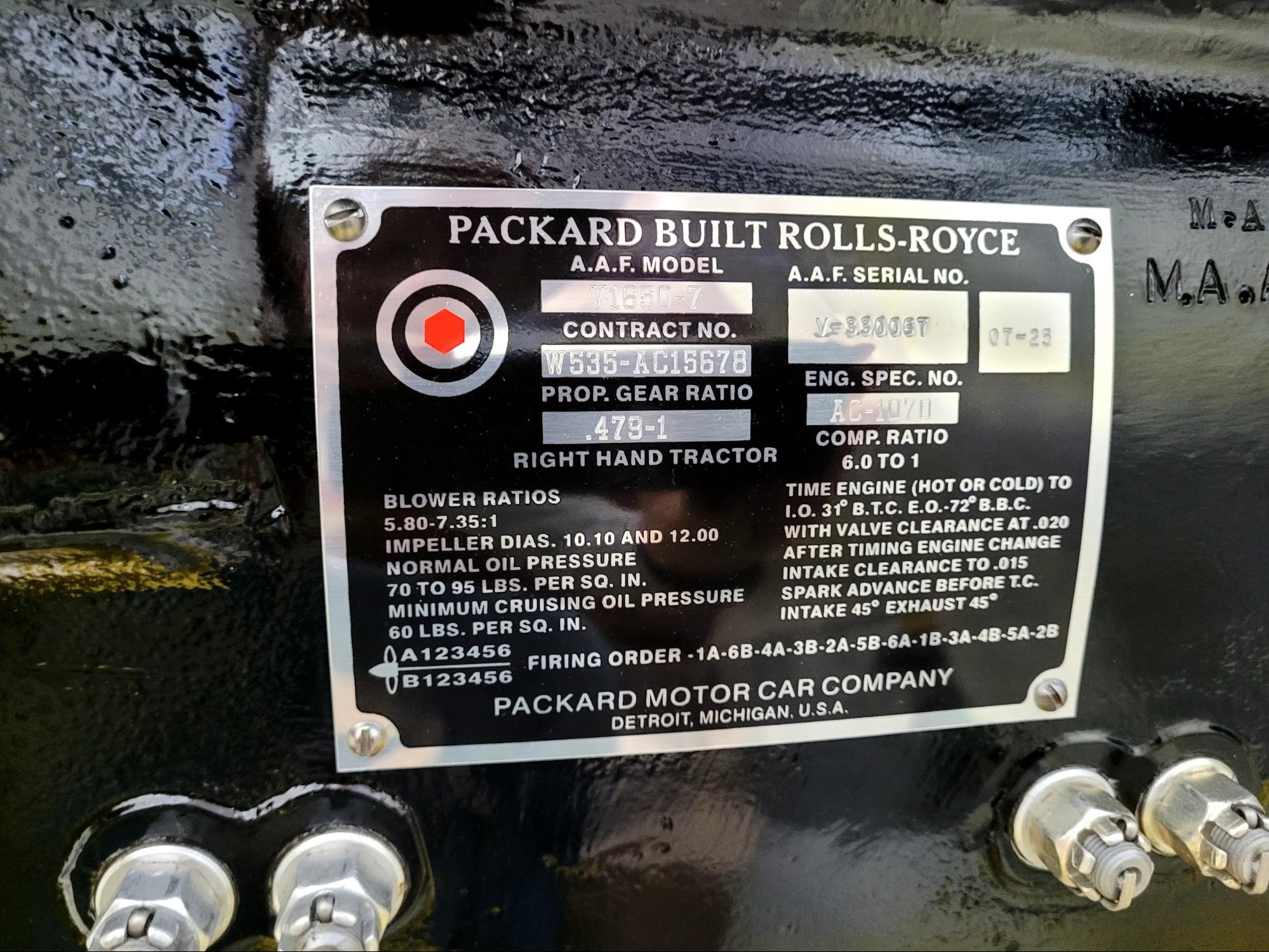
With many of the internal fuselage surface control systems in place, emphasis turned to the firewall forward section of the fuselage. The wing construction also continued, with more of the skin sections riveted in place permanently. The Merlin engine from Vintage V-12s was uncrated.
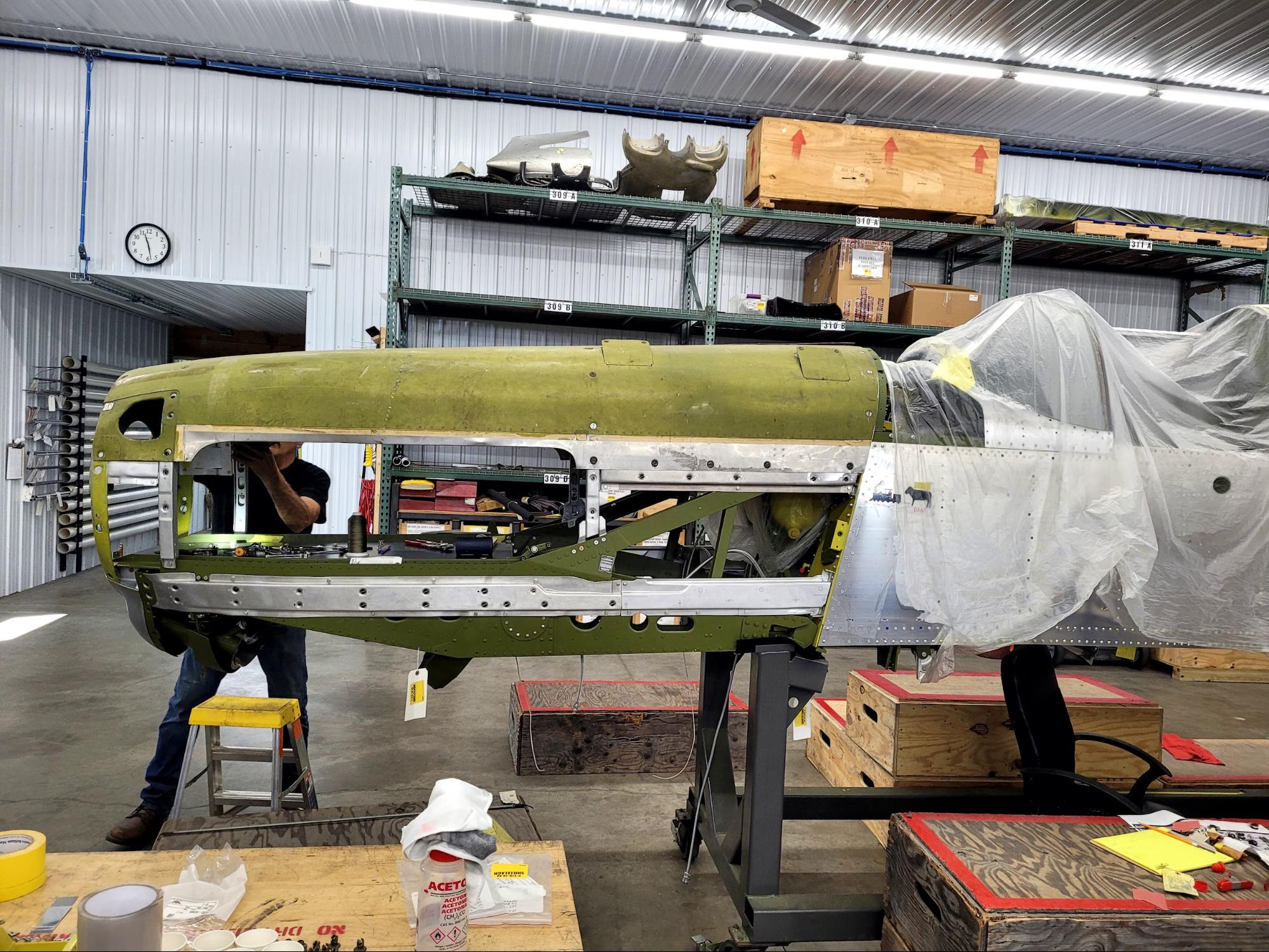
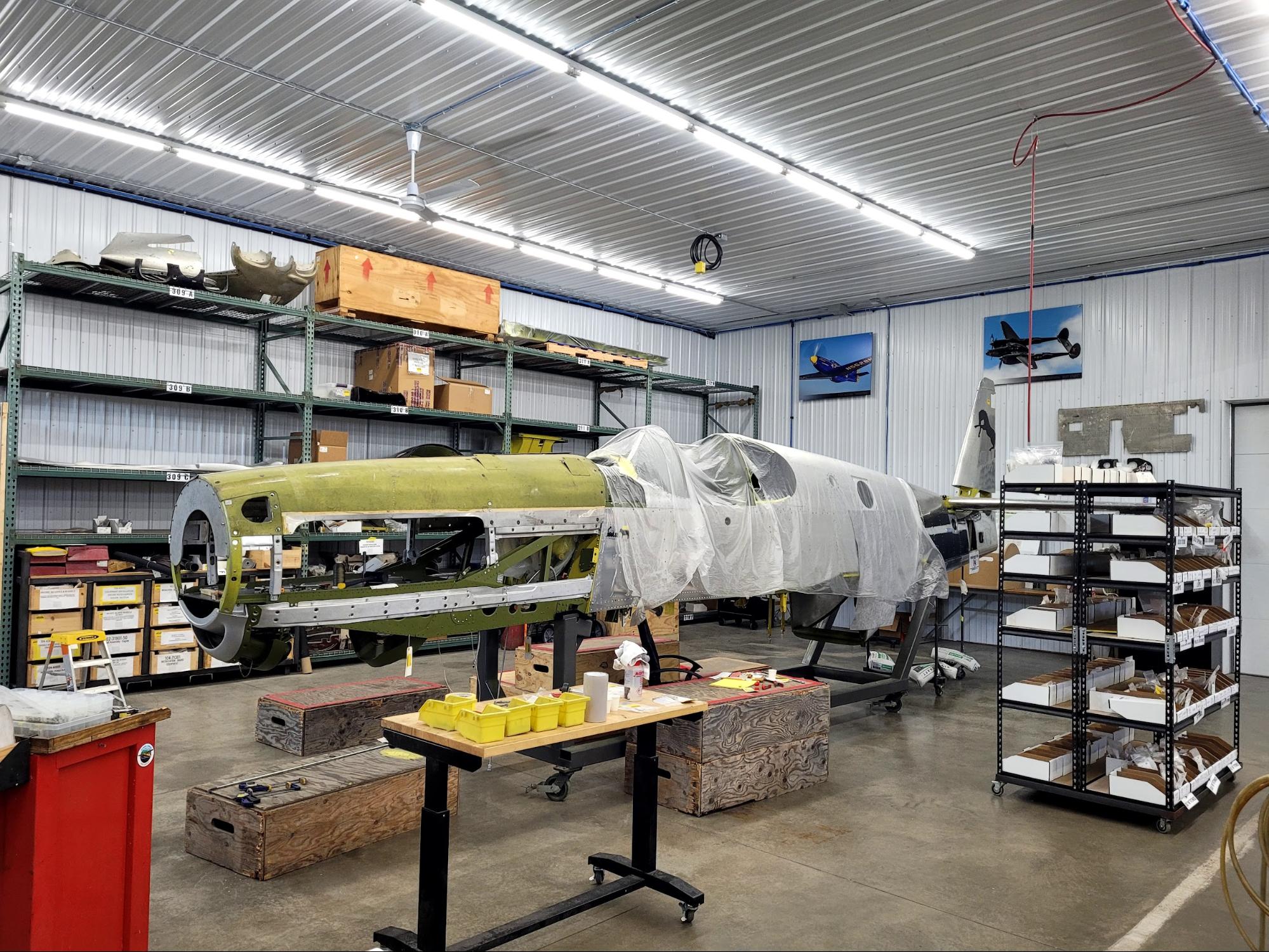
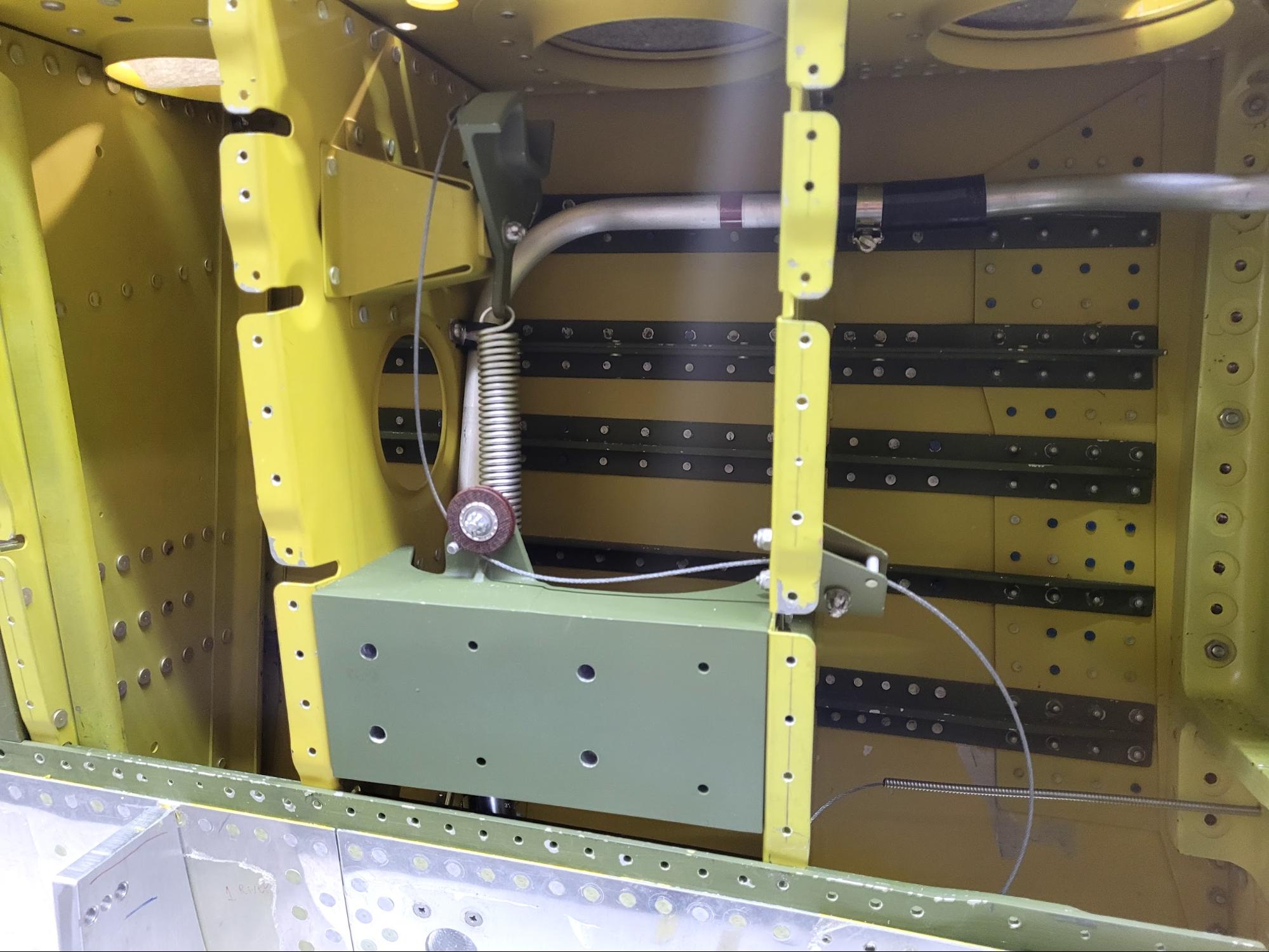
The installation of the forward frames that support the cowl, nose ring, and “smile” continued the progress on the firewall forward section of Shillelagh III. Once the framework was in place, fitting of the cowl skins began.

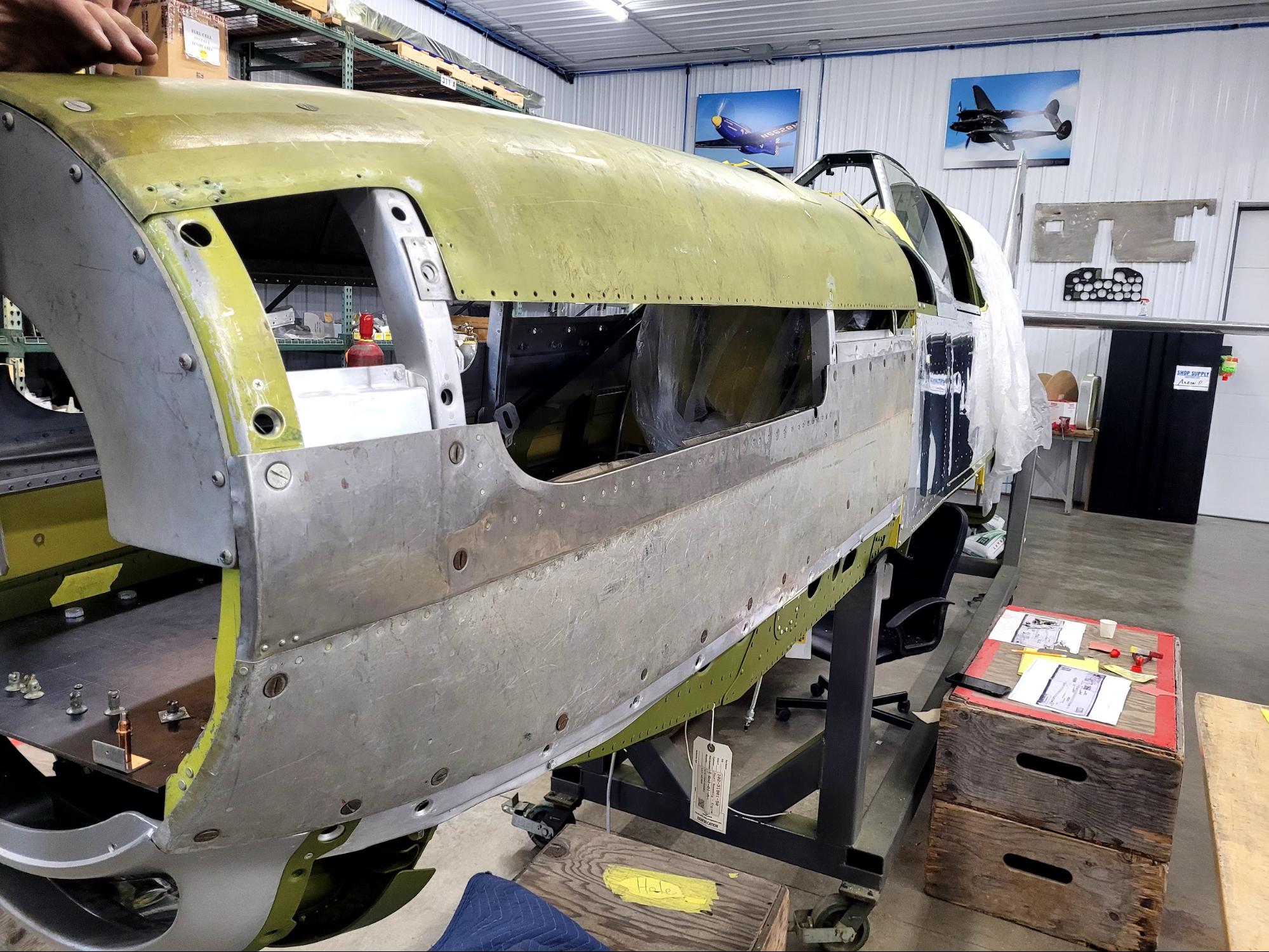
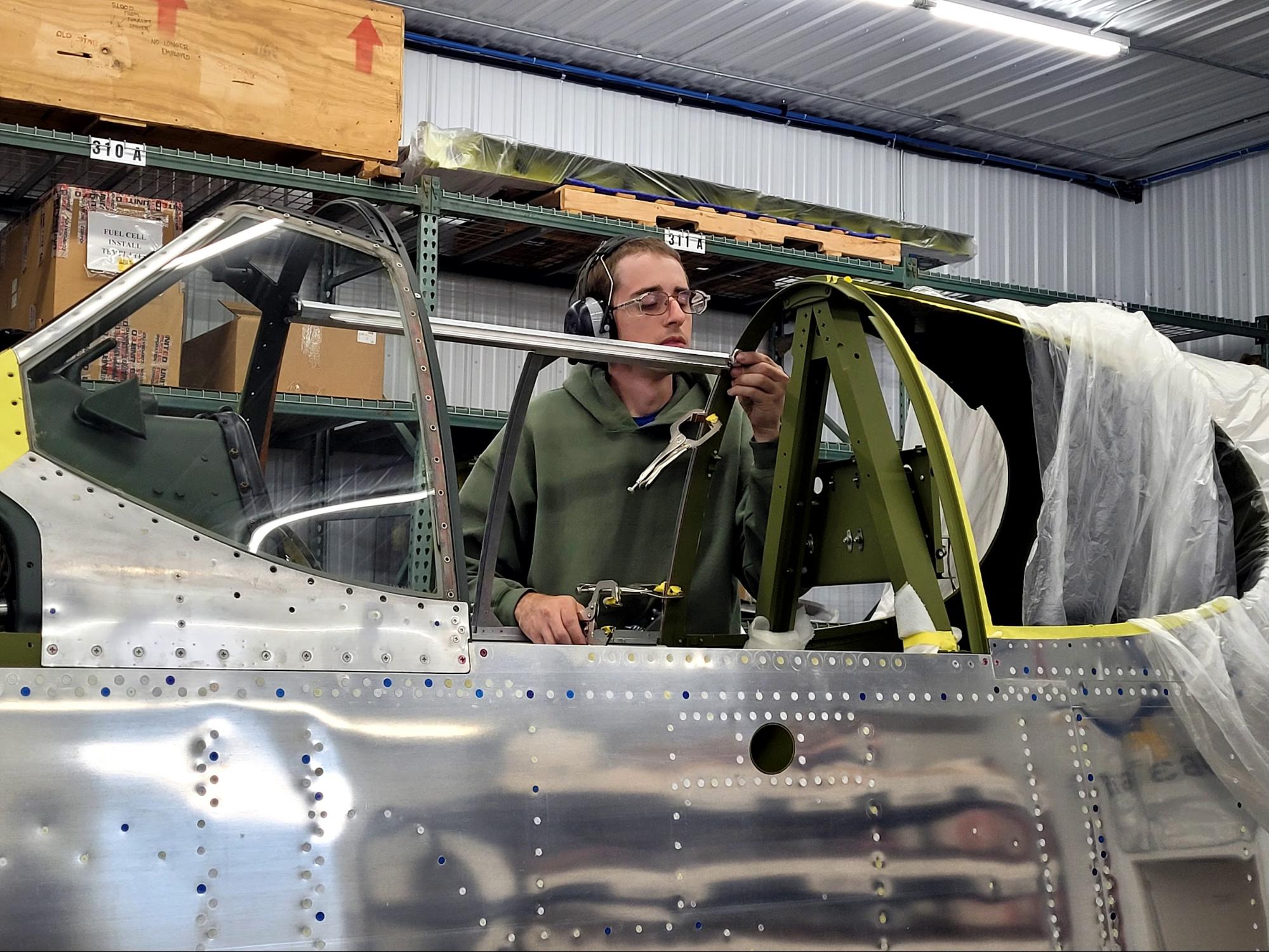
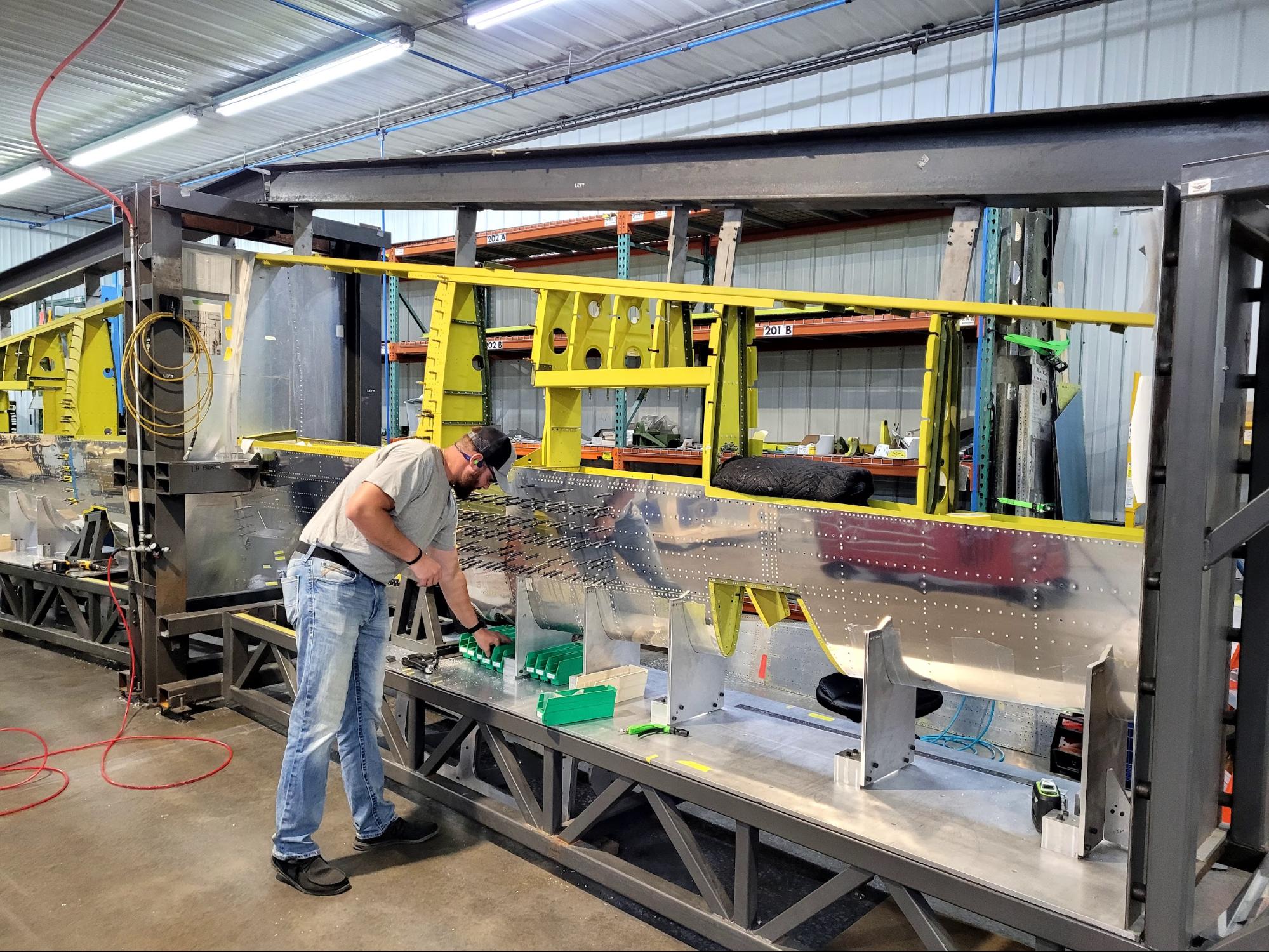
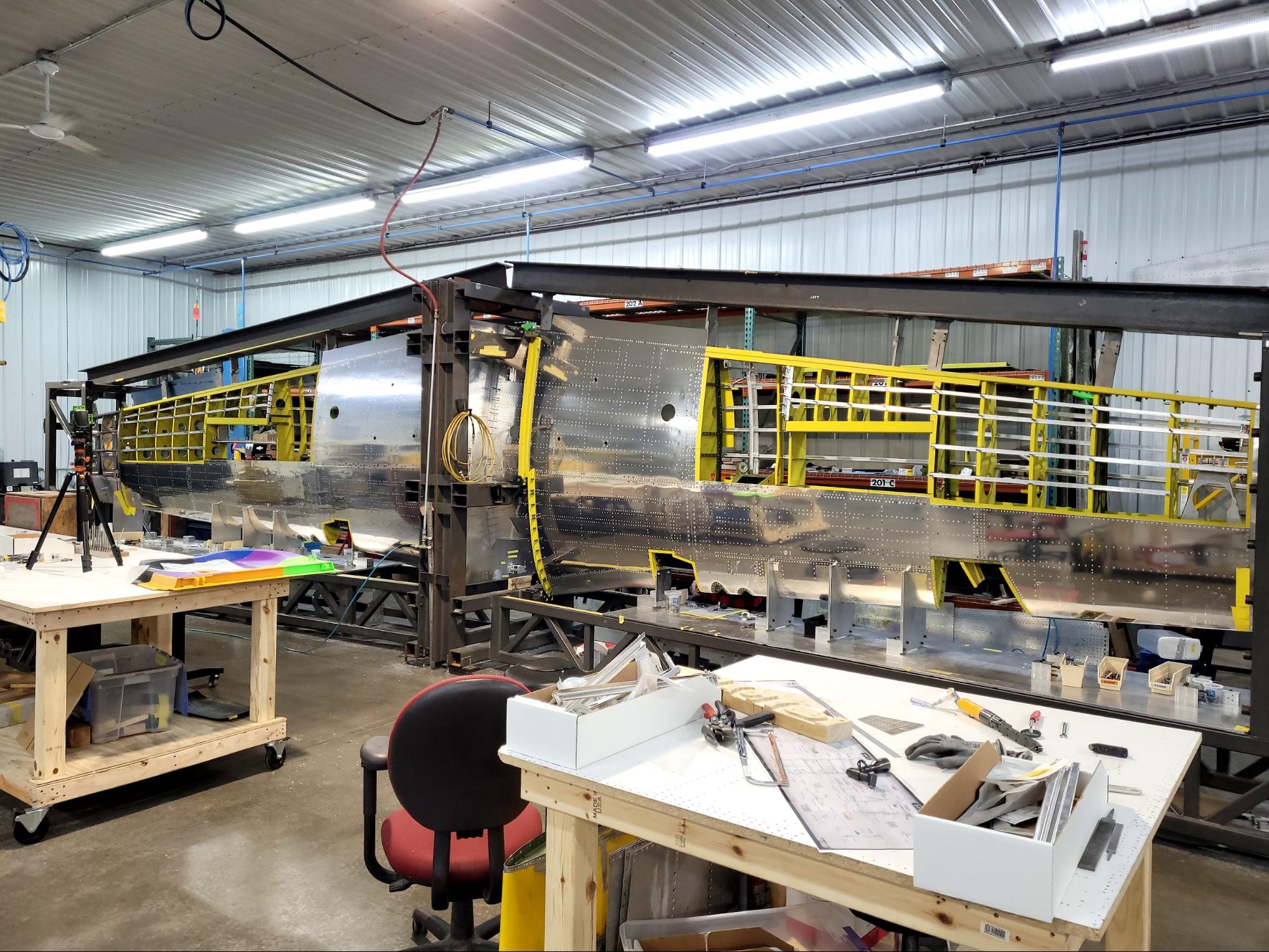
Thousands of rivets secure the skin sections on a P-51 wing. The skins forward of the main spar were permanently riveted in place. The tank cover doors, which are installed under the fuel tanks and provide access, were readied.


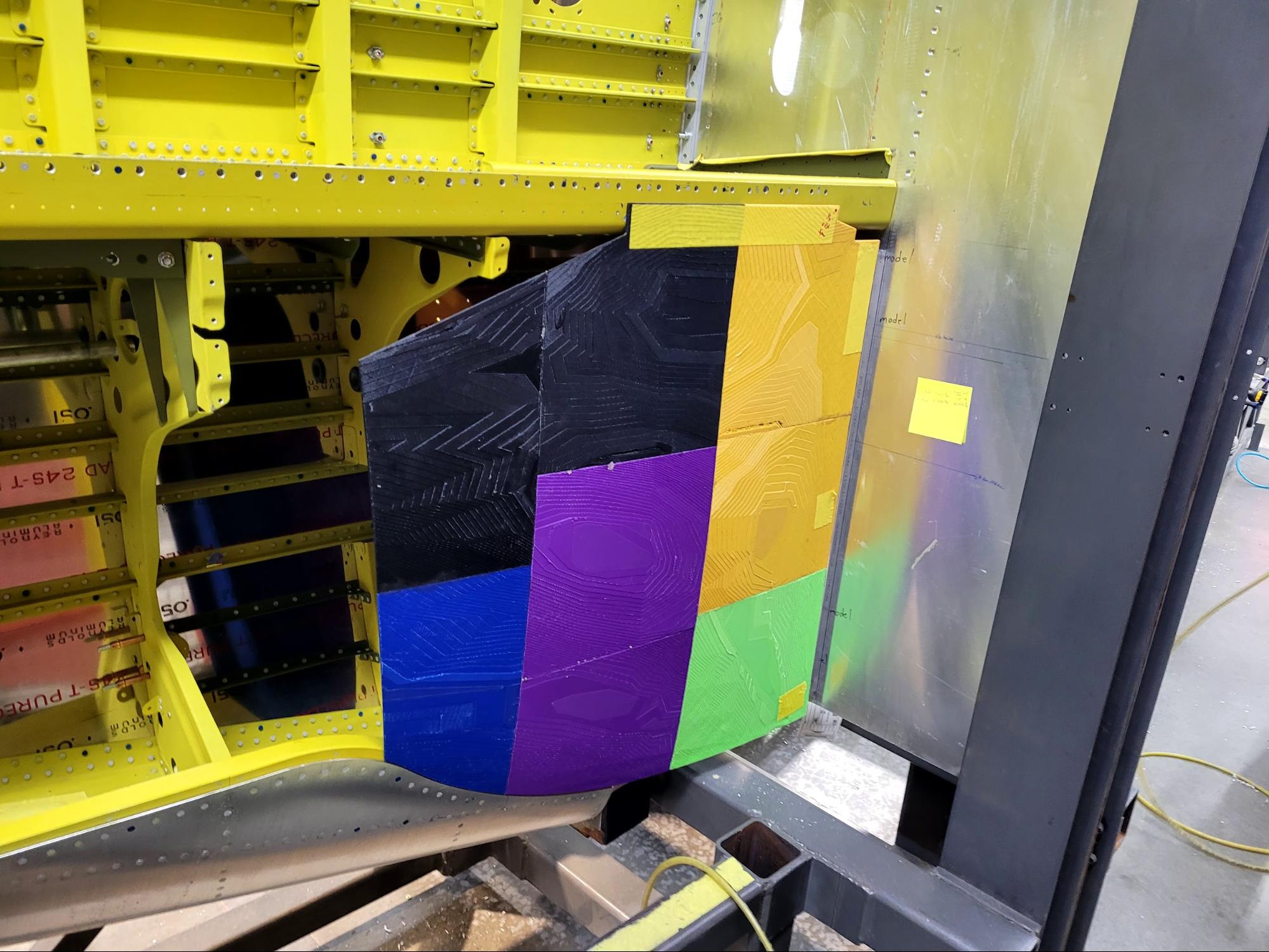
The growth in contract manufacturing AirCorps performed for the broader aerospace industry allowed the addition of a large scale 3D printer. Those capabilities allow rapid prototyping, verification, and fit checking of complex shapes like the clamshell doors (P/N 73-33301) prior to fabrication. In the photo to the right, the patchwork of printed sections when attached create a full scale landing gear door from our
CAD model.
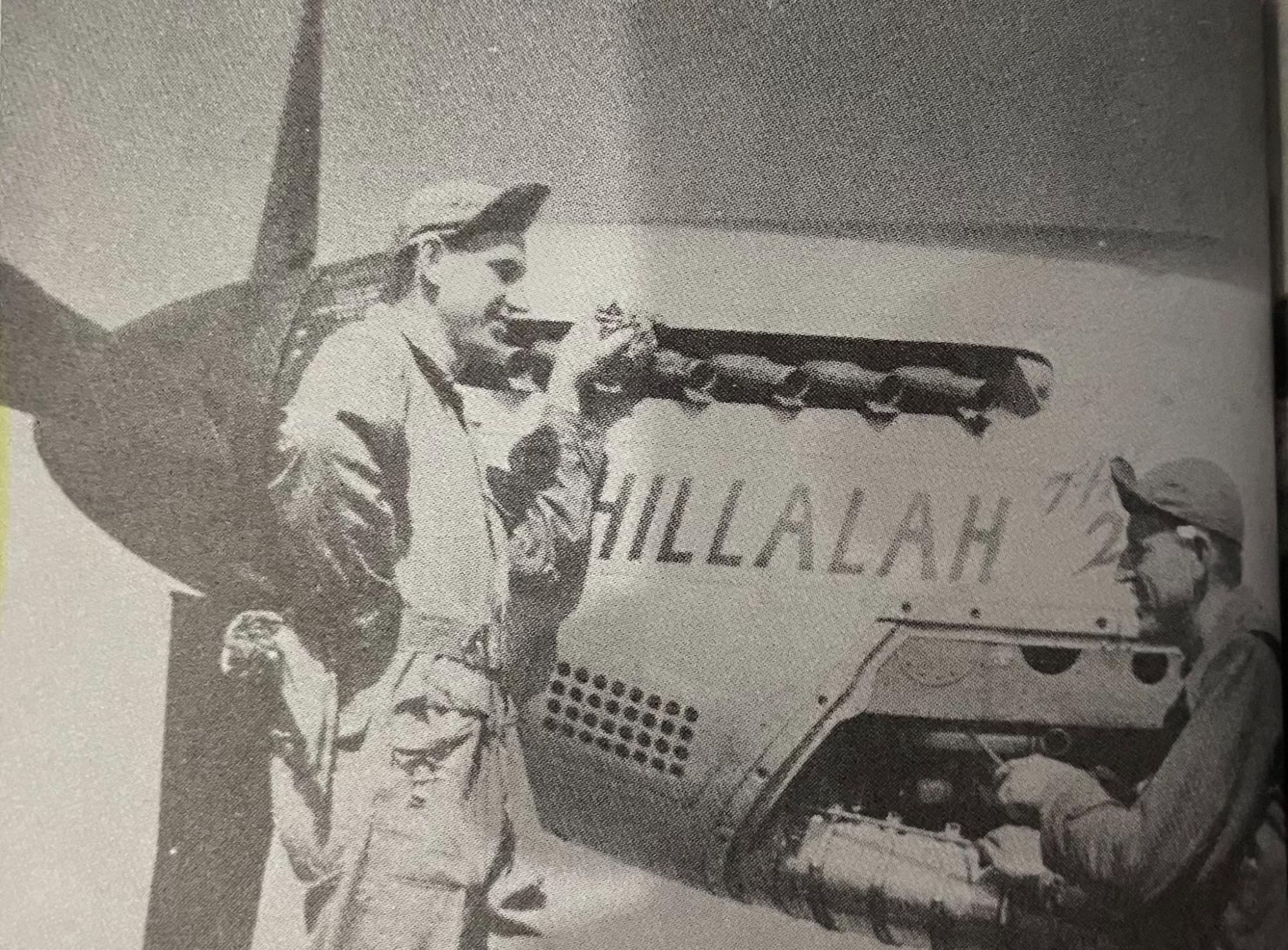
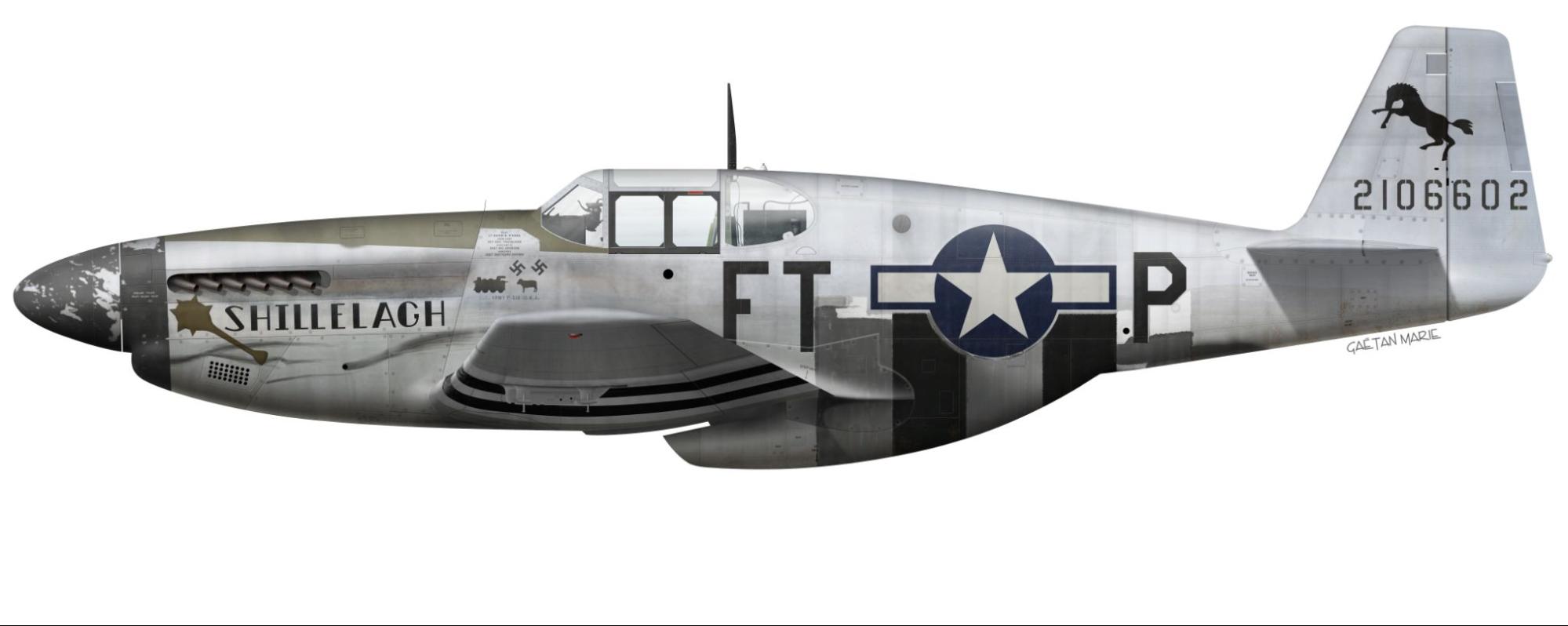
David O’Hara had four different Mustangs assigned to him during WWII, all named Shillelagh, and all spelled differently. The four P-51s all carried the squadron and plane code FT-P; the spellings were variations of the word “shillelagh,”- a thick stick of blackthorn or oak used as a weapon in Ireland. The spellings on O’Hara’s aircraft were: Shillalah, Shillelaugh, Shillelagh, and The Shillelagh, depending on who painted the name. All four P-51s were lost or damaged while being flown by someone other than David O’Hara.
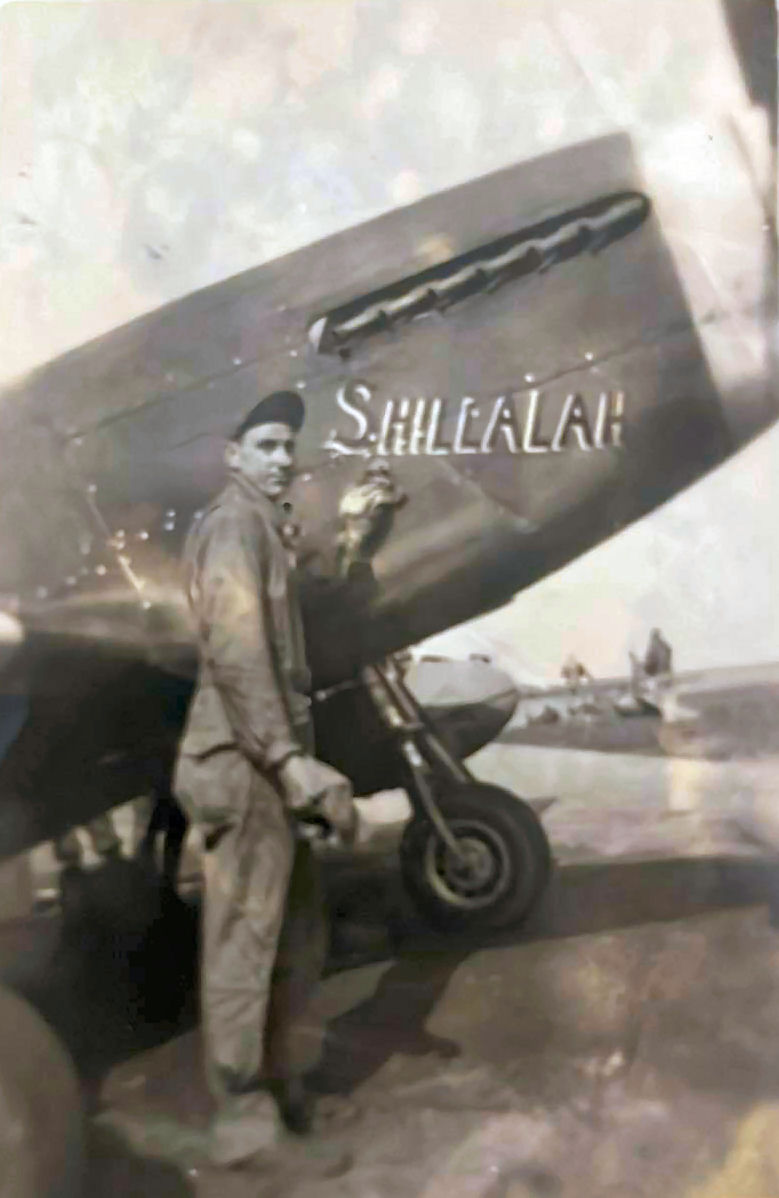
David O’Hara had four different Mustangs assigned to him during WWII, all named Shillelagh, and all spelled differently. The four P-51s all carried the squadron and plane code FT-P; the spellings were variations of the word “shillelagh,”- a thick stick of blackthorn or oak used as a weapon in Ireland. The spellings on O’Hara’s aircraft were: Shillalah, Shillelaugh, Shillelagh, and The Shillelagh, depending on who painted the name. All four P-51s were lost or damaged while being flown by someone other than David O’Hara.

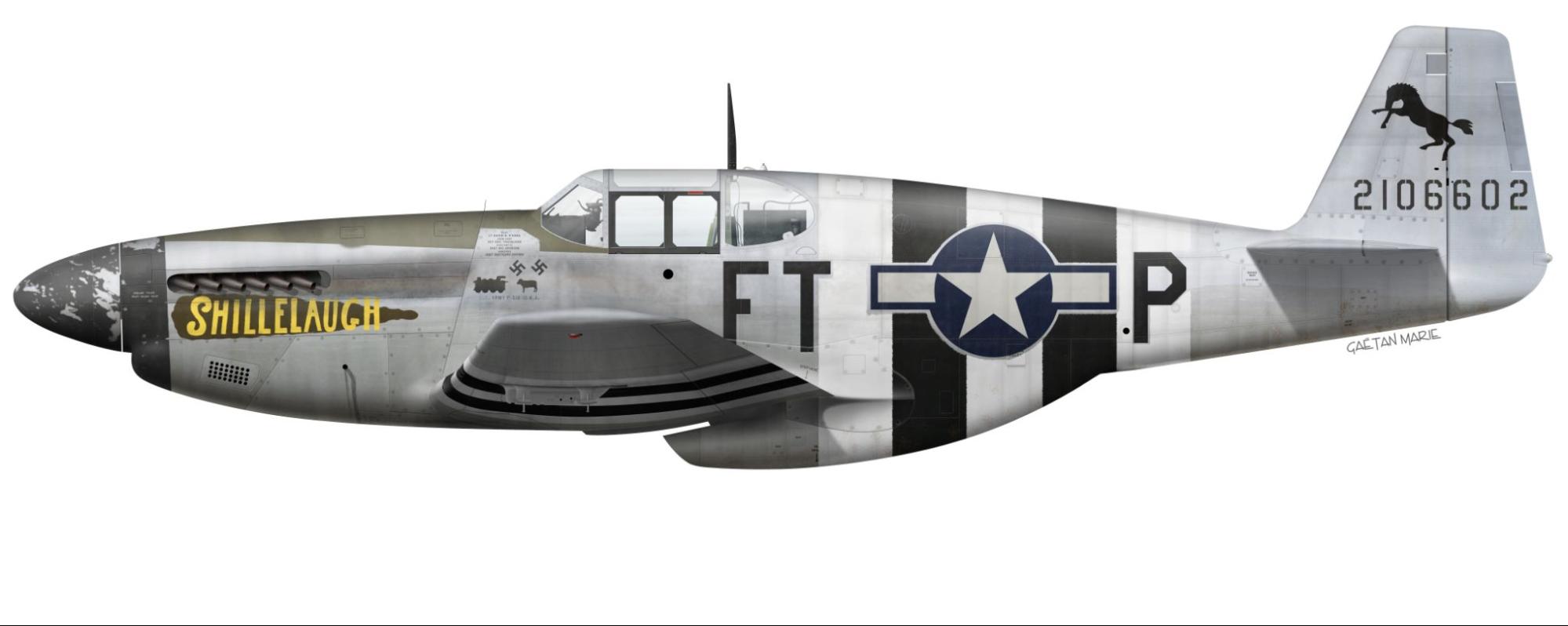
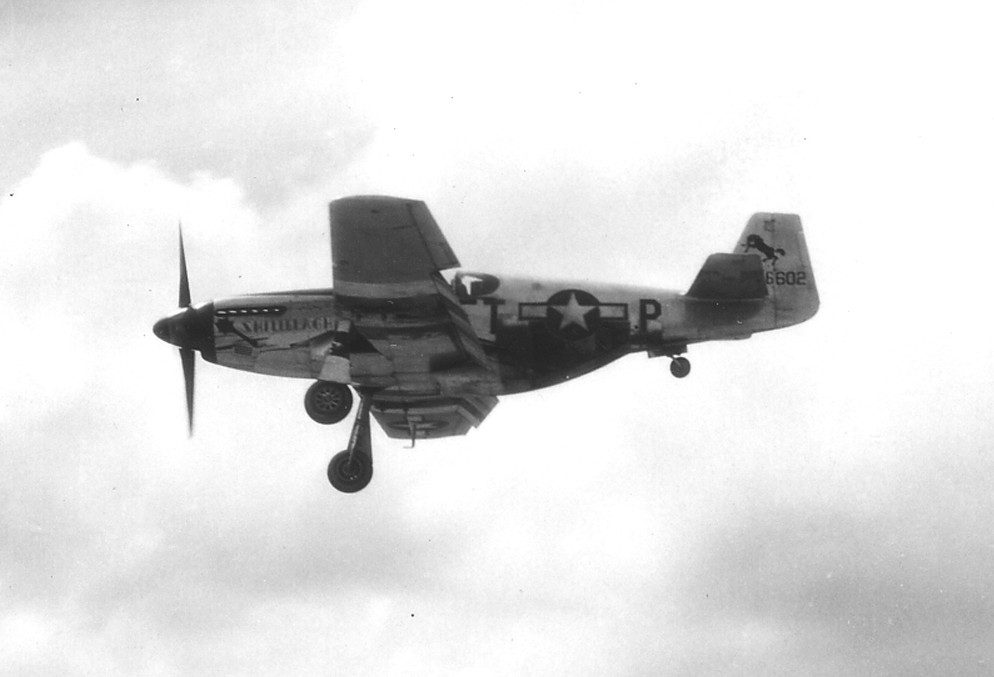
Served in 1944 with the 9th AF 354th FG 353rd FS, “Shillelagh” named by Lt. Col. David O’Hara. On 42-106602, the name was first spelled “Shillelaugh” and was later repainted at the depot level as “Shillelagh”.




Being in the aircraft restoration business myself. I am so pleased that you are restoring one of the few early models of the 51. Thank you!
I am particularly interested in the progress of the AT-10. I know just how rare that airplane is. And the enormous amount of labor needed for that restoration.Thank you again!
Jerry Stadtmiller BIPE, Inc
AT-10; Hi Jerry I live in Seattle retired from aviation/aerospace. Also former vintage aircraft owner. We had a combat document NEIAF Ryan STM-2.
I served with one of the WASP who flew the AT-10 AirCorp is restoring. She was a civilian AirForce employee at the time. Mary Martin Sabota wonderful lady
Hi Jerry,
Thanks for reaching out. I am pleased that you enjoy the updates. Check the website: https://www.aircorpsaviation.com/projects/ for more on the other two early P-51s we’ve restored ( Lope’s Hope 3 and Thunderbird) and also all the AT-10 updates. The At_10 is kind of on hold at the moment, but I just received a bunch of photos from the base it was assigned to.
WhT would I have to do to get a 12″X12″ piece of the original skin of this plane for display in my office? I have several from. Glacier Girl, the XP-82, Memphis Bell and others.
I don’t believe they brought back any irginal skin after digging up the wreck in France.
It is very nice to this great progress with all the little details – which really make the difference…
It is very nice to see this great progress with all the little details – which really make the difference…
Thank you Axel, glad you enjoyed the update!
Thank you for giving this great insight of the restoration. Love the great attention to detail and authenticity, but also the use of modern technology like 3D printing for prototyping.
The early P51‘s have always been one of my favourites. Can‘t wait to see that one finished.
Keep up the great work!
Greetings from Salzburg, Austria.
Patrick
The Flying Bulls
Thank you, Patrick,
The kind words mean a lot coming from you and the Flying Bulls!