- Tour Our Sites:
- Restoration
- Depot
- Library
- Fabrication
- Art

by Chuck Cravens
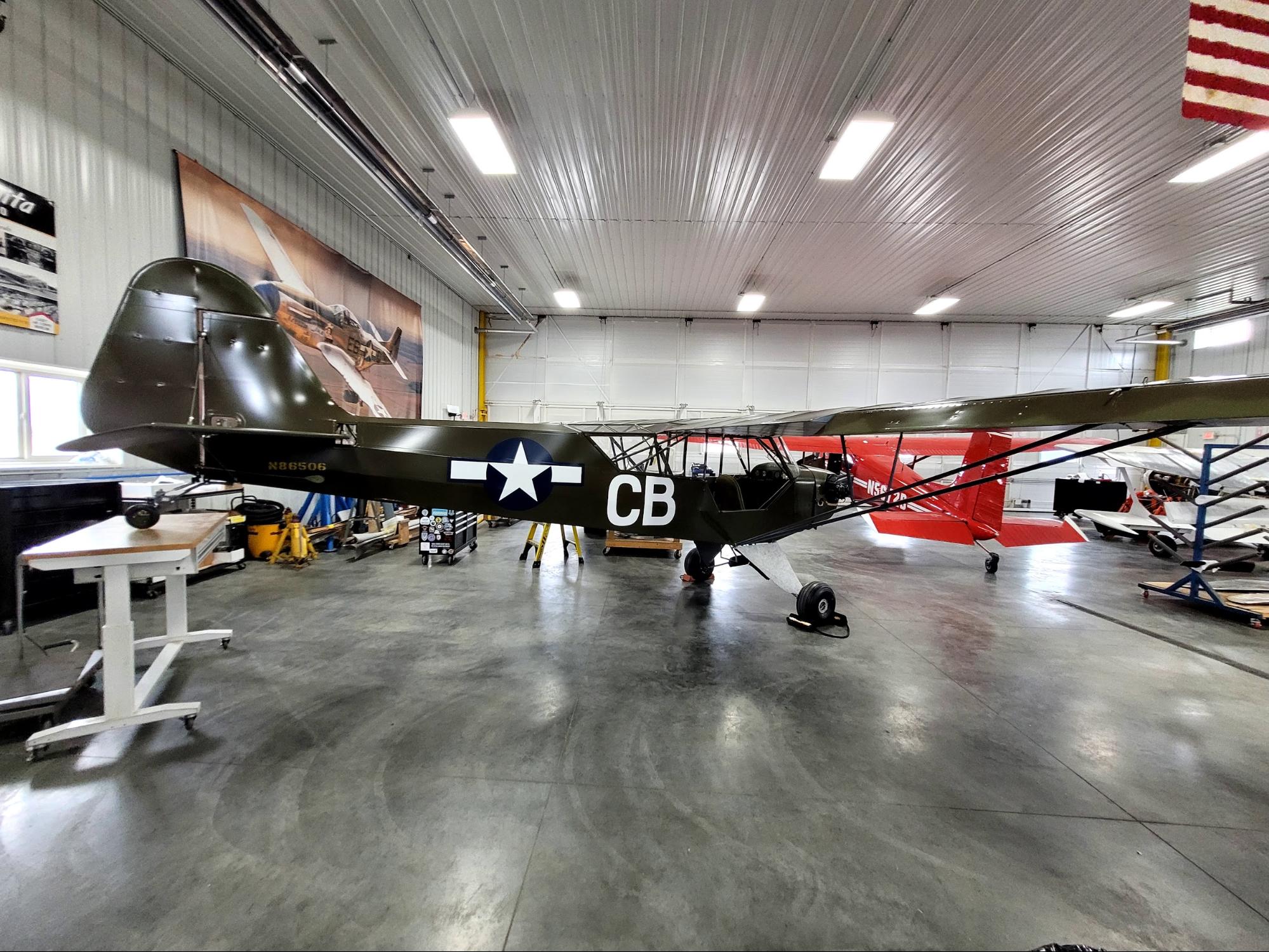
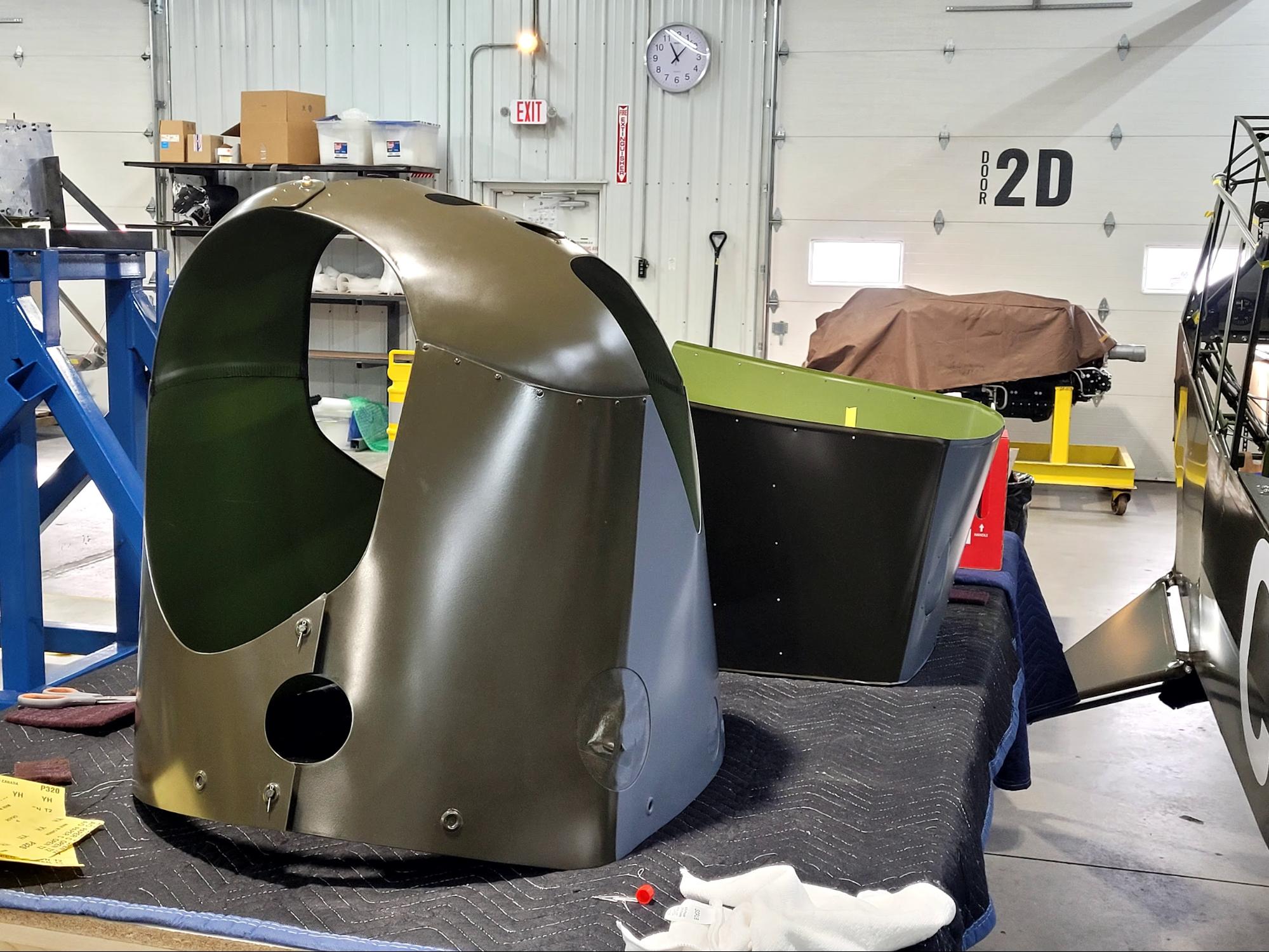
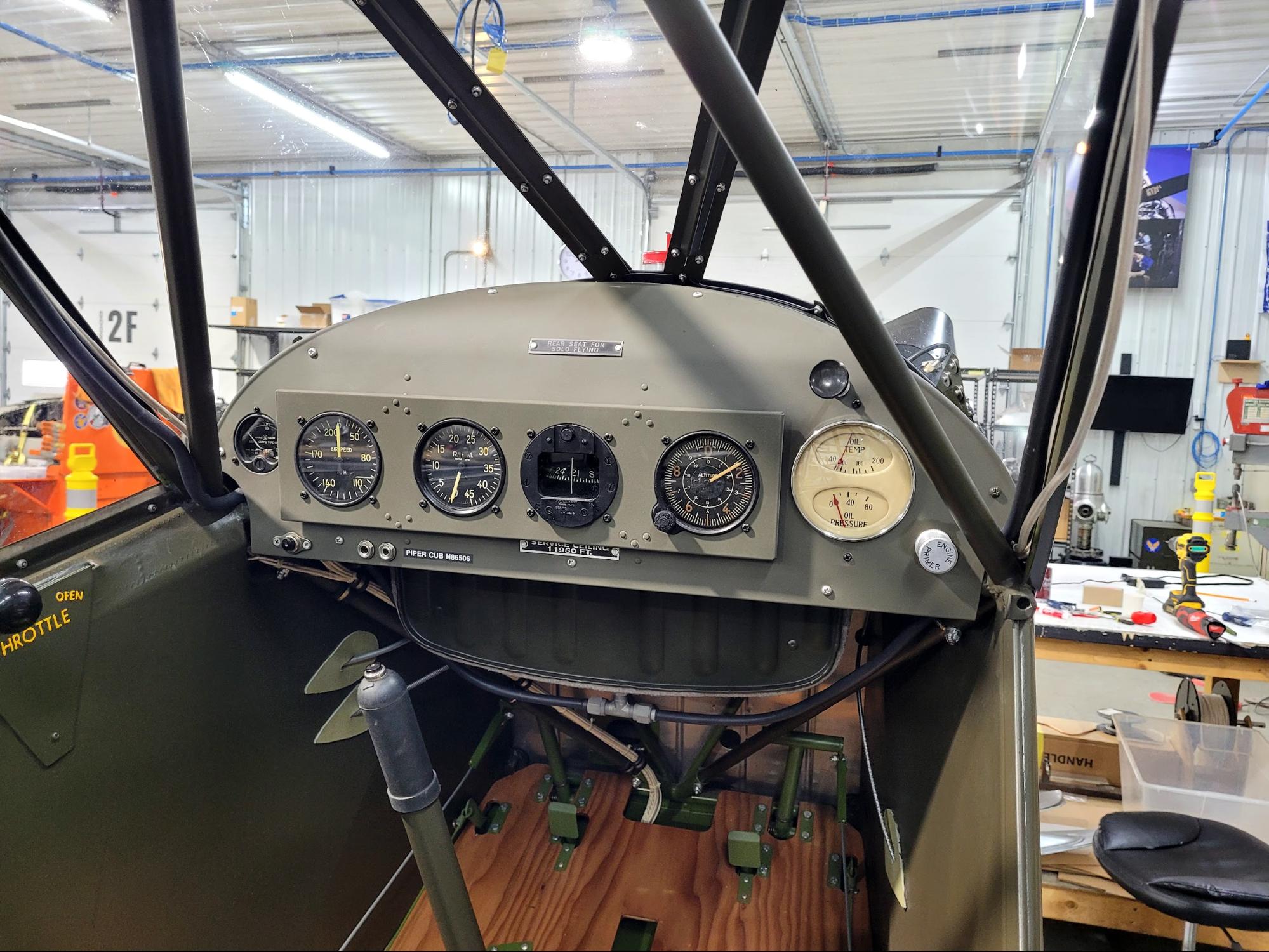
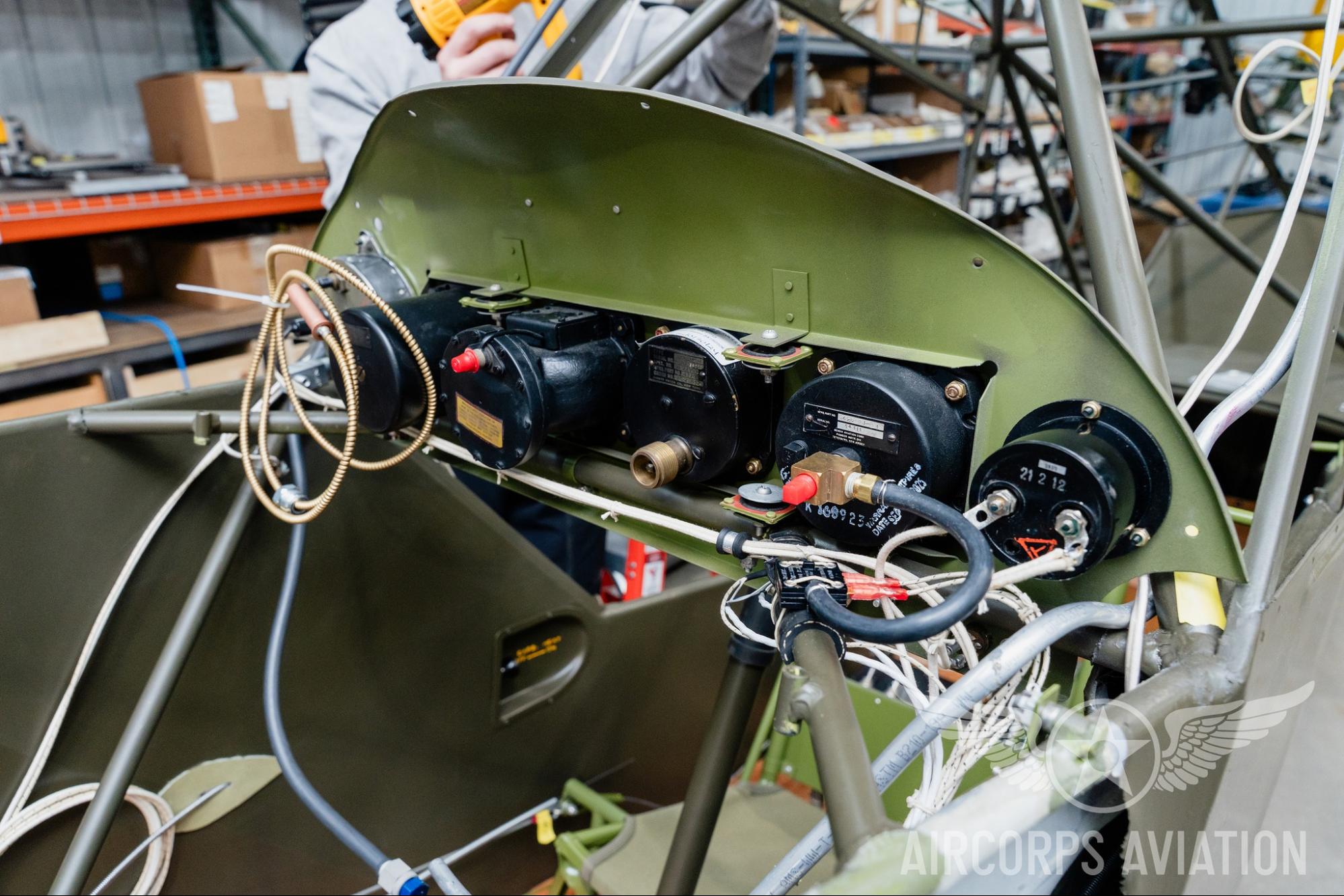
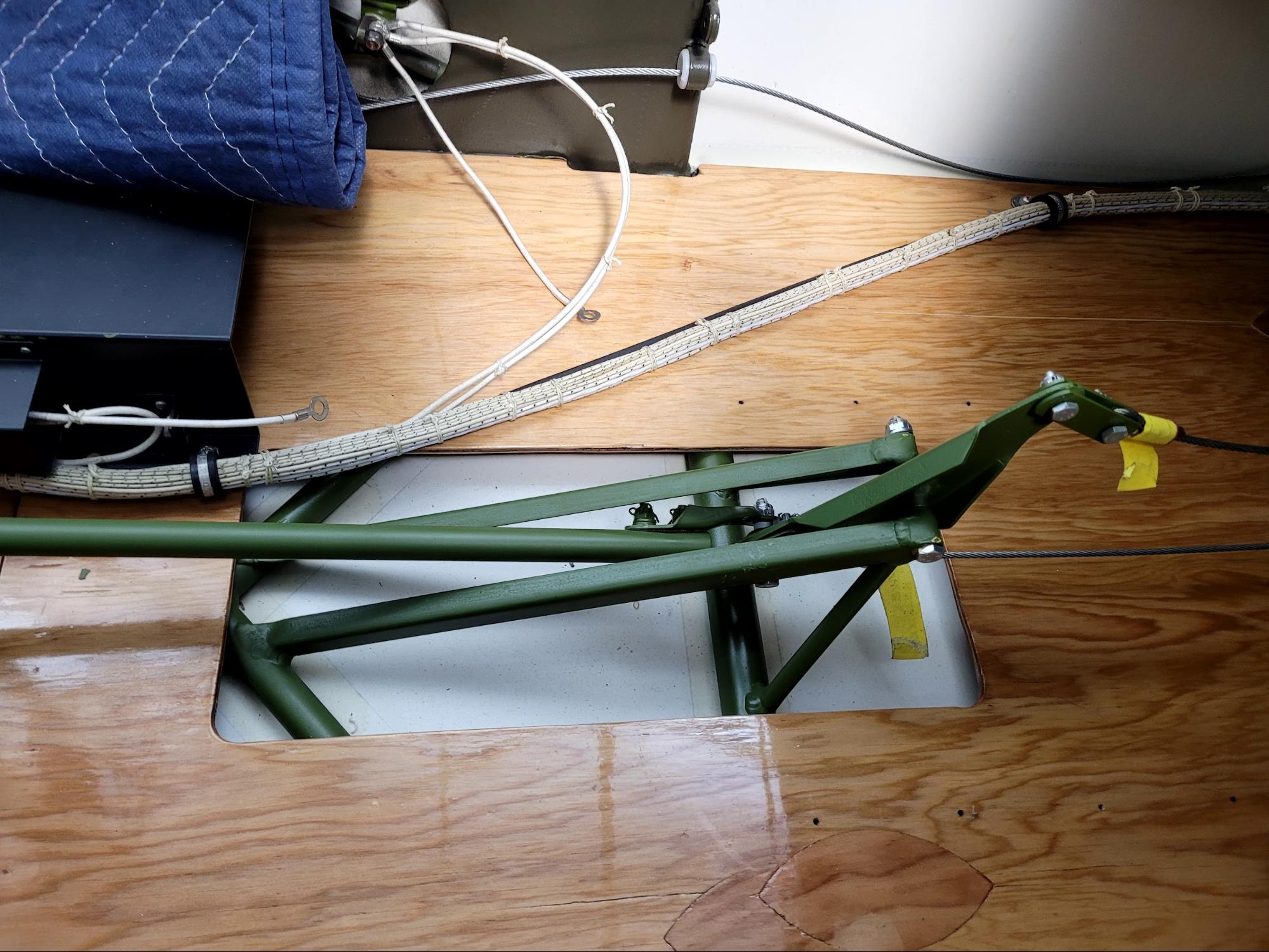
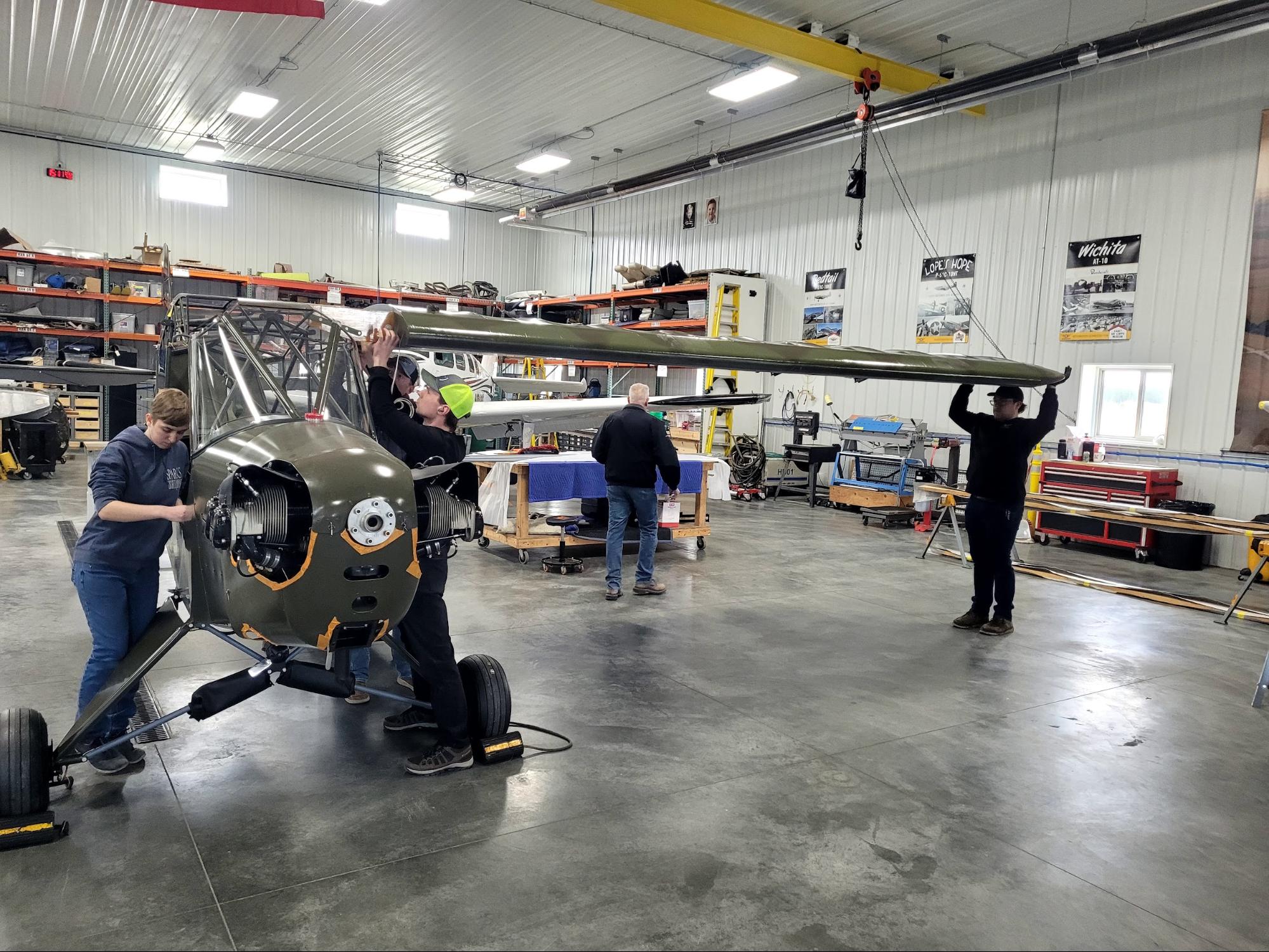
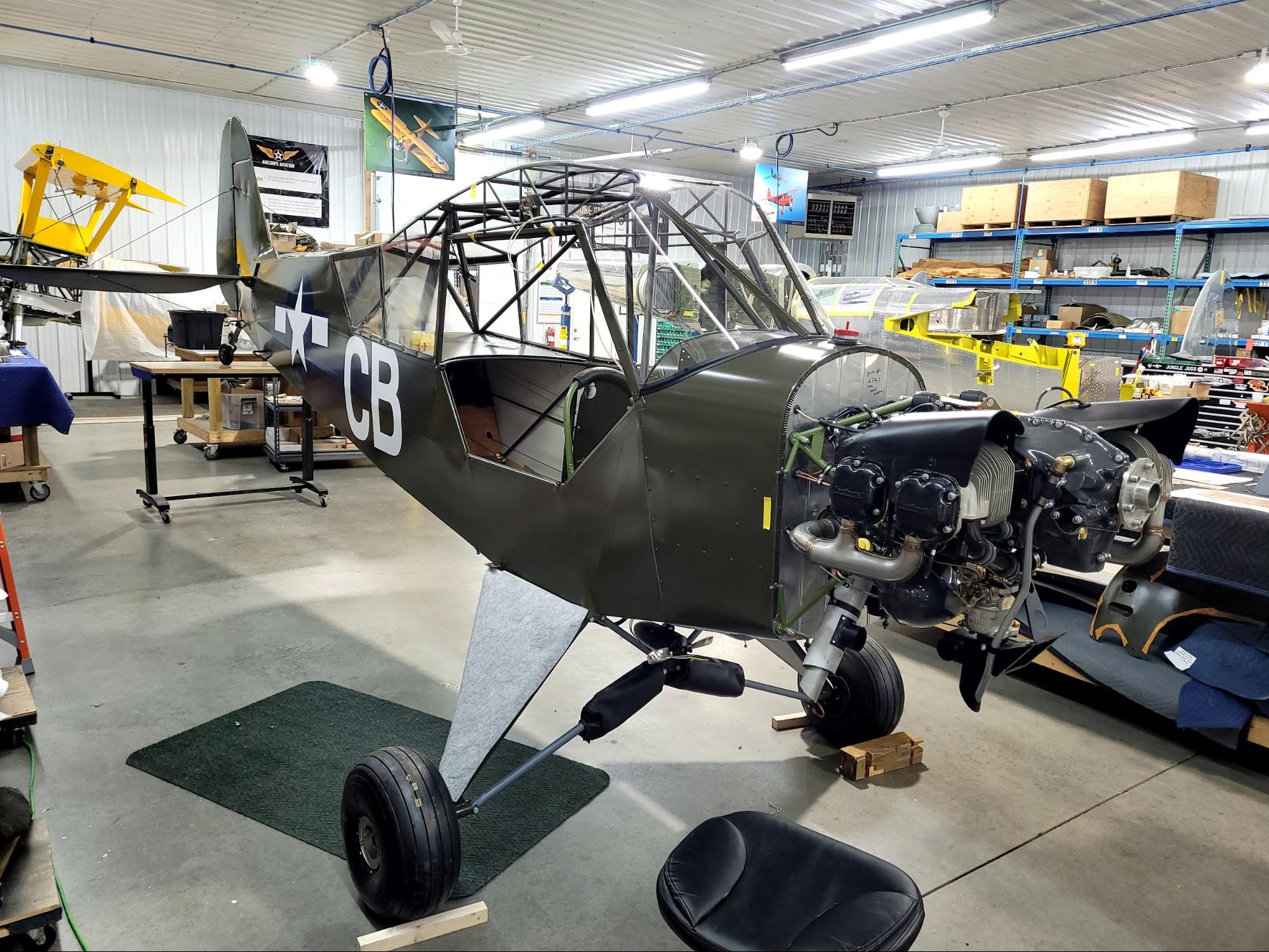
As the L-4 nears completion, the landing gear, engine installation, instrumentation, and control systems in the cockpit cabin received attention.
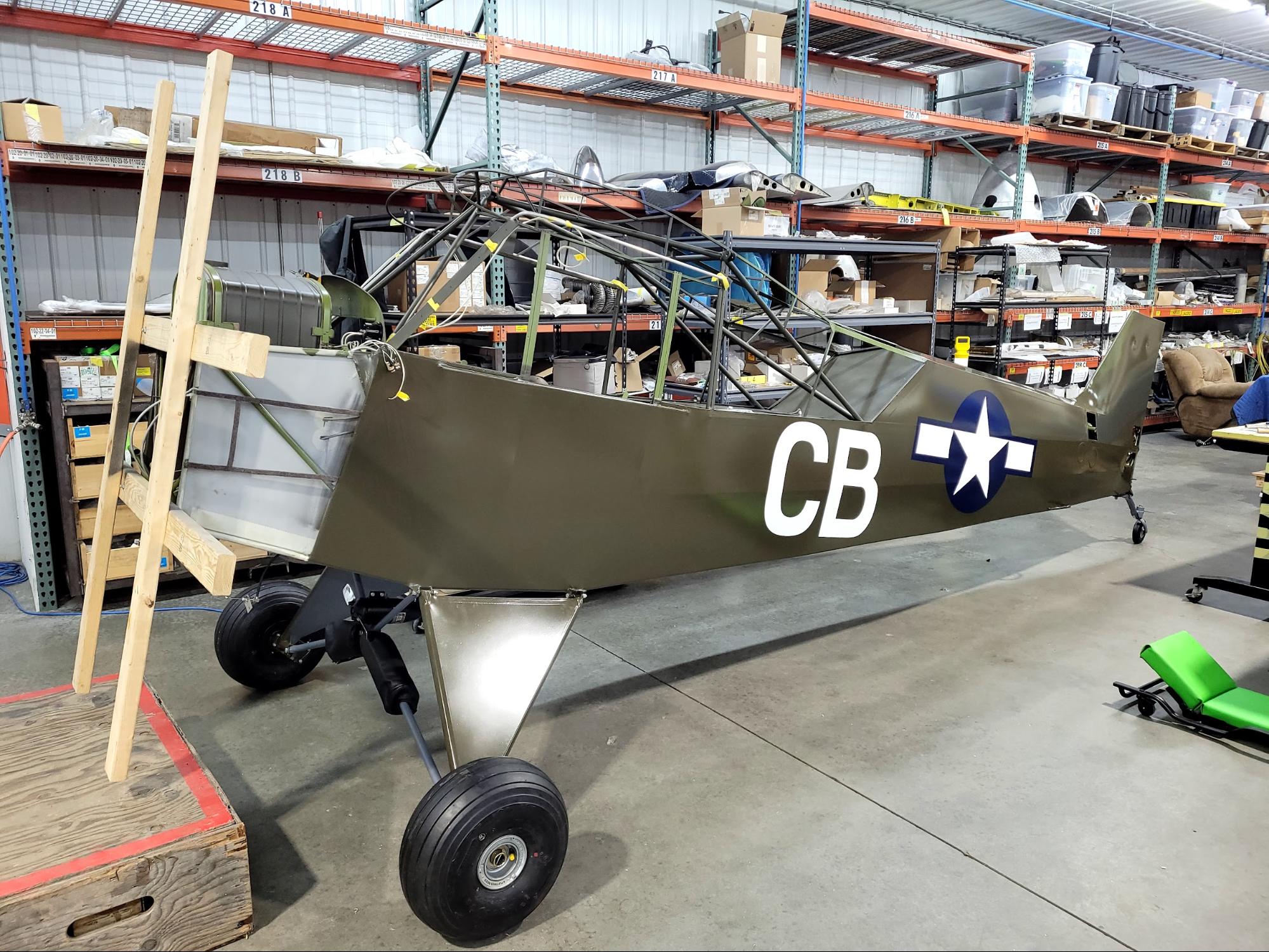
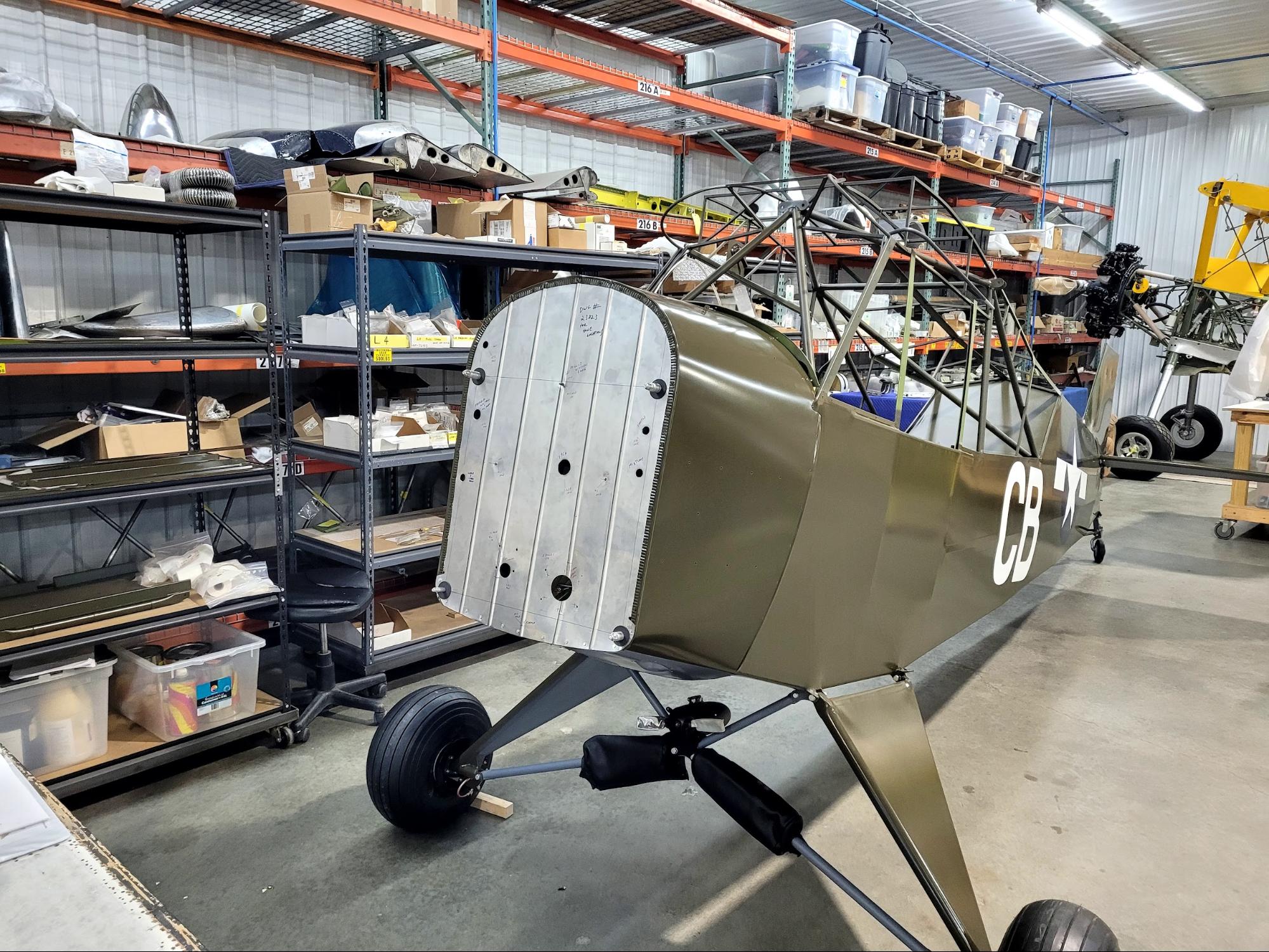
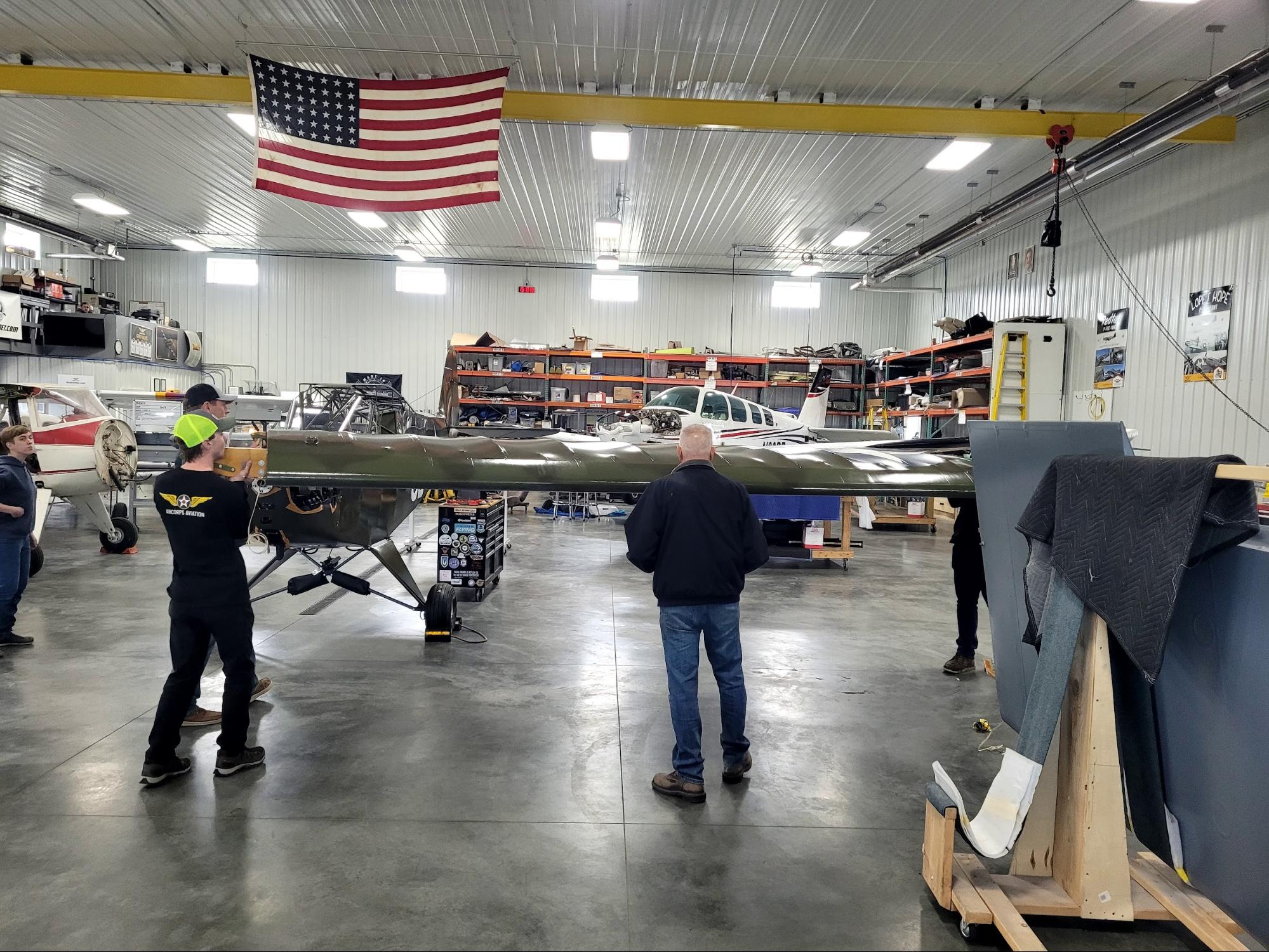
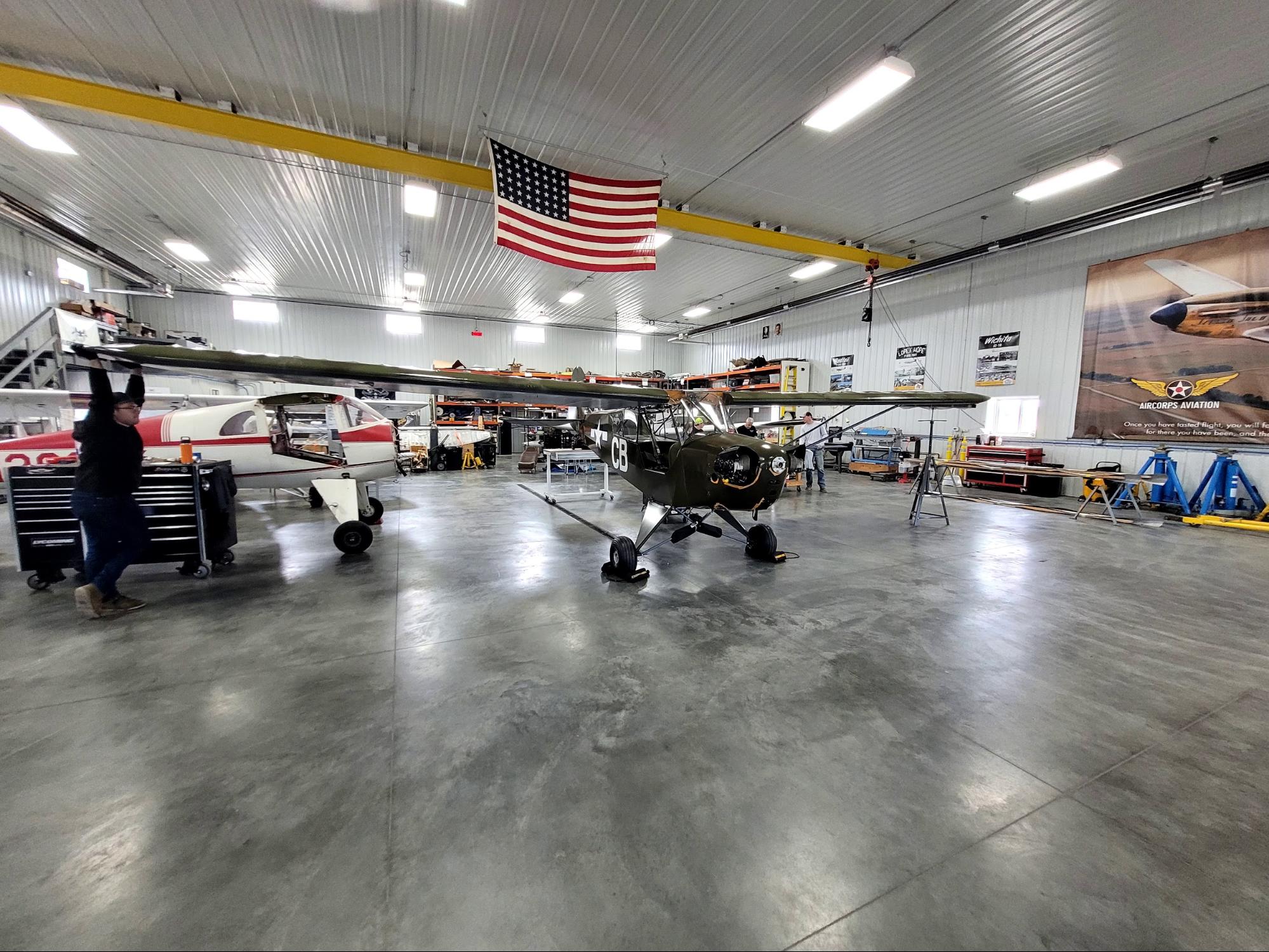
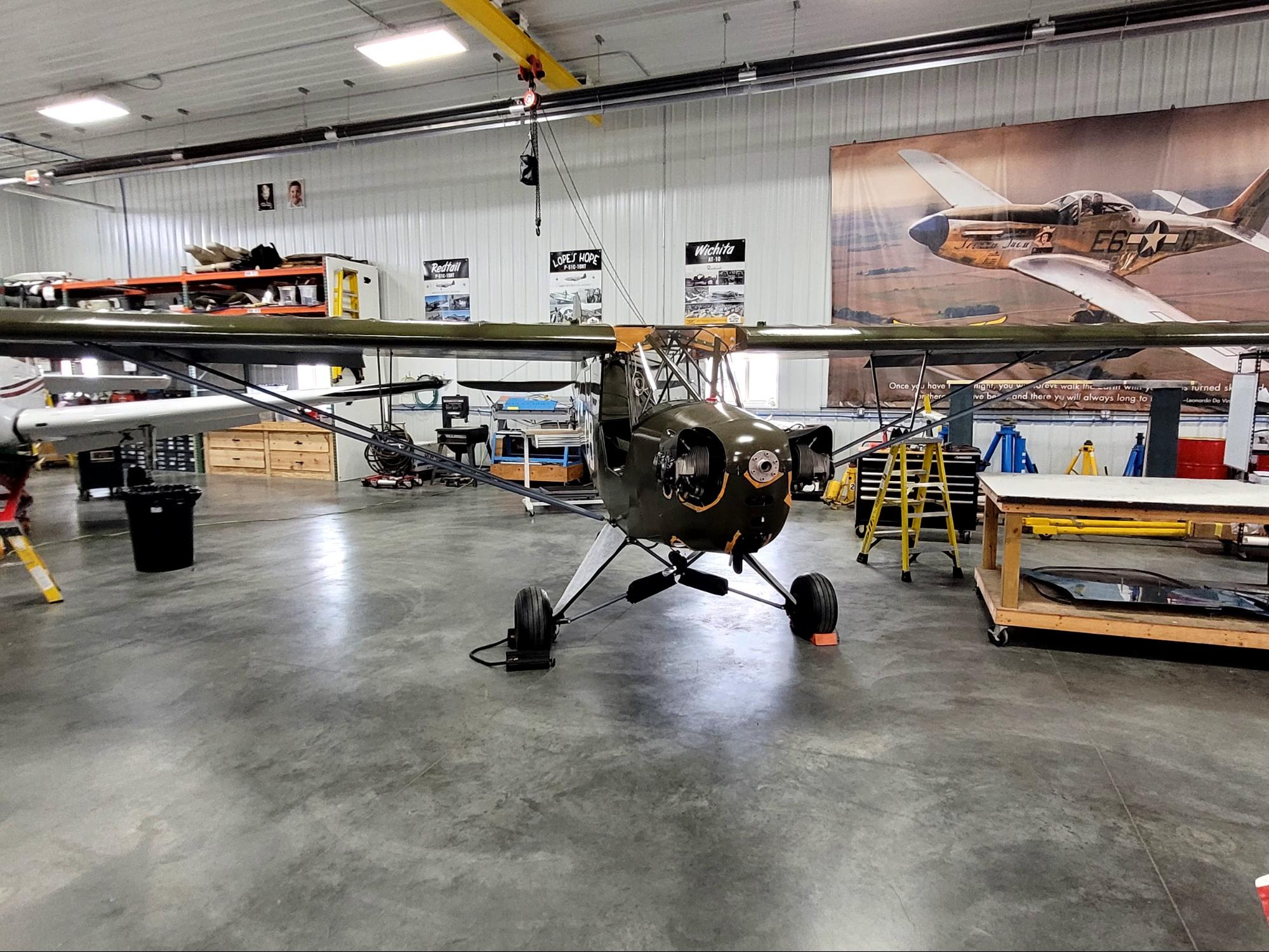
A restoration milestone was reached as the Grasshopper now rests on its own wheels. A more significant event was the move to the hangar for assembly.
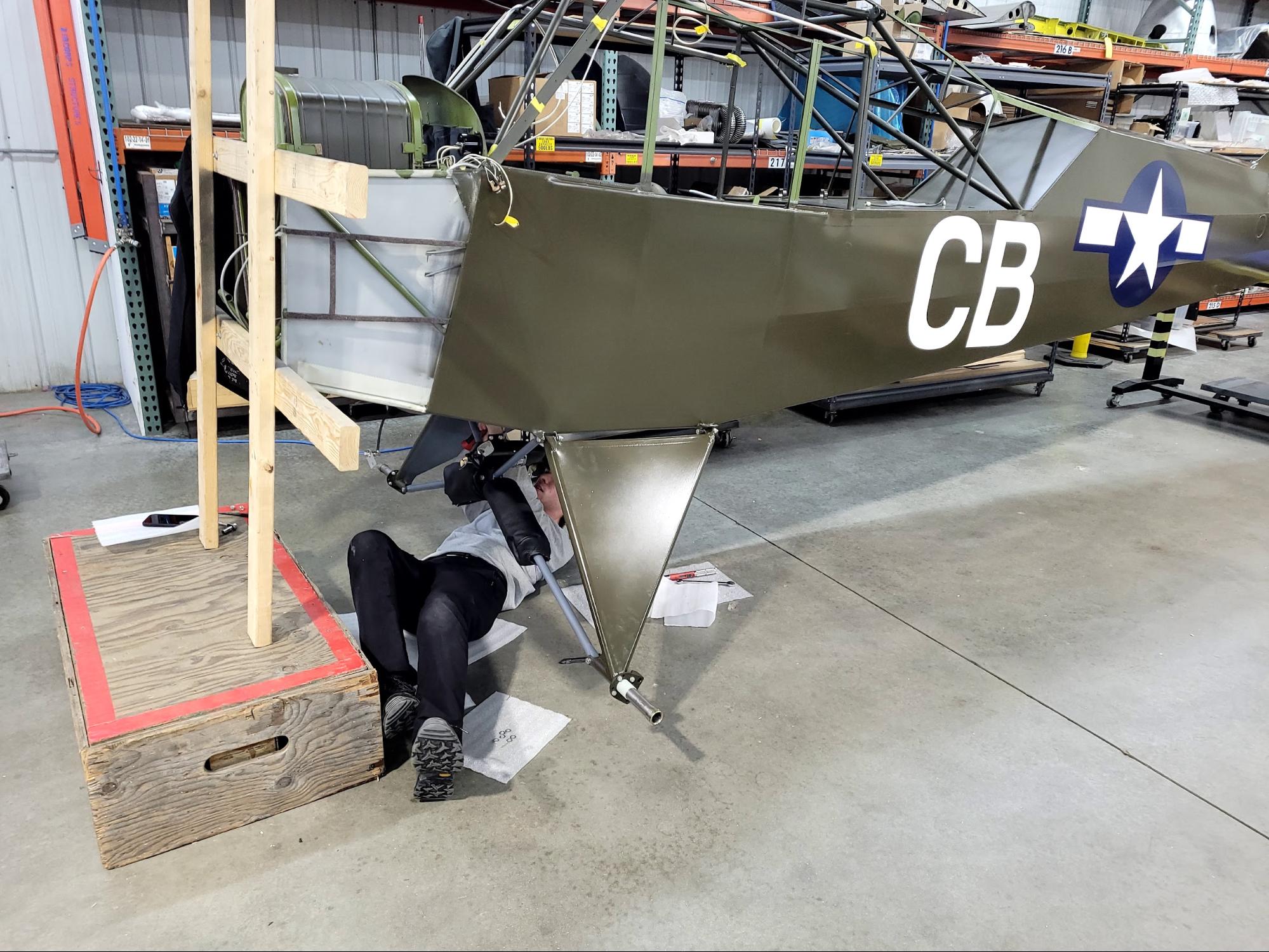
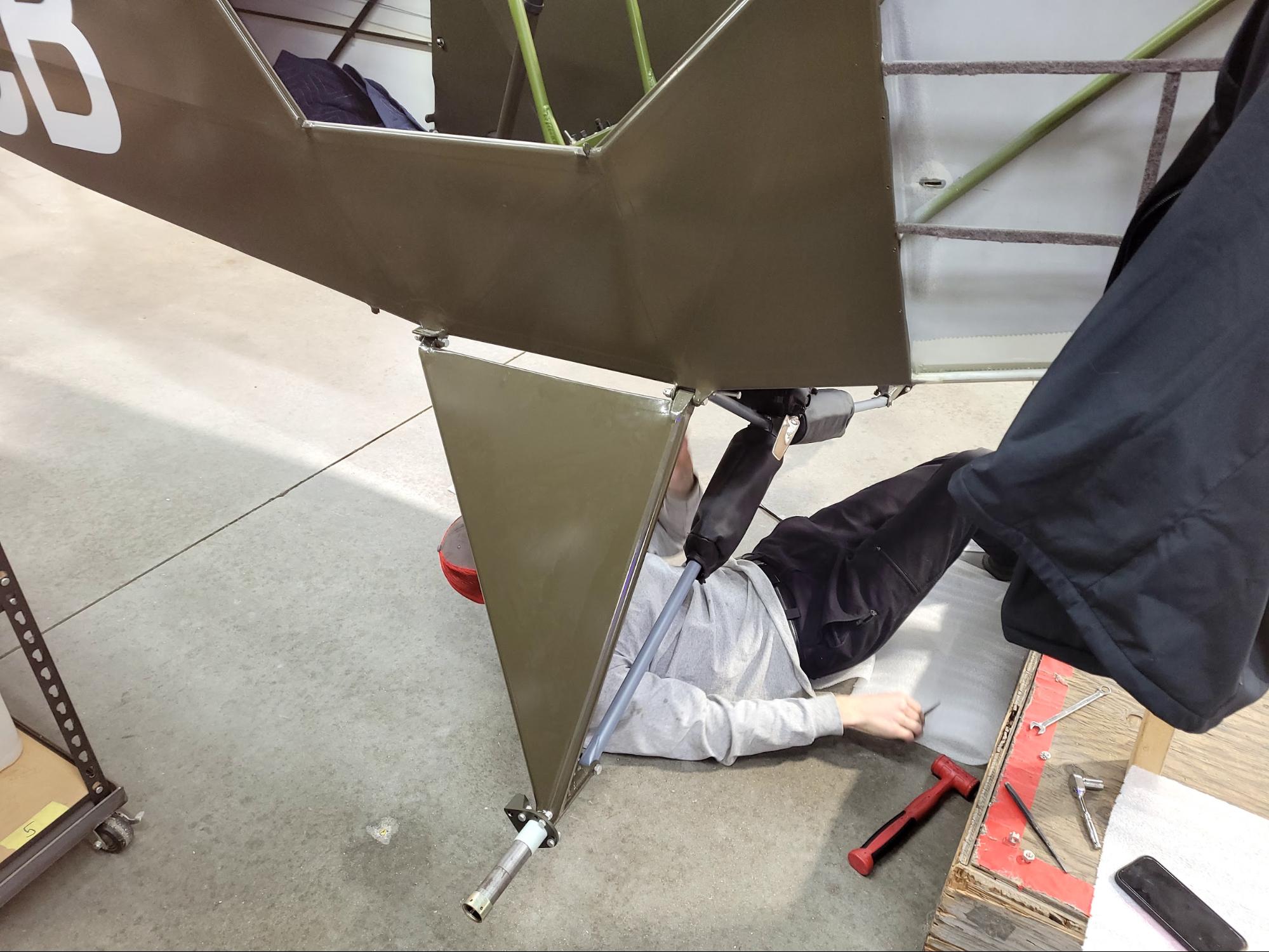
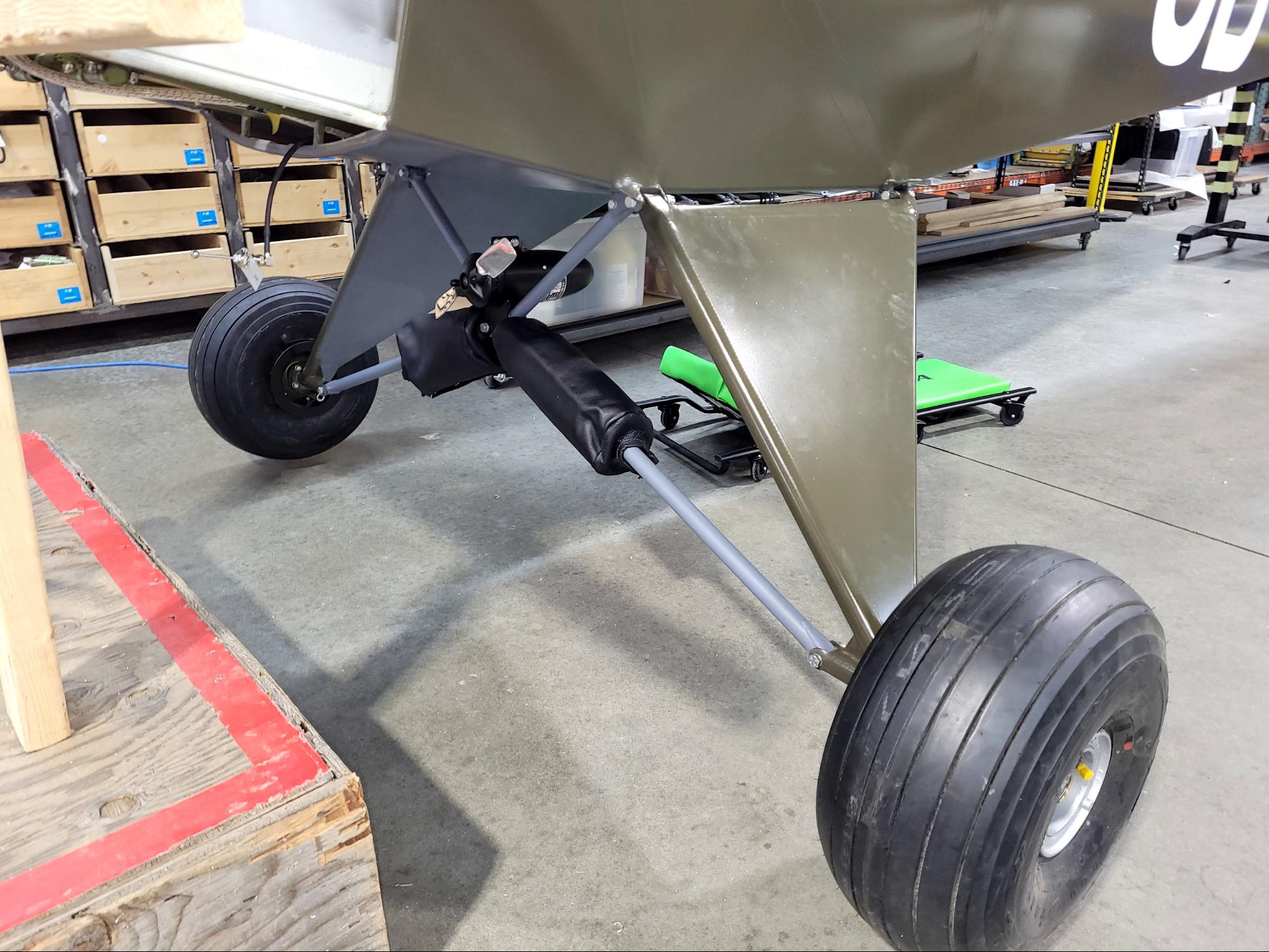
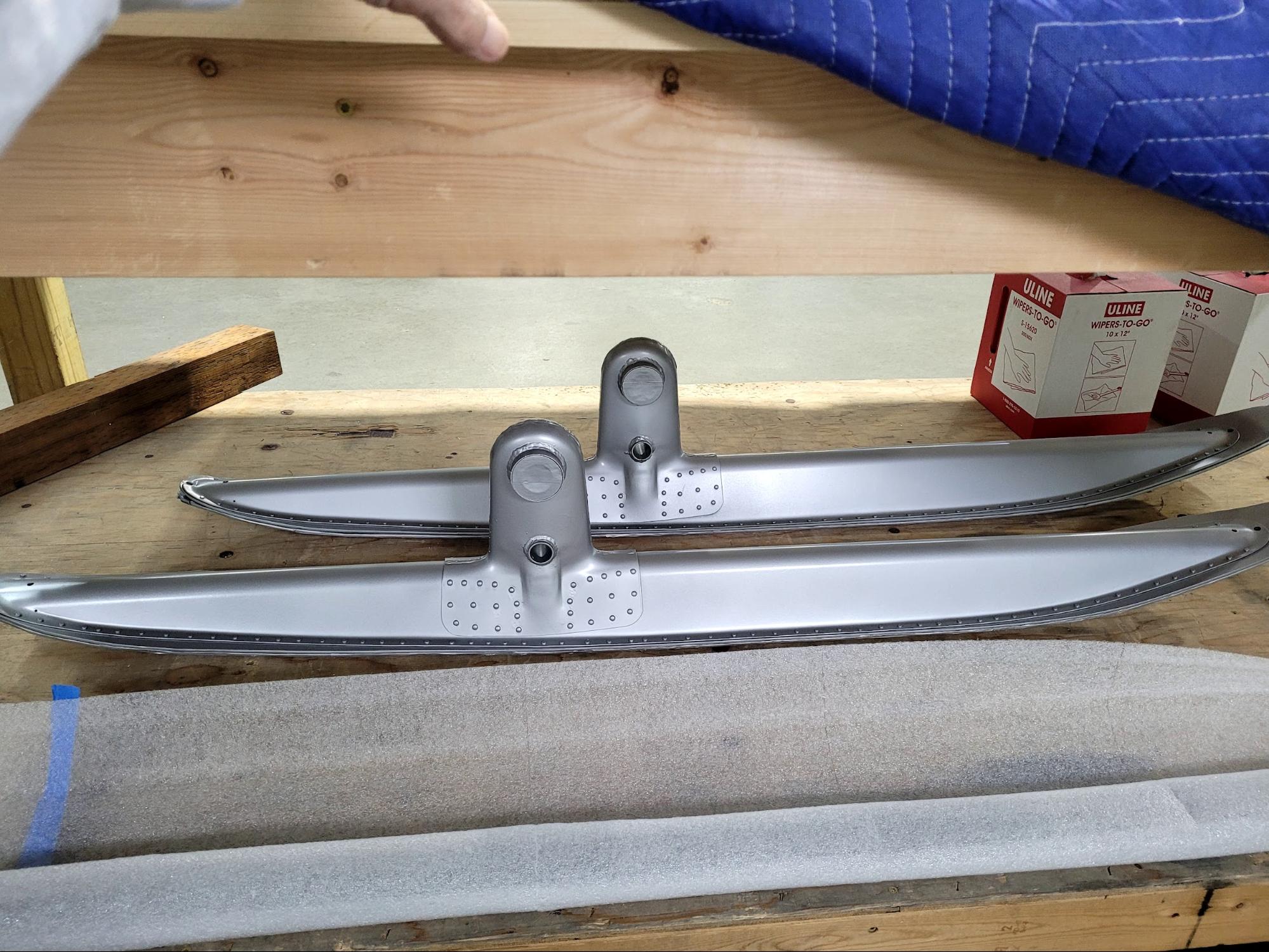
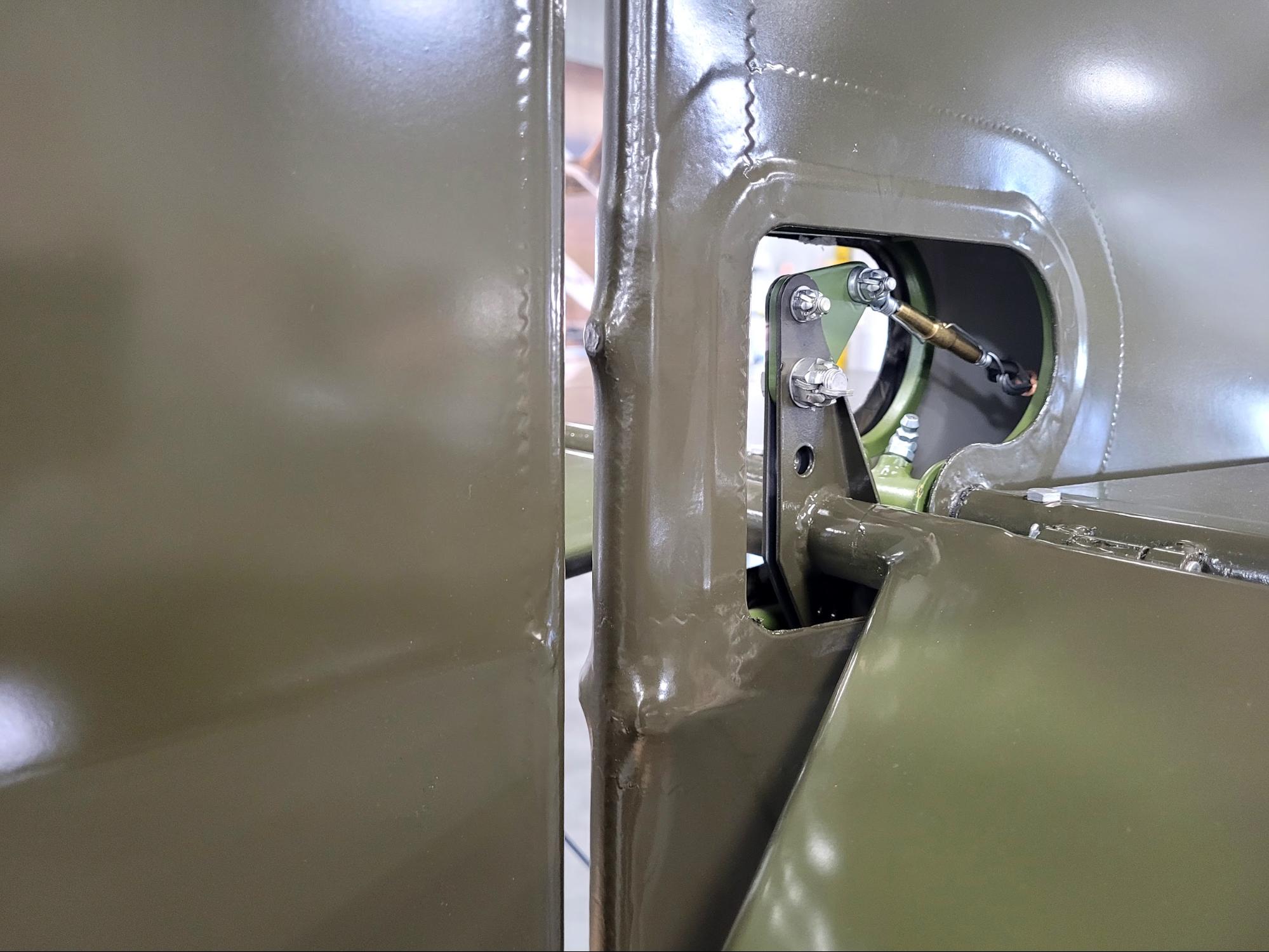
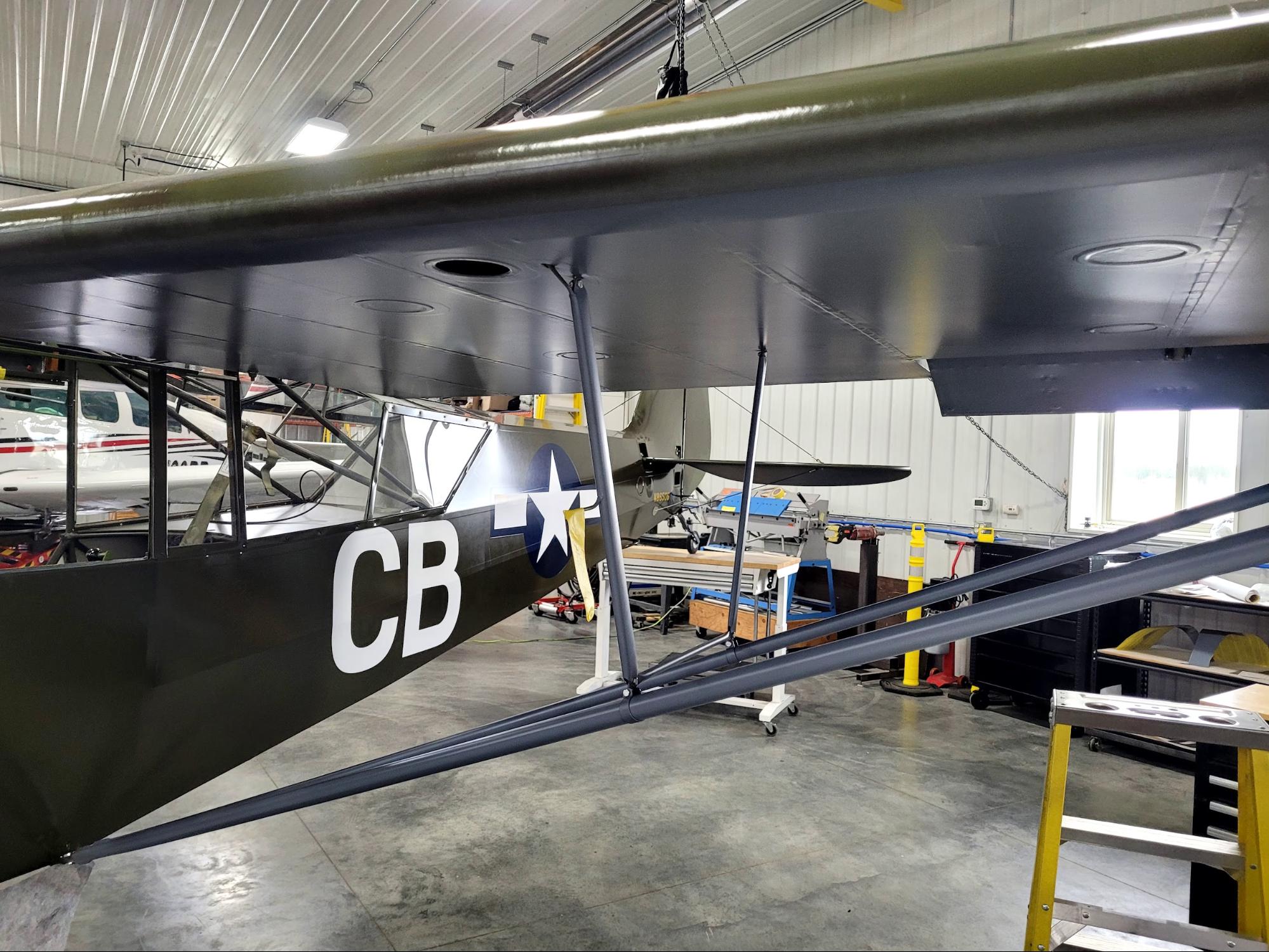
The simple yet effective, bungee-sprung landing gear has been completely installed. A set of skis has been obtained and restored, so the L-4H will be capable of operating from a snow-covered field.
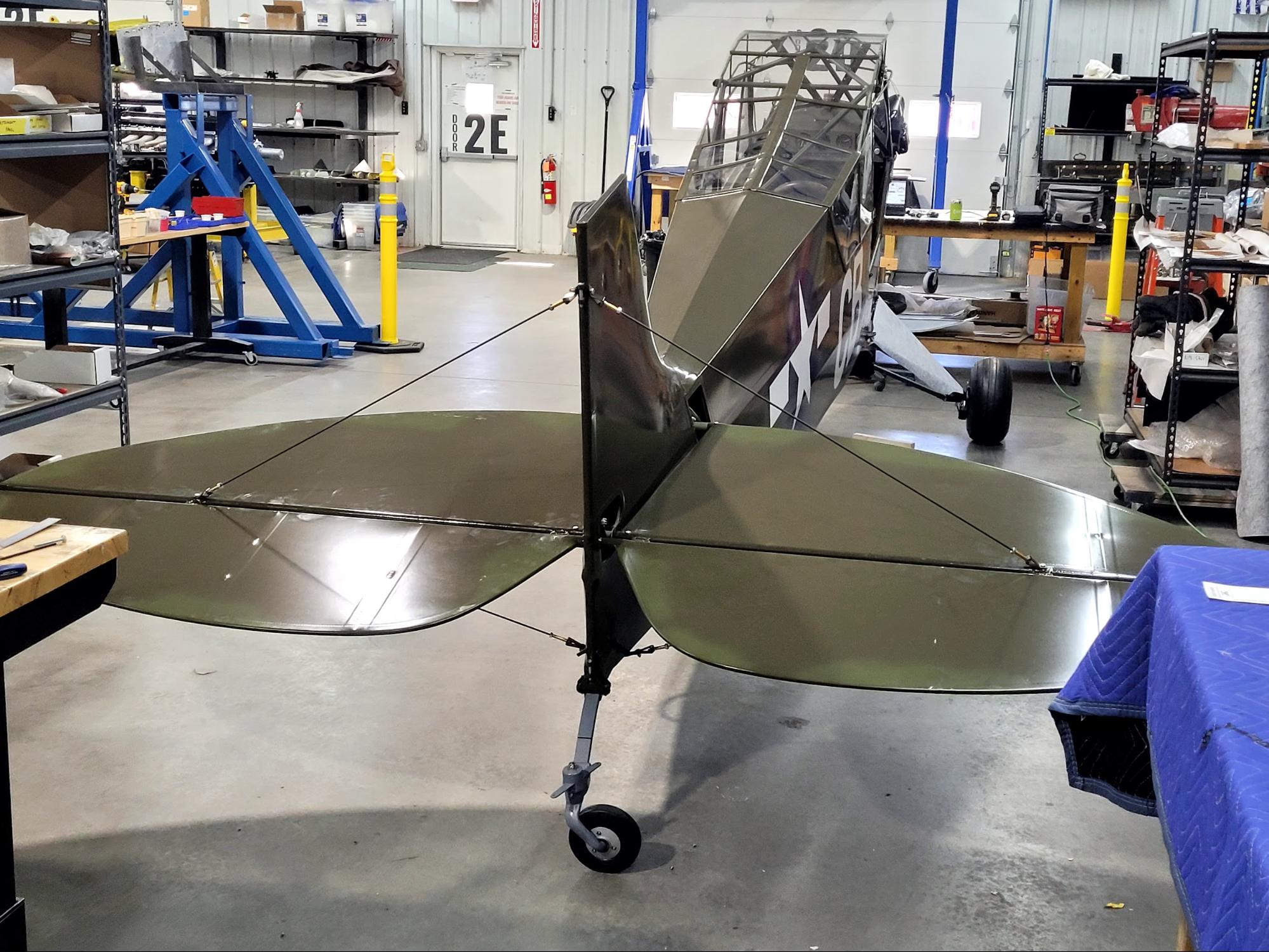
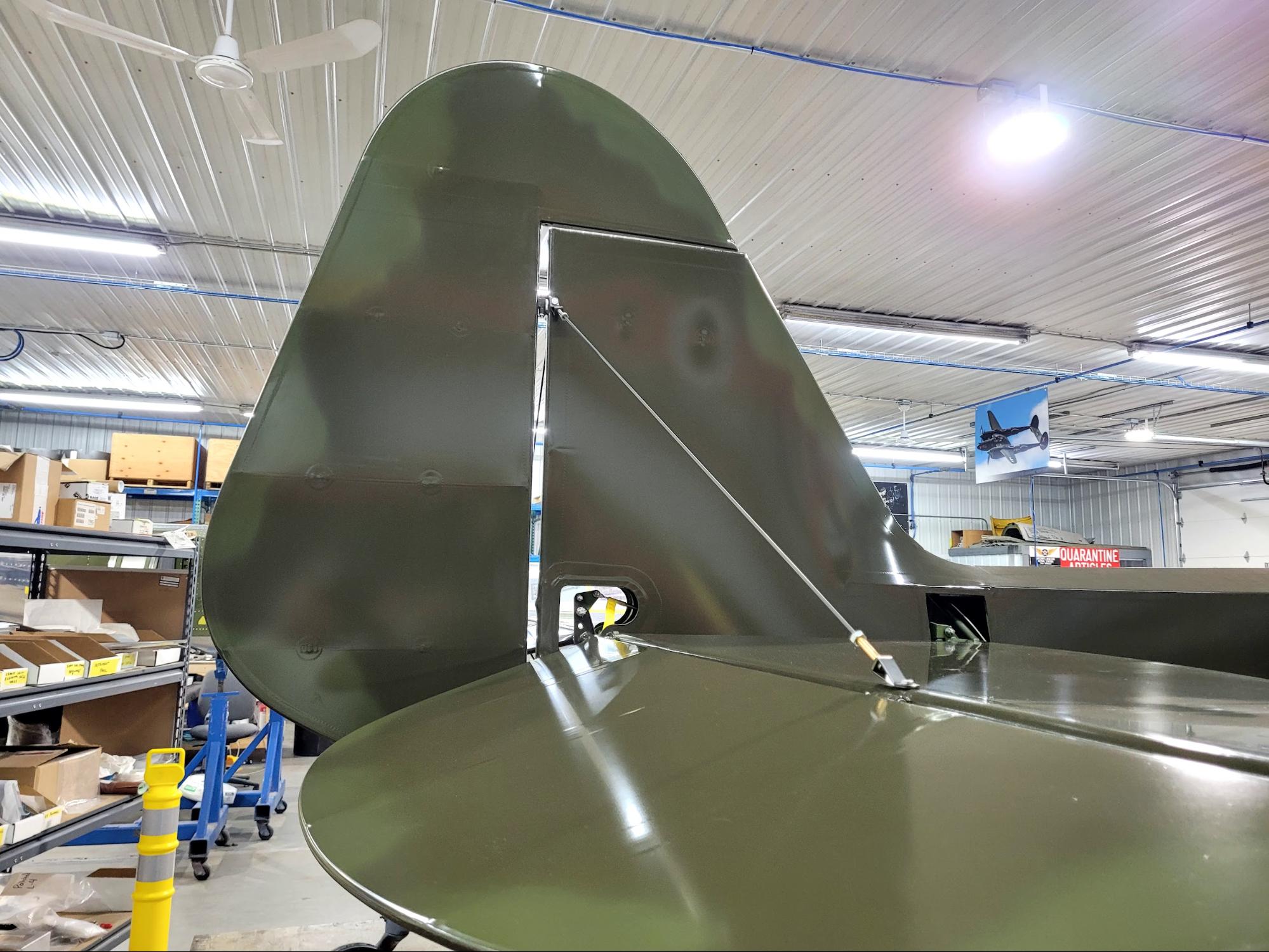
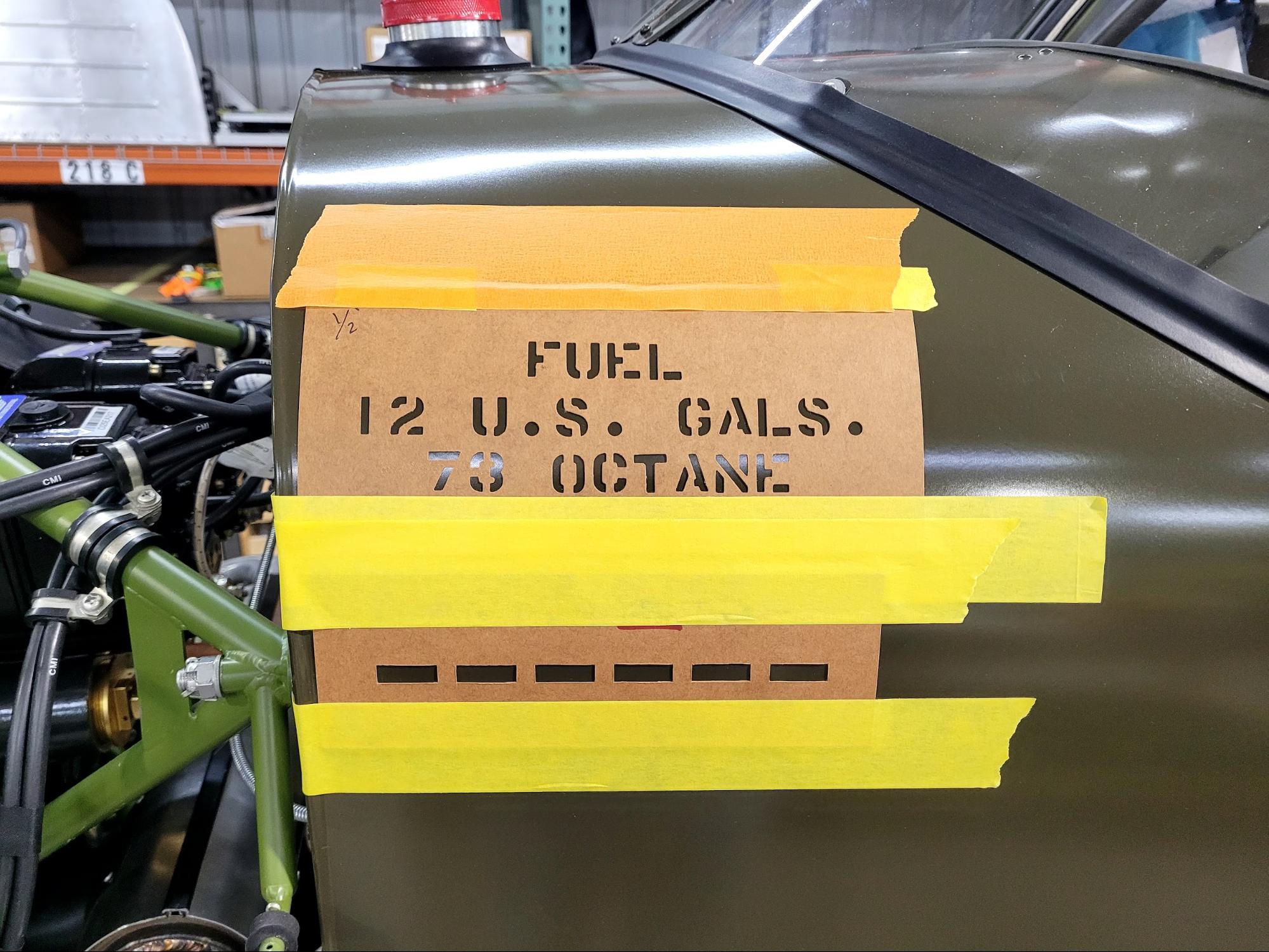
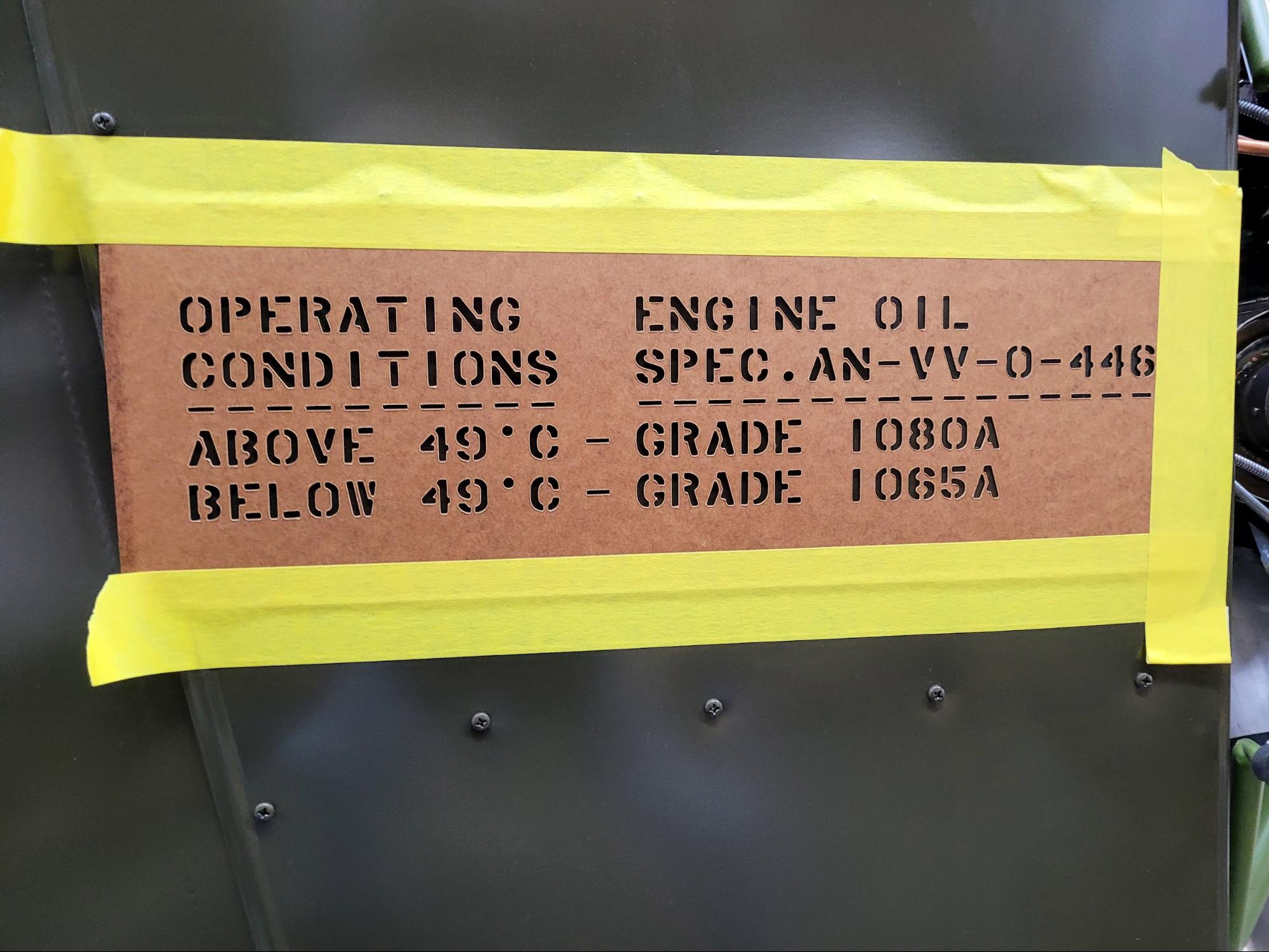
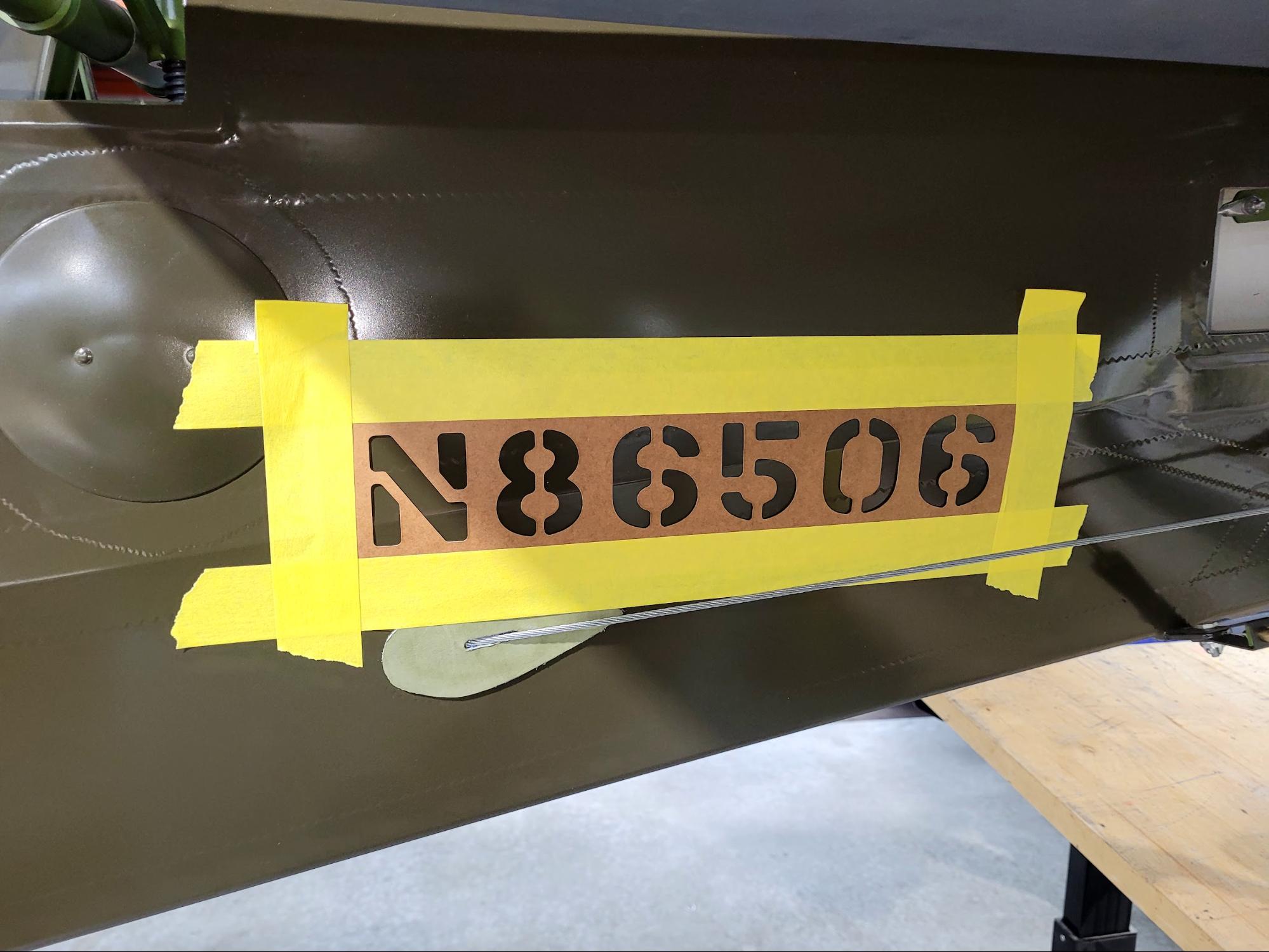
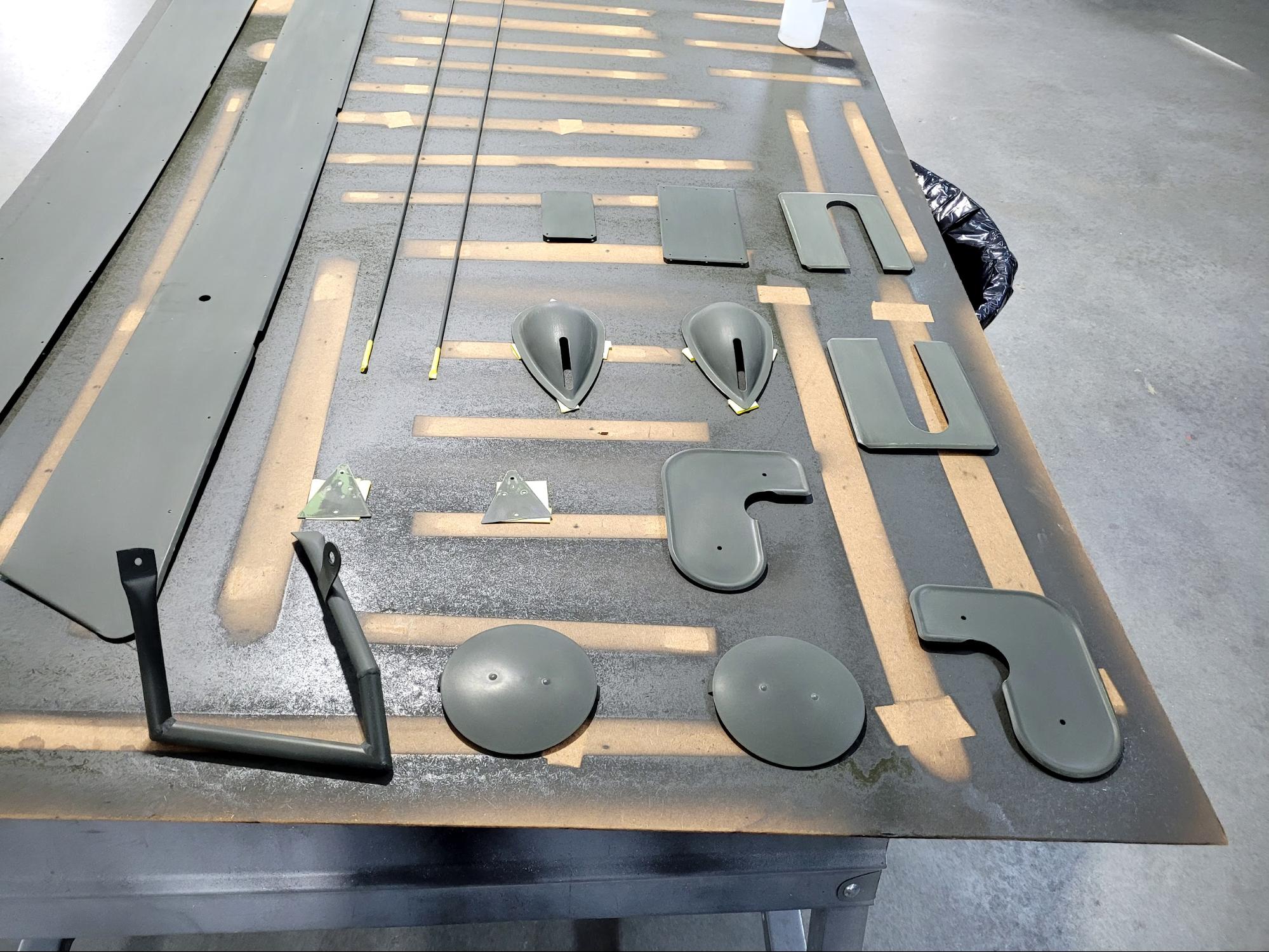
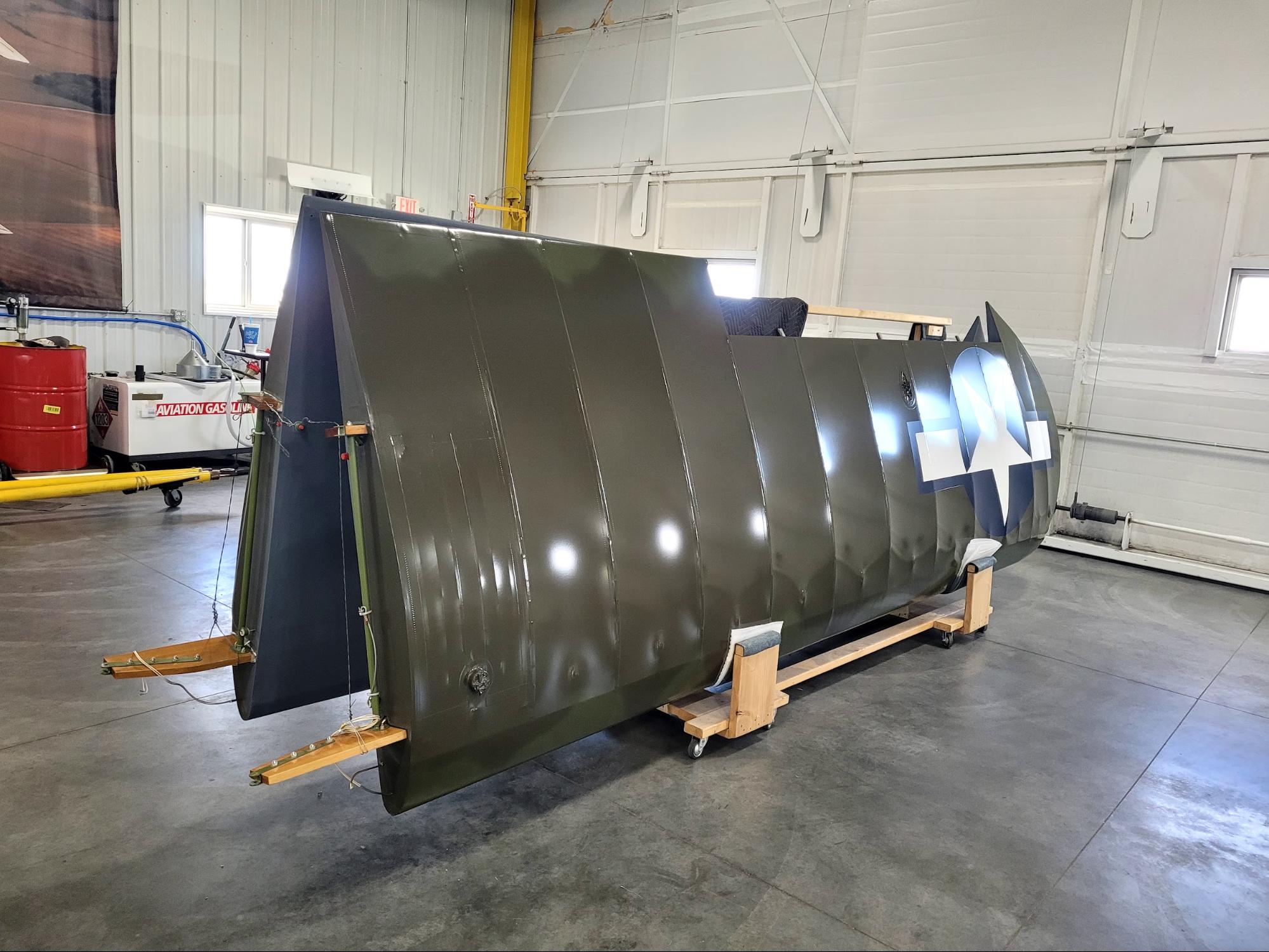
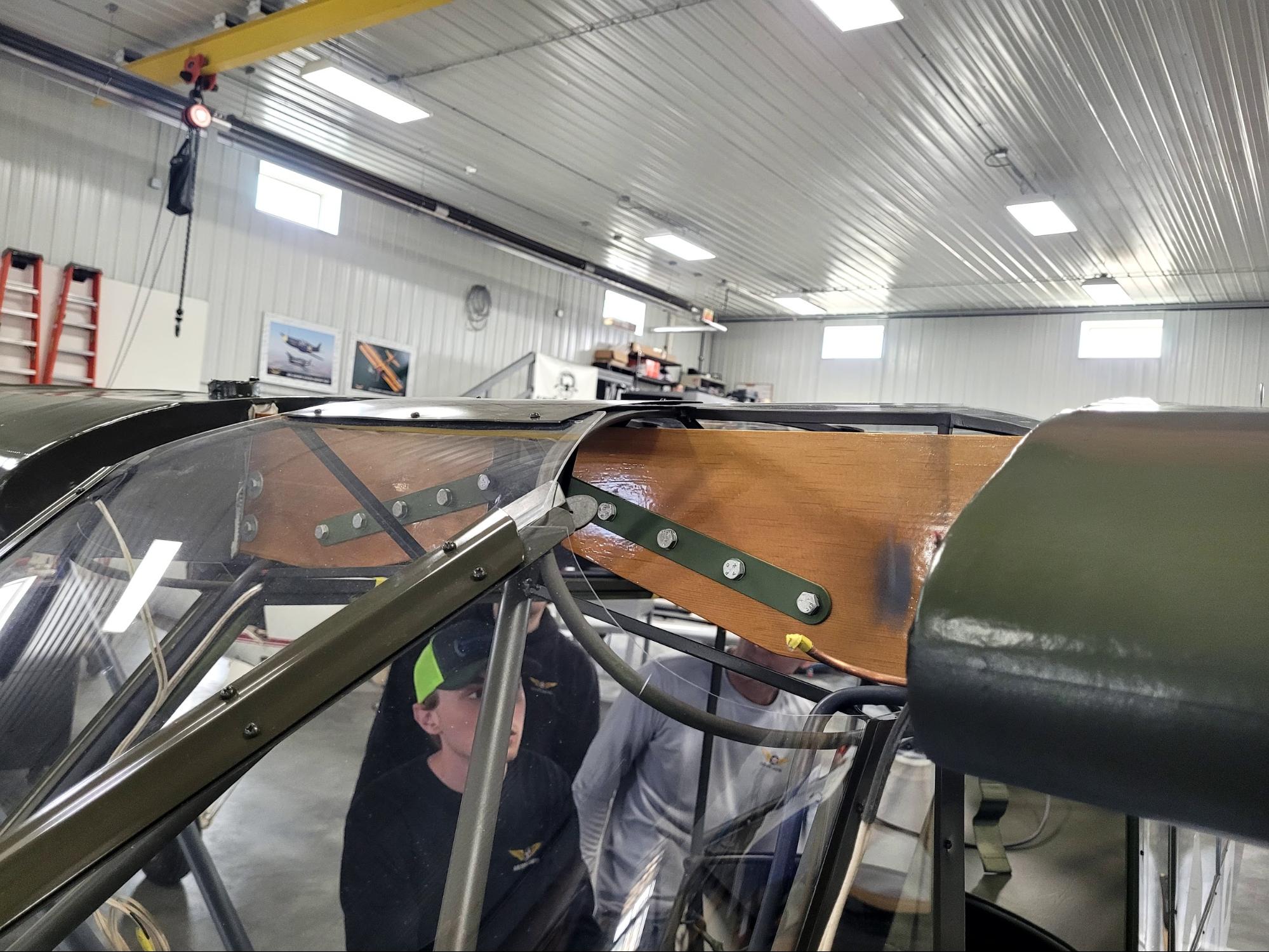
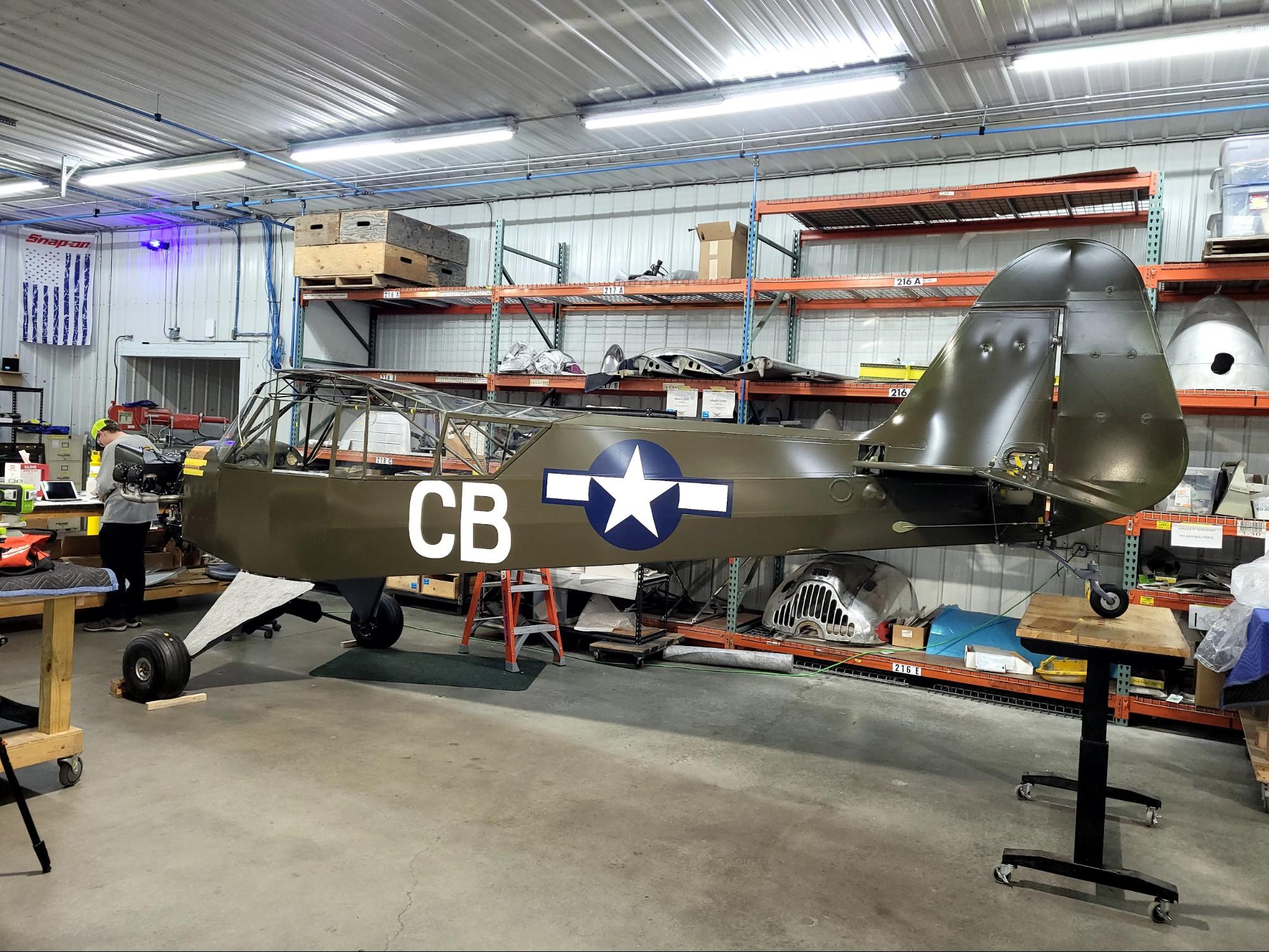
The control surfaces have been attached to the empennage, all the windows are in place, and fine-detail painting/stenciling is underway.
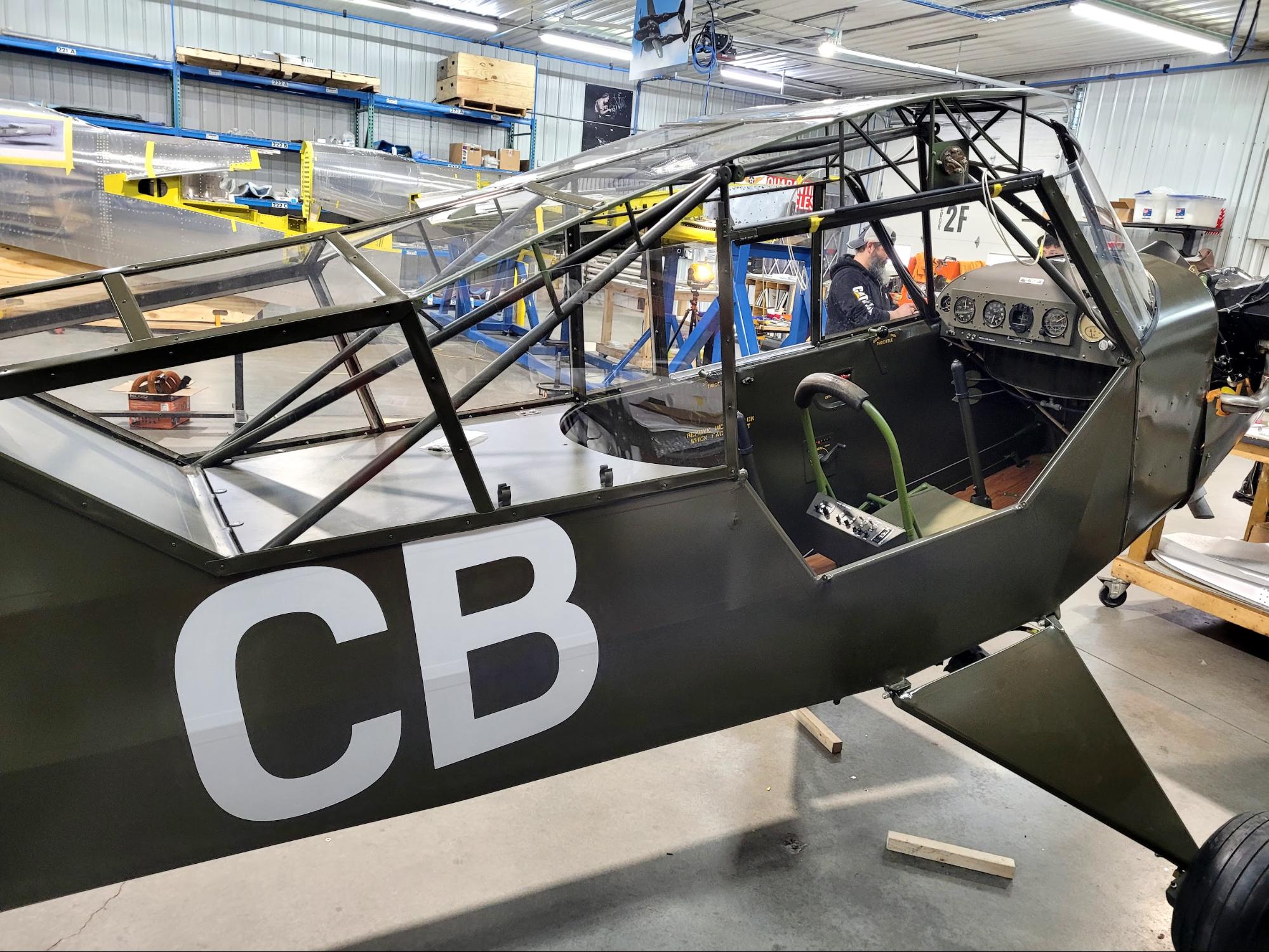
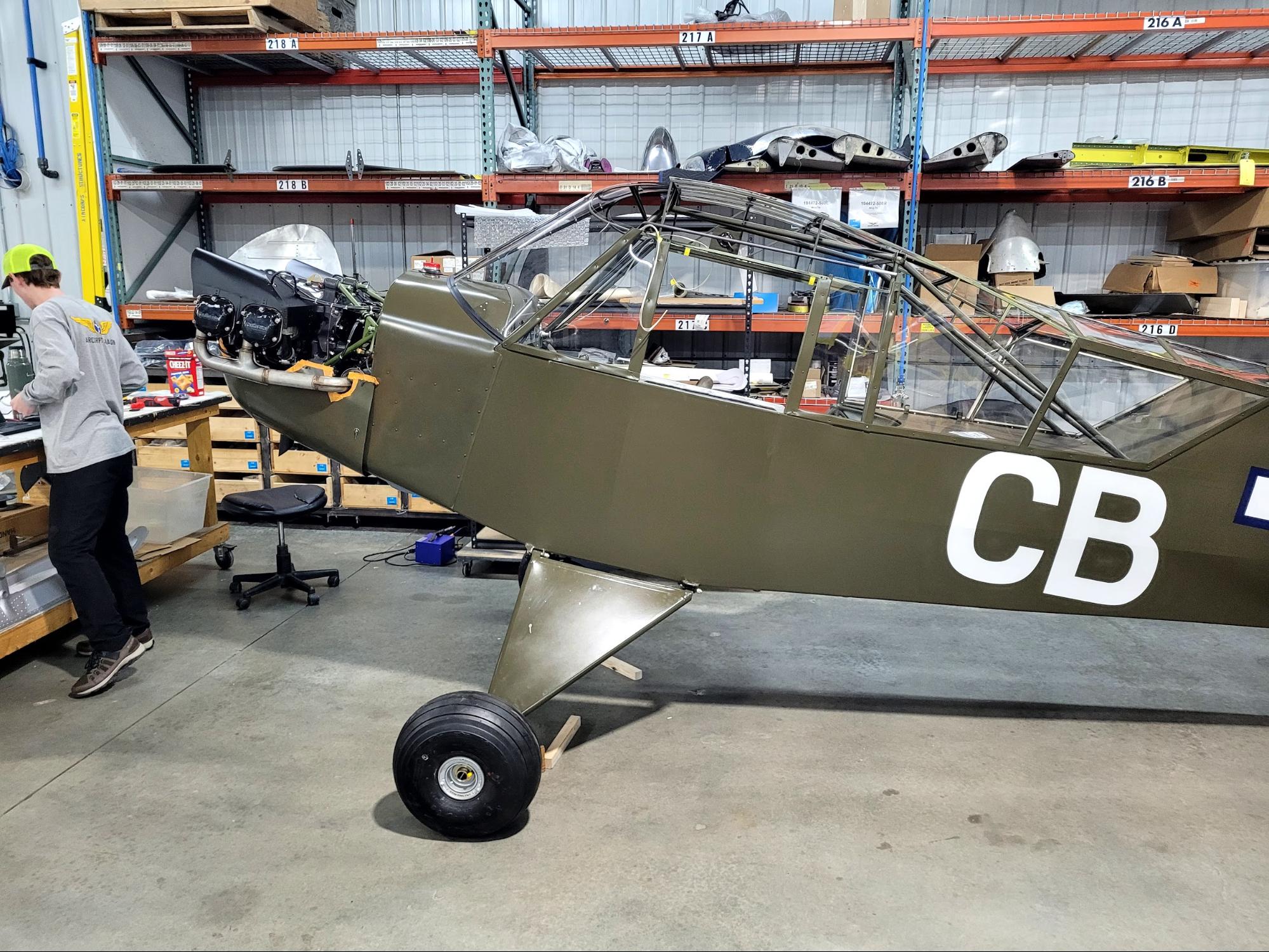
The term glazing is a little misleading in this instance because it implies the use of glass, but the windows in an L-4 are made of acrylic plastic.
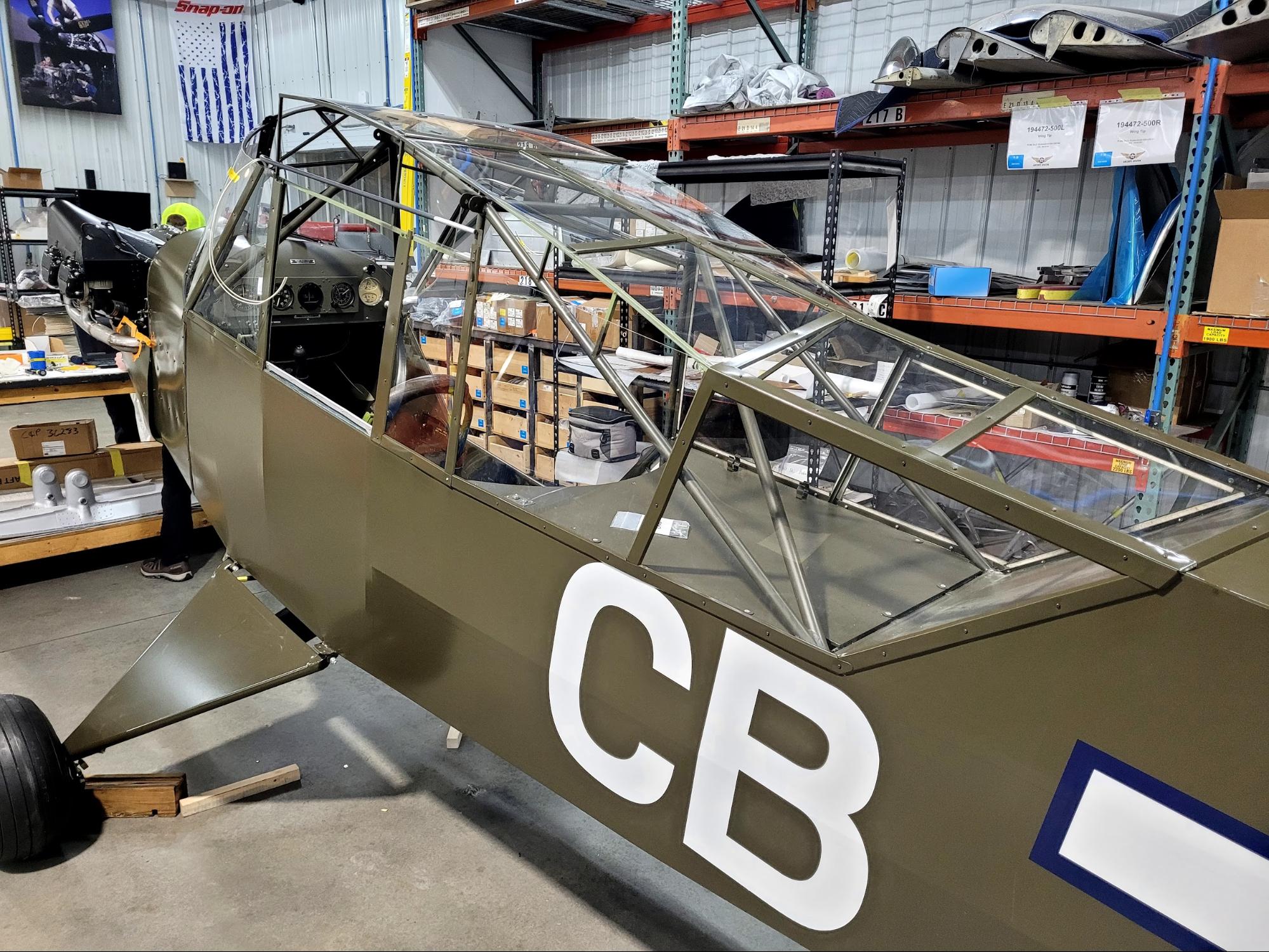
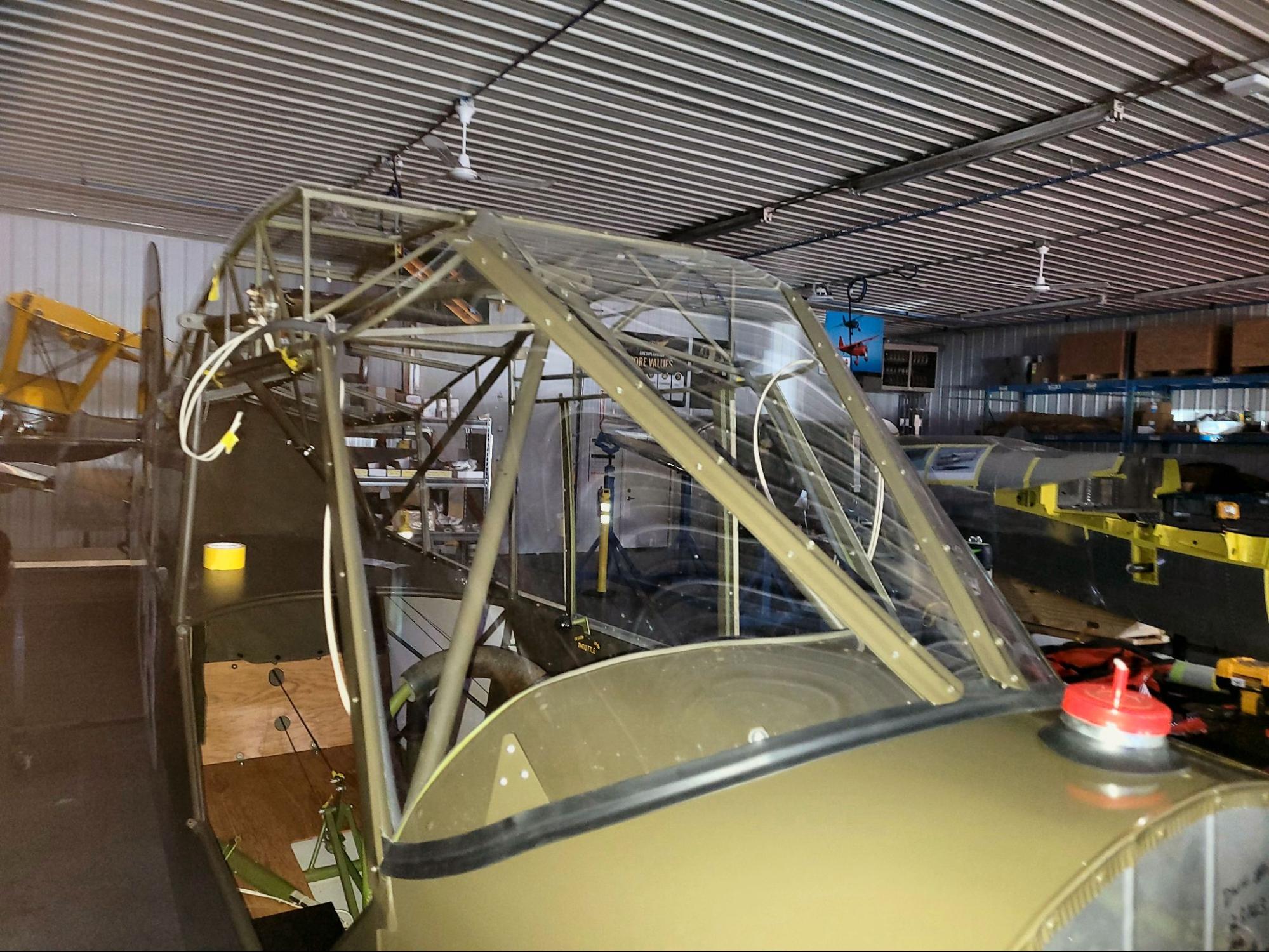
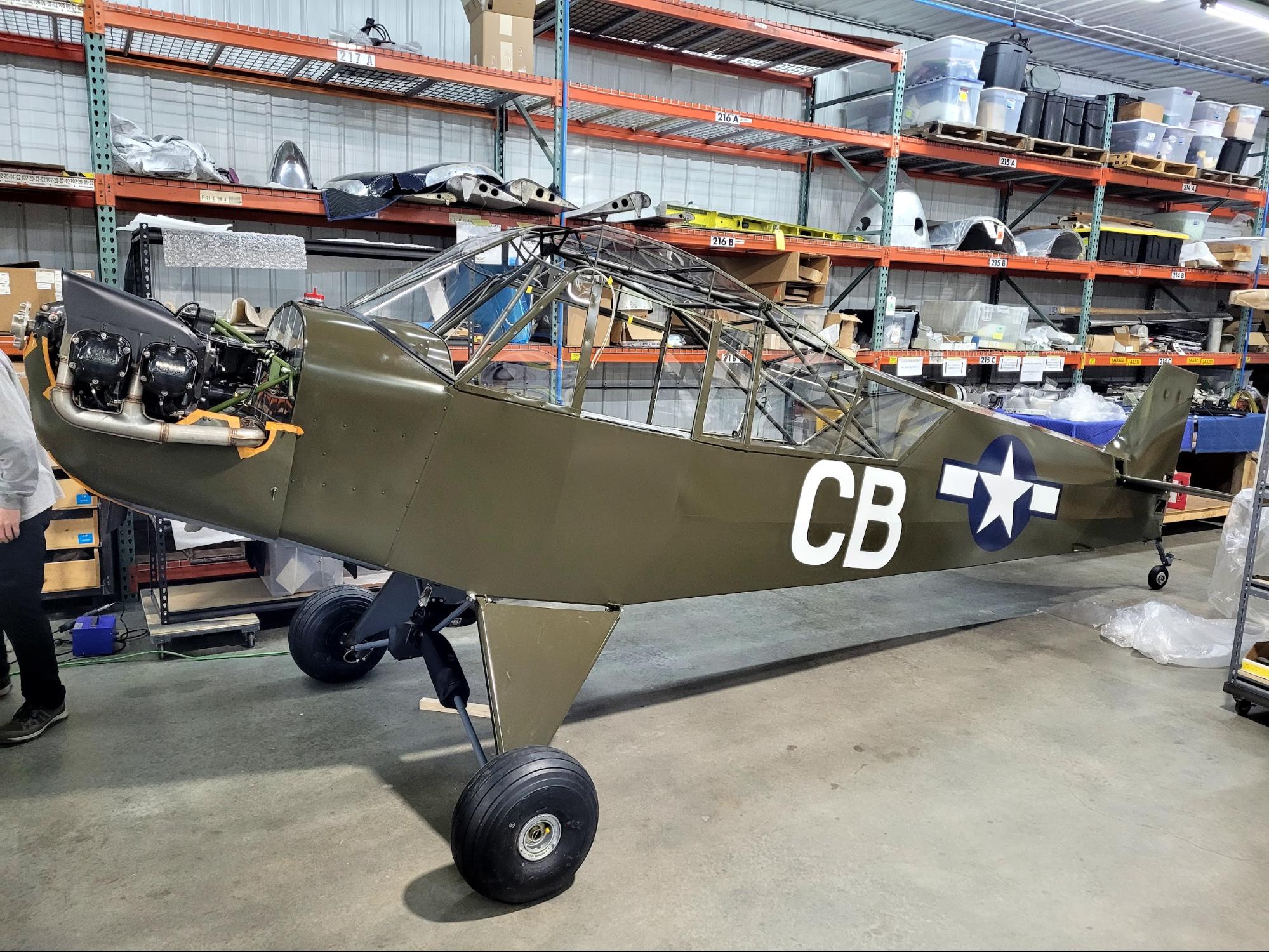
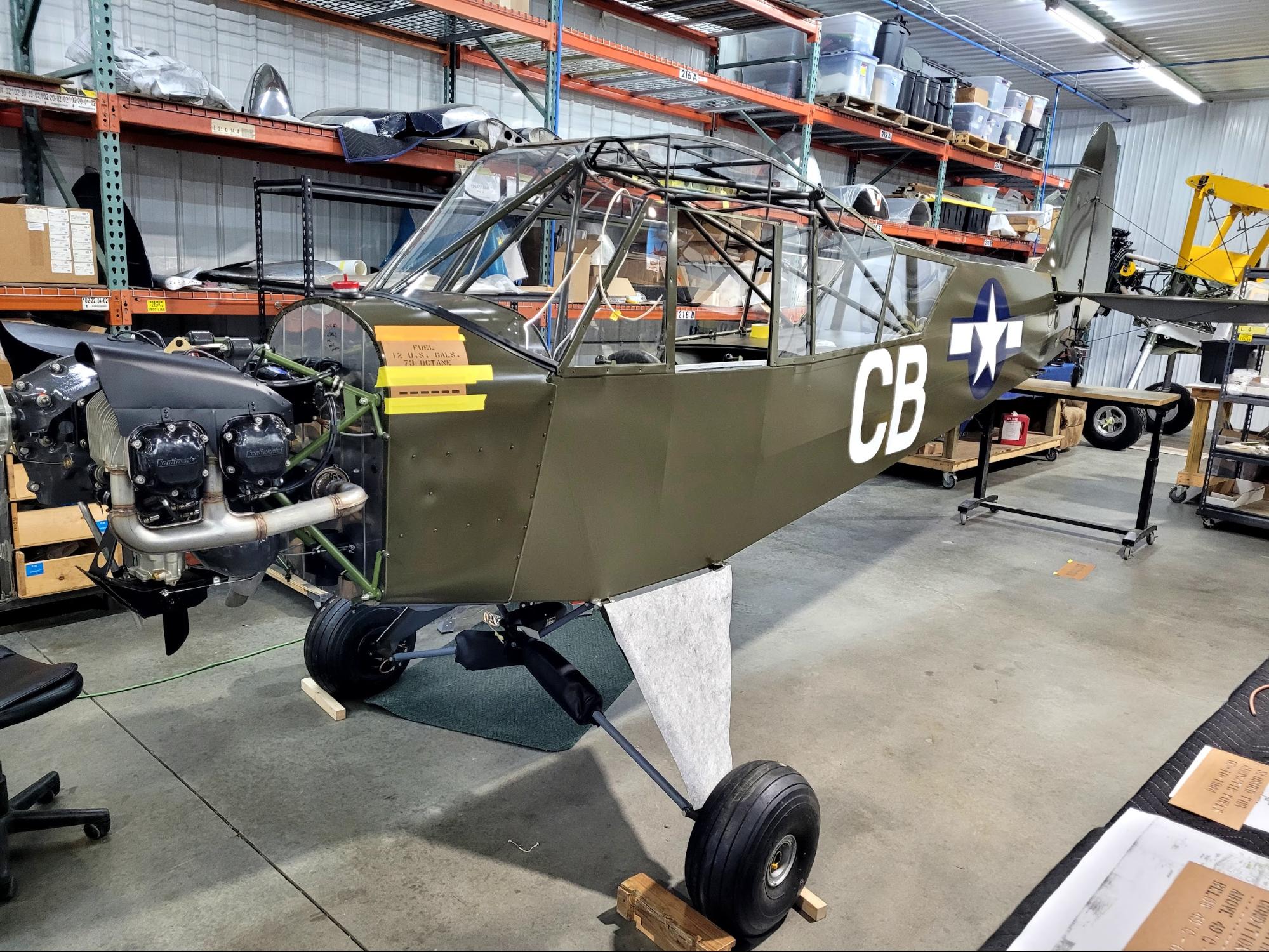
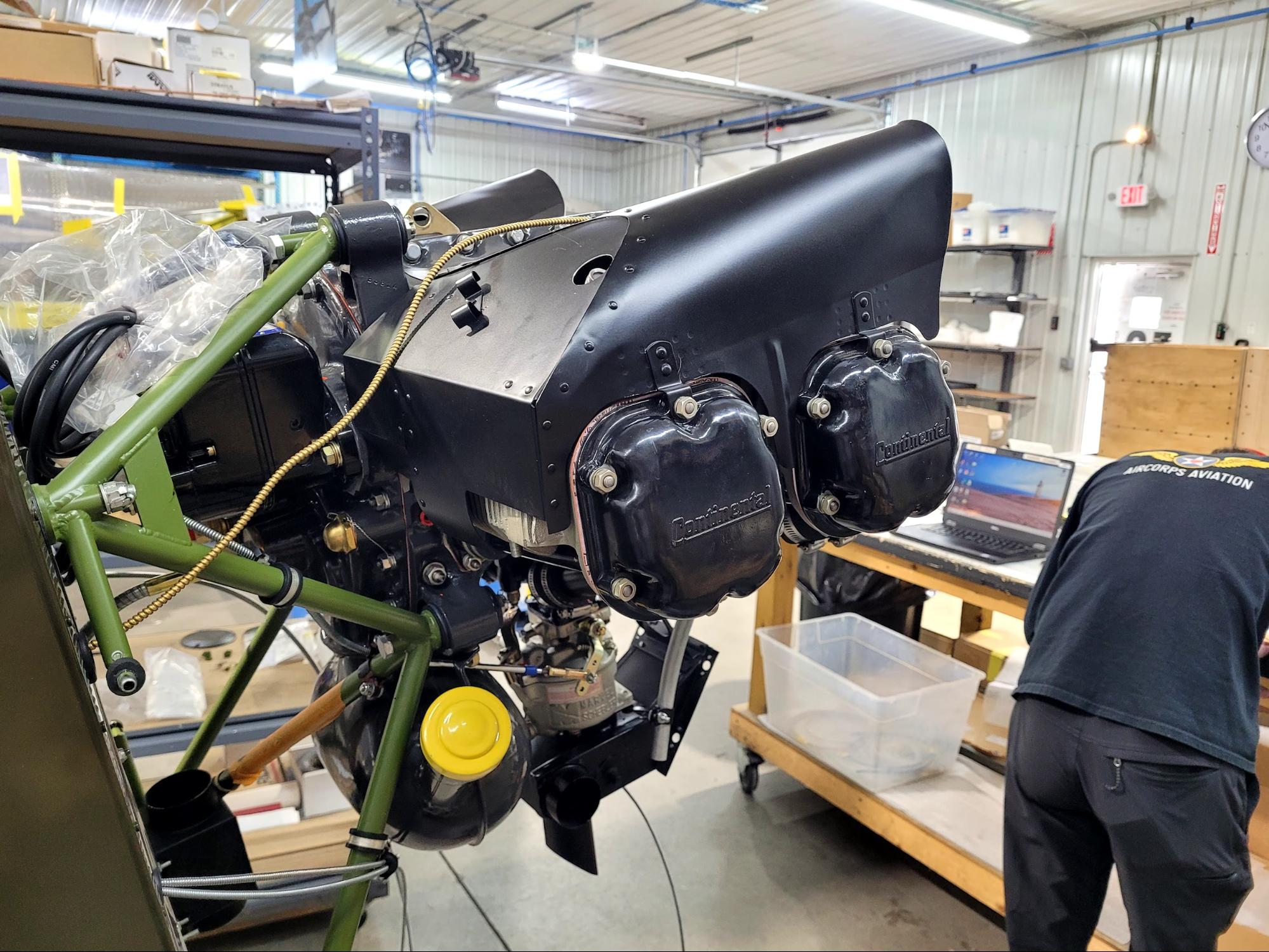
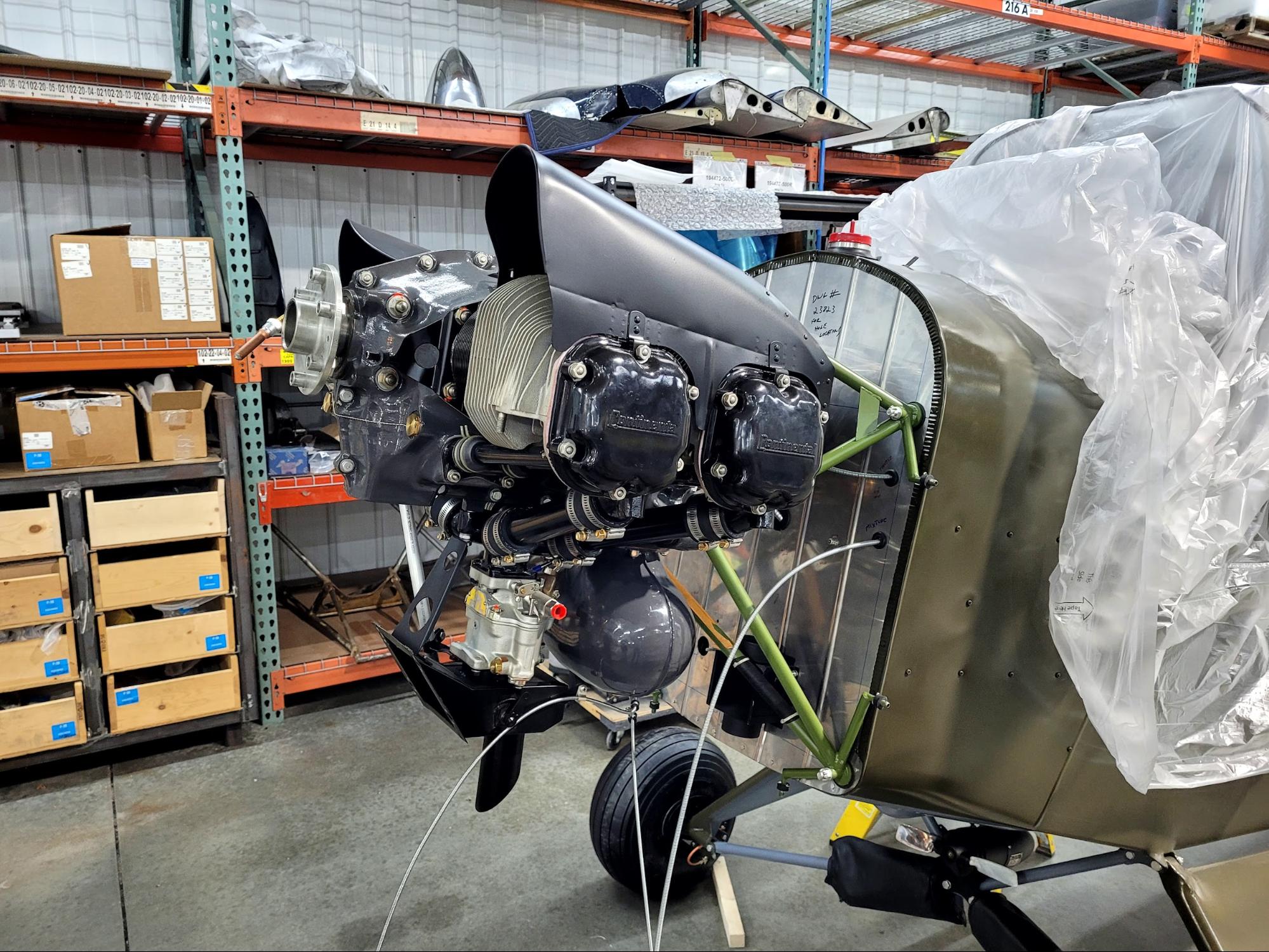
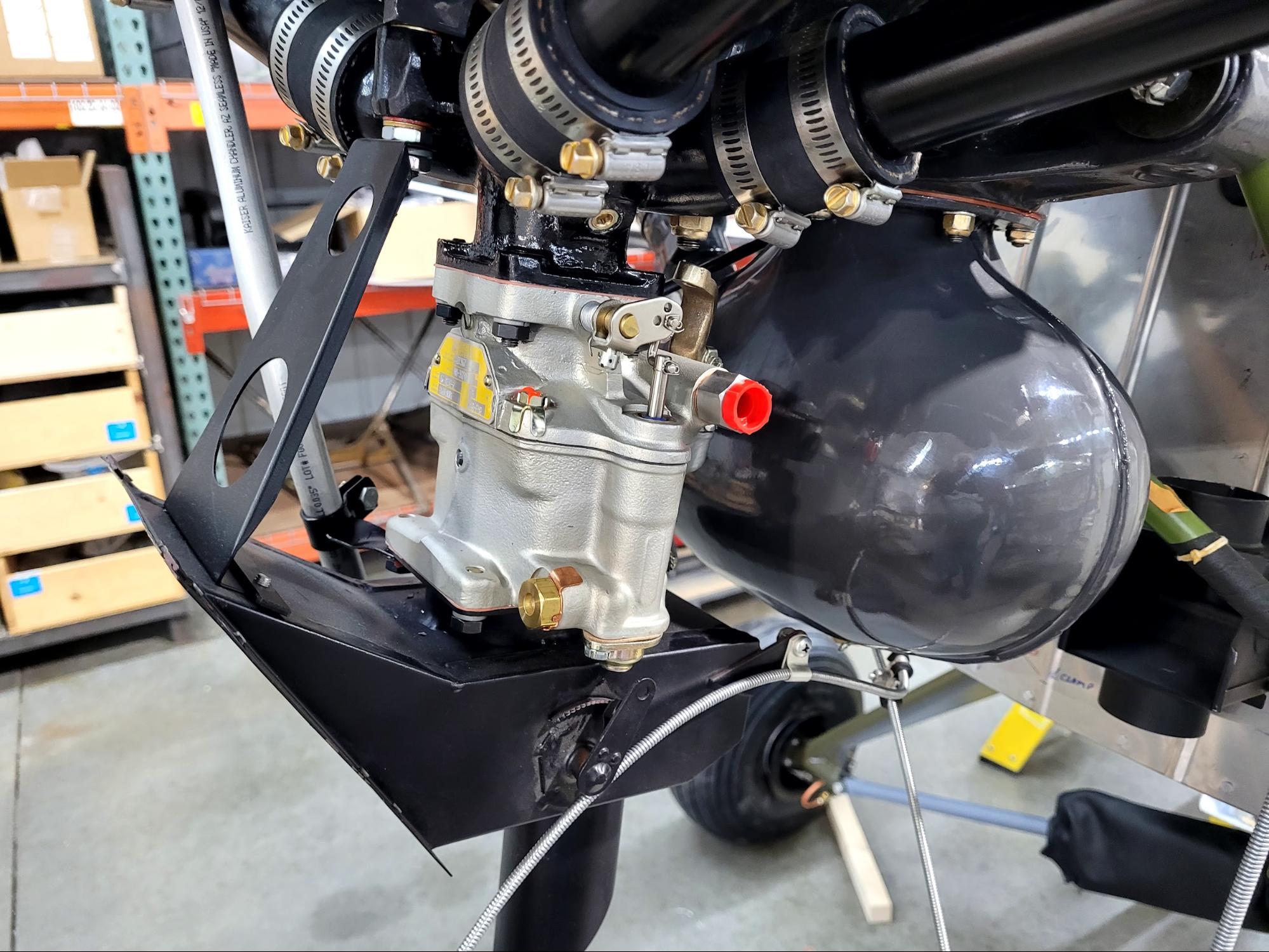
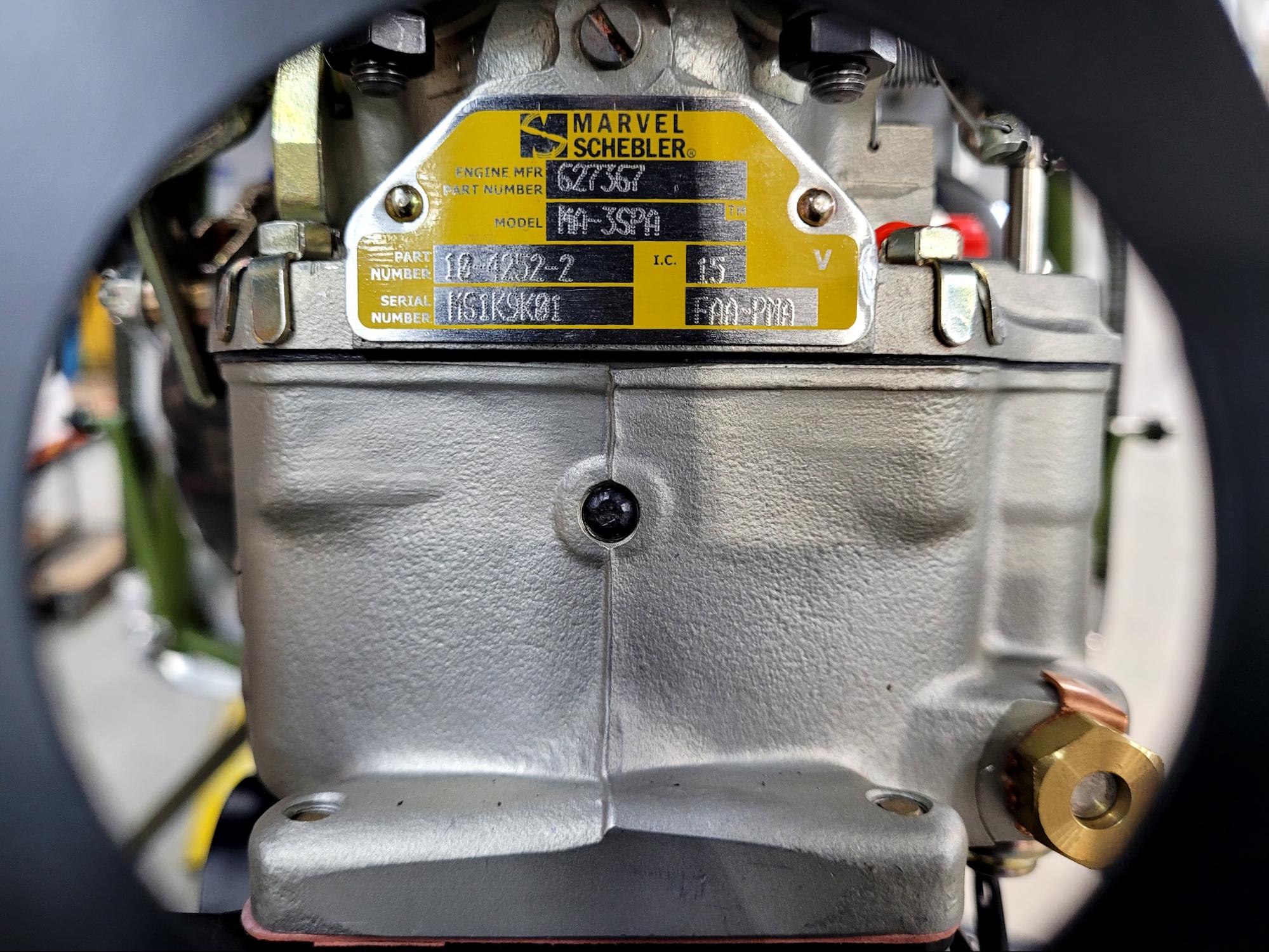
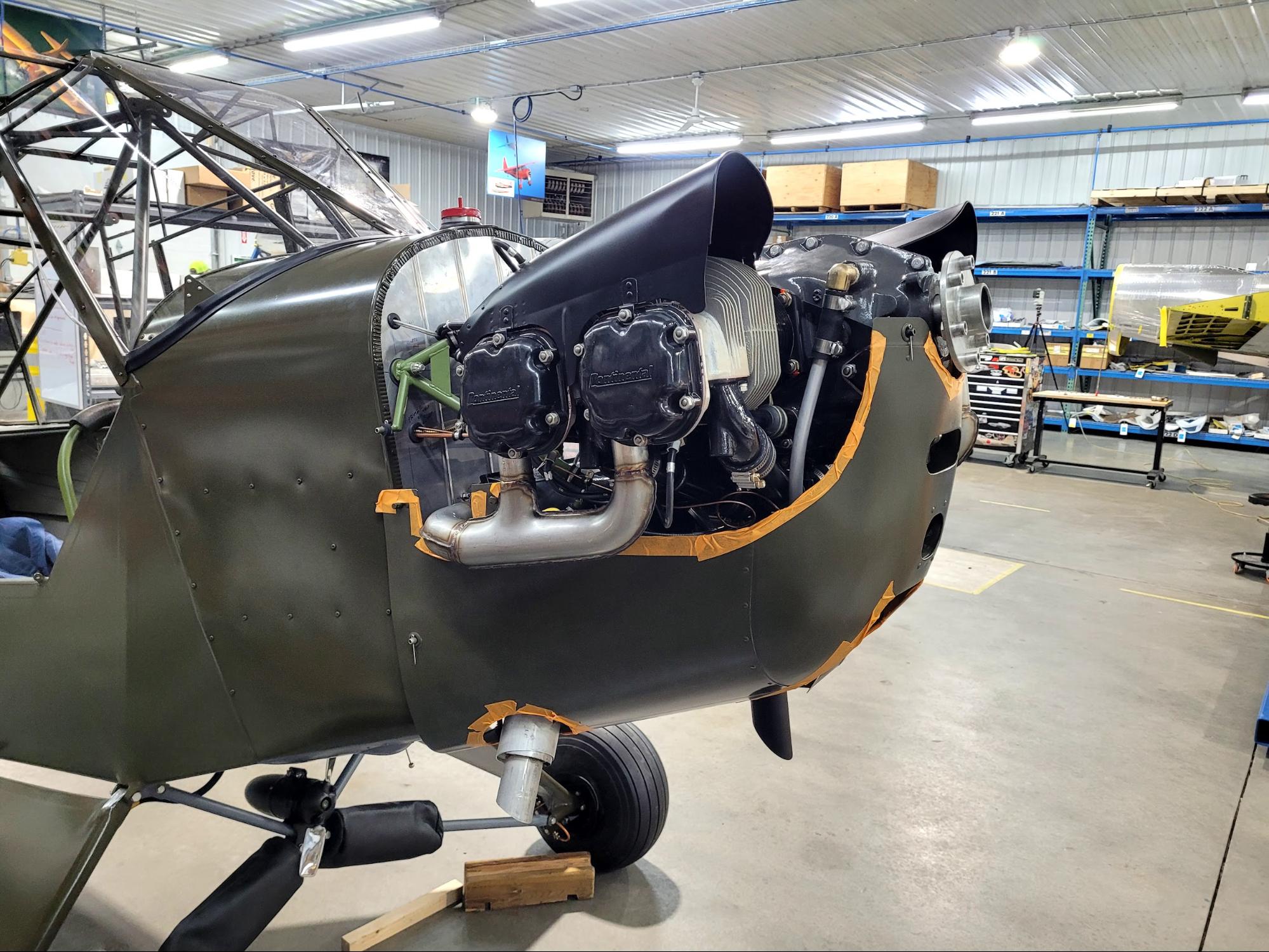
Besides the landing gear installation, another restoration milestone was reached as the little Continental four-cylinder was mounted on the Grasshopper. Originally, a Continental A-65-8 (military designation O-170-3) was installed. The C-90-8 chosen for this L-4 is a slightly larger displacement flat-four engine, offering more torque
and horsepower.
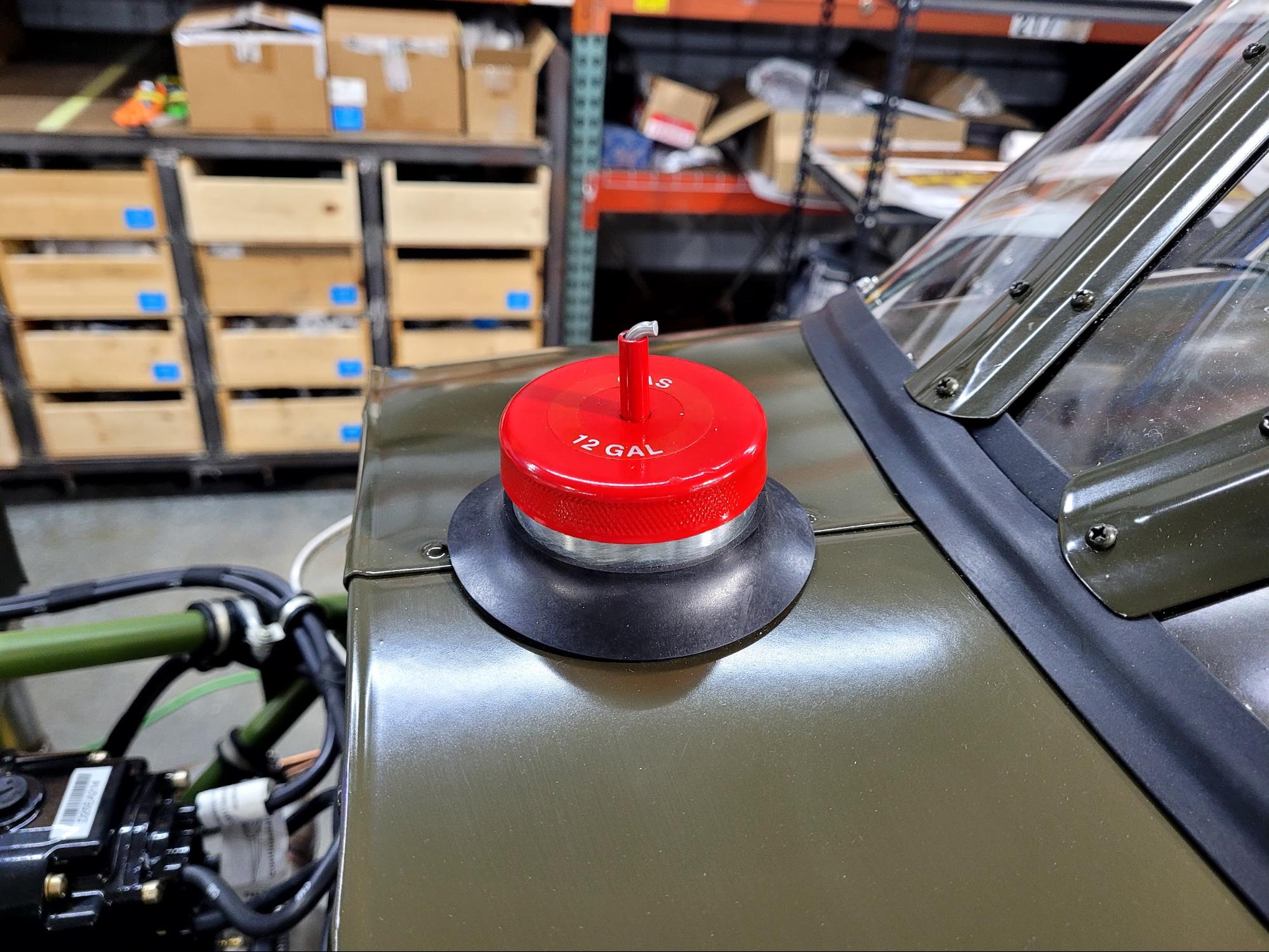
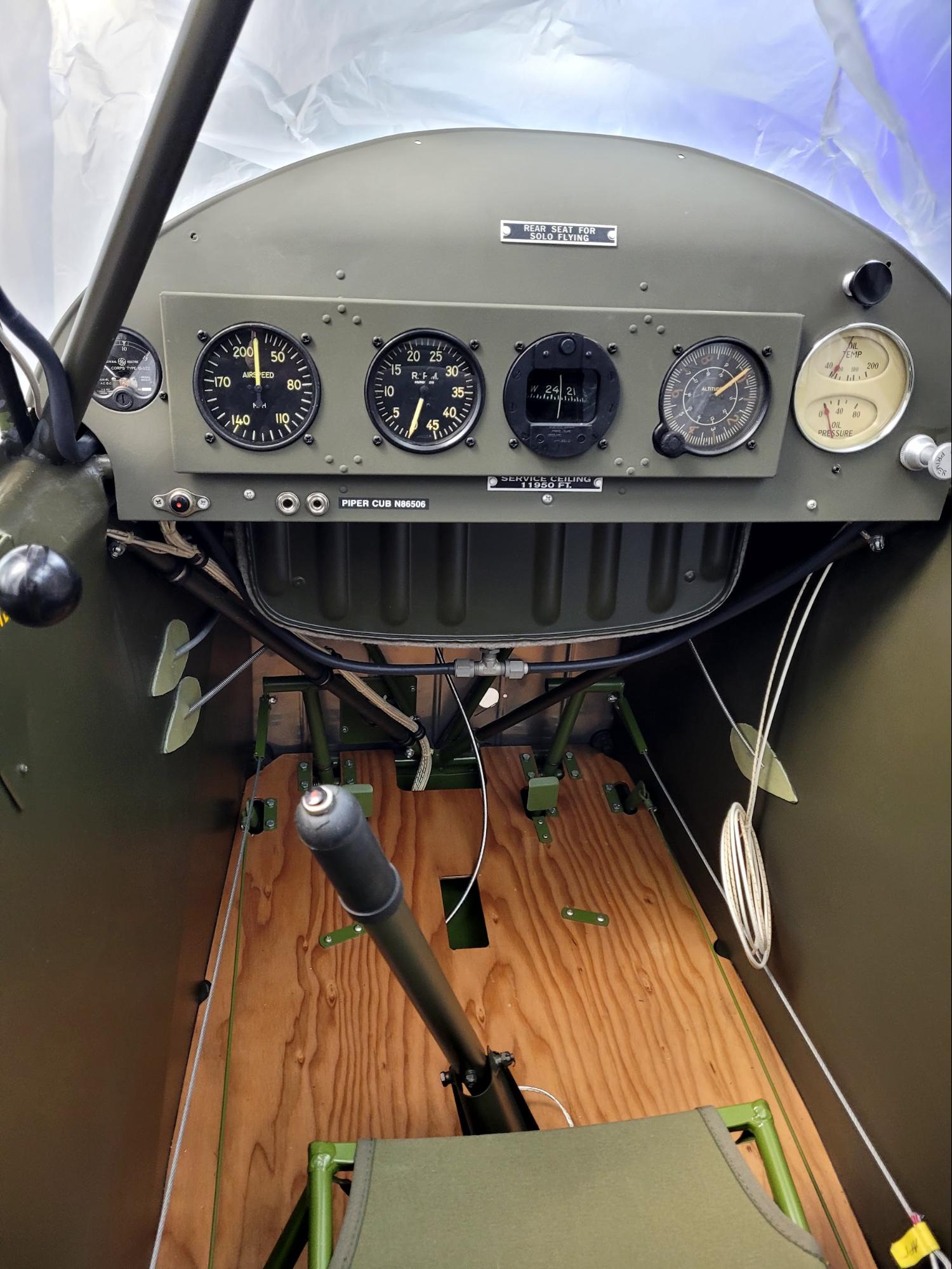
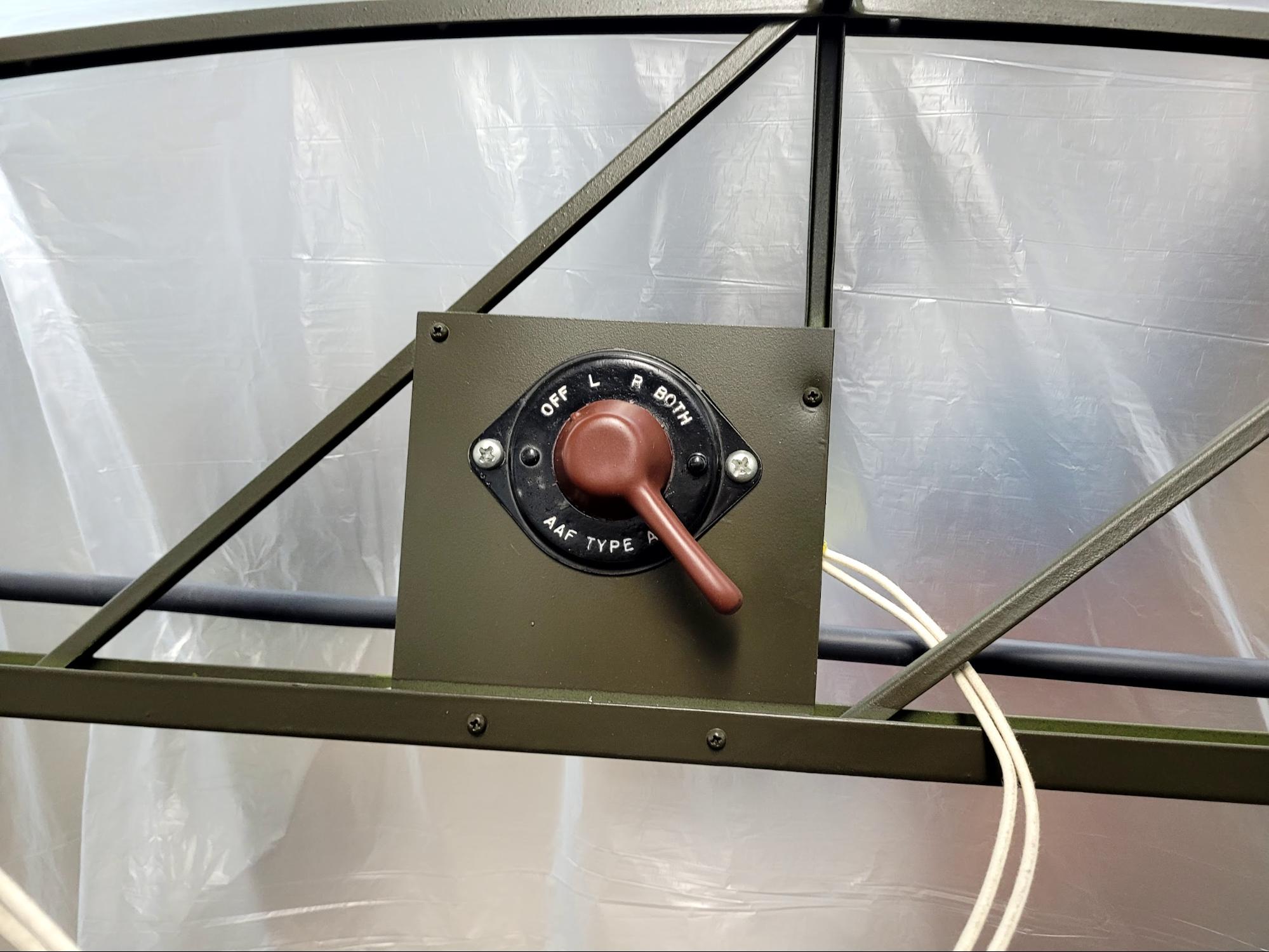
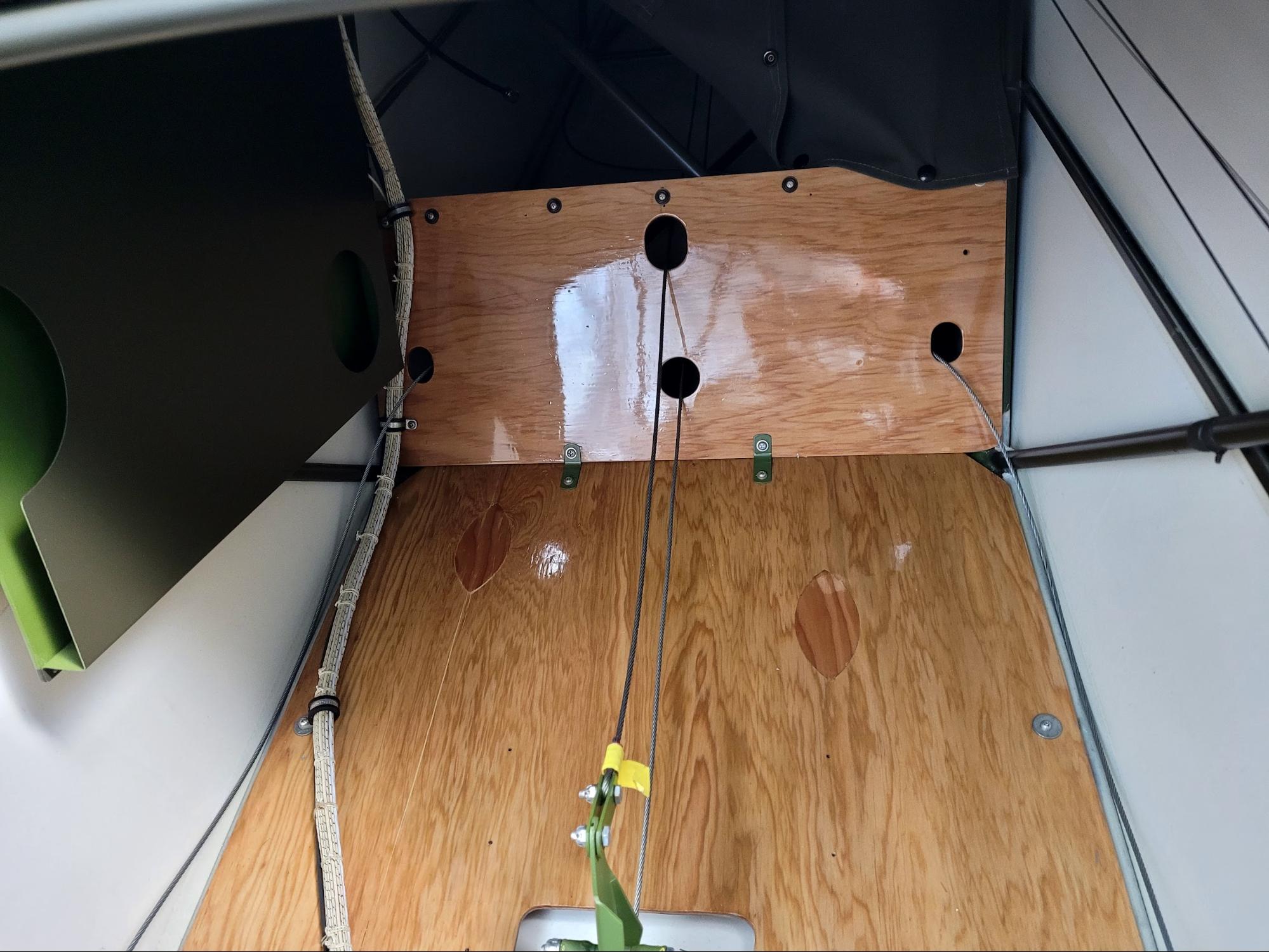
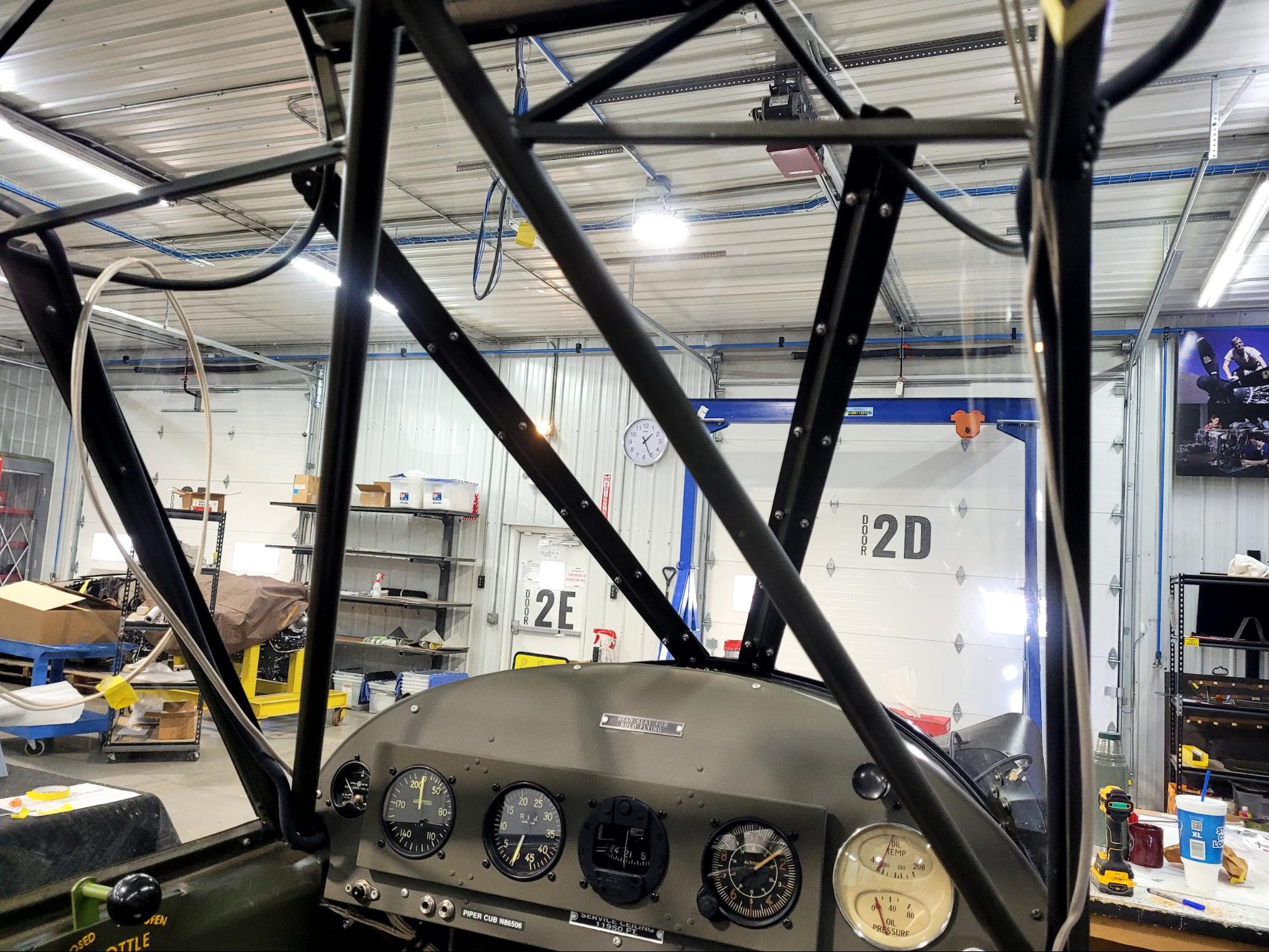
Wiring, instrument connections, and control systems connections were the focus of work inside the cabin.
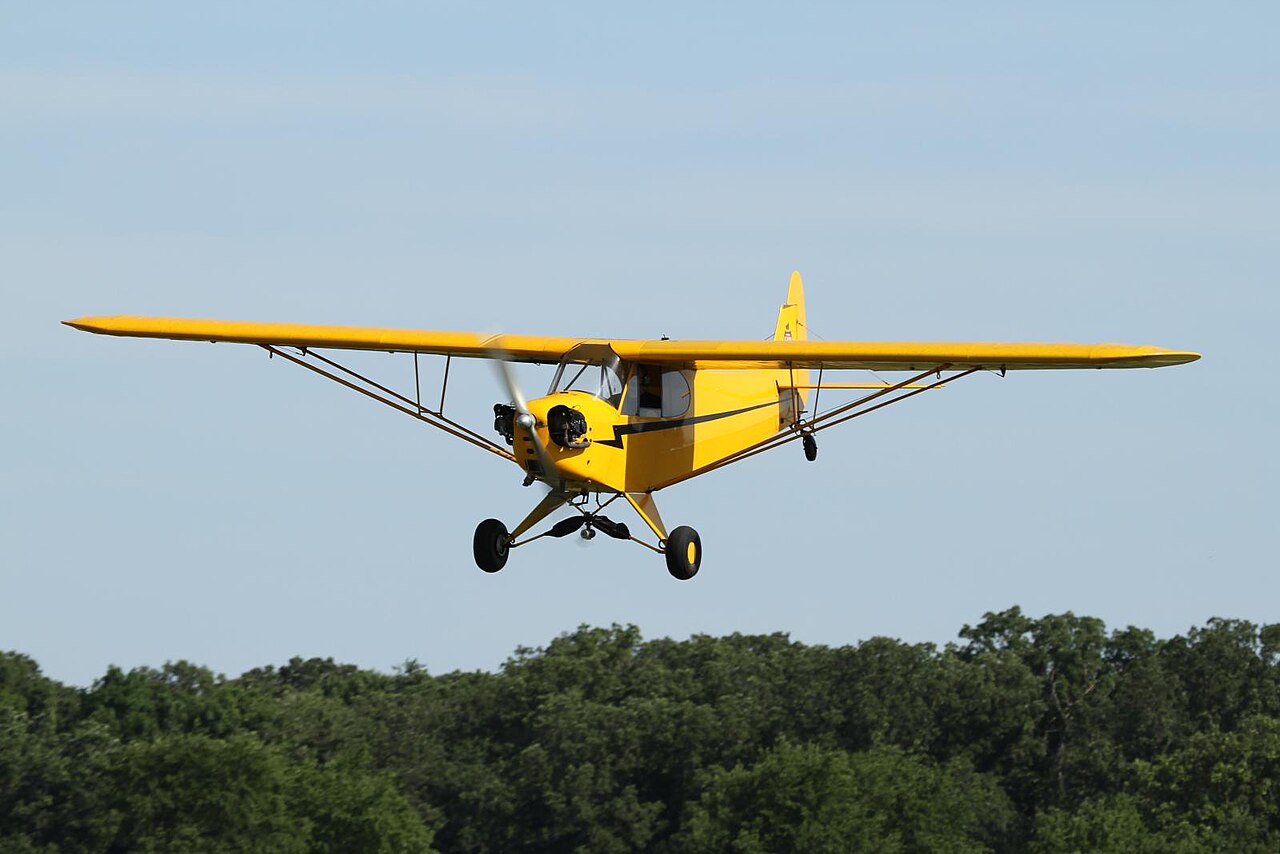
In 1938, Piper Aircraft launched its new light plane, the J-3 Cub. They produced 736 that first year. “With the threat of war escalating, the Civilian Pilot Training Program (CPTP) was launched in 1939, creating a massive surge in demand for training aircraft to prepare military pilots. Consequently, Piper accelerated production, manufacturing approximately 1,300 of its iconic J-3 Cubs that year to meet the need for affordable, accessible trainers”.1 In 1940, the number produced jumped to over 3,000.
War experience created a growing interest in the use of light aircraft for liaison and observation duties in direct support of ground forces.
Piper developed a slightly modified J-3 with much more window area, particularly above and behind the standard windows on a J-3. This military version of the Cub was originally designated 0-59 and changed to L-4 in April 1942.
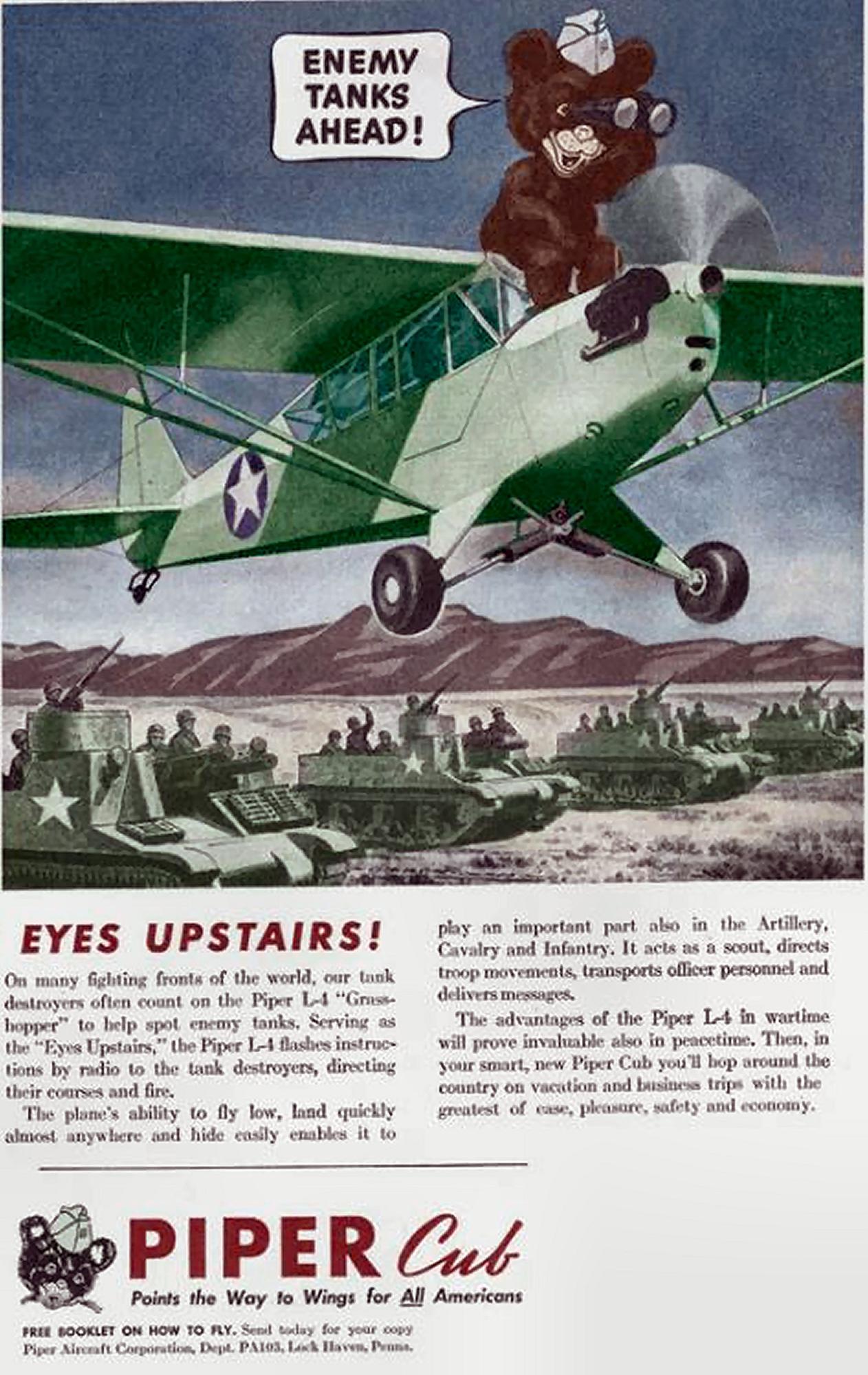
The U.S. military procured a total of 5,413 Piper L-4 Grasshoppers—including the O-59, L-4A, L-4B, L-4H, and L-4J variants, as well as the Navy’s NE-1 and NE-2 versions—between 1941 and 1945. That number varies slightly by source, but 5,413 is the most frequently cited number of L-4 production that includes only military Piper variants based on the J-3.
44-79780 was the 236th L-4H from a production run of 500 (Serial numbers 44-79545 through 44-80044). 1,801 of the total number of L-4s were L-4H versions, making the H the most produced L-4 variant.
Thousands of L-4s remained in the US for the duration of WWII, training pilots and serving liaison duties for Army units in training. The little Piper is common in the United States and Canada, but combat veteran L-4s are rare in the United States.


As well and again – excellent stuff and staff. Appreciate fotos and comments. Many thanks.
Best regards..
Is this for sale?
Nice job!
Great work on a rare combat veteran L-4H! This is an unusual Cub having the cowl fuel tank and two wing tanks. The 4th picture under Cockpit Cabin is labeled as a wing fuel tank selecter, but it looks more like a mag switch. That’s just me being just picky. Great work and I love the detailed updates on these projects. Keep them coming.
Thanks for catching that Dan, you are correct, it is the mag switch.
My error. I am glad you enjoy the updates.